
Lisbon
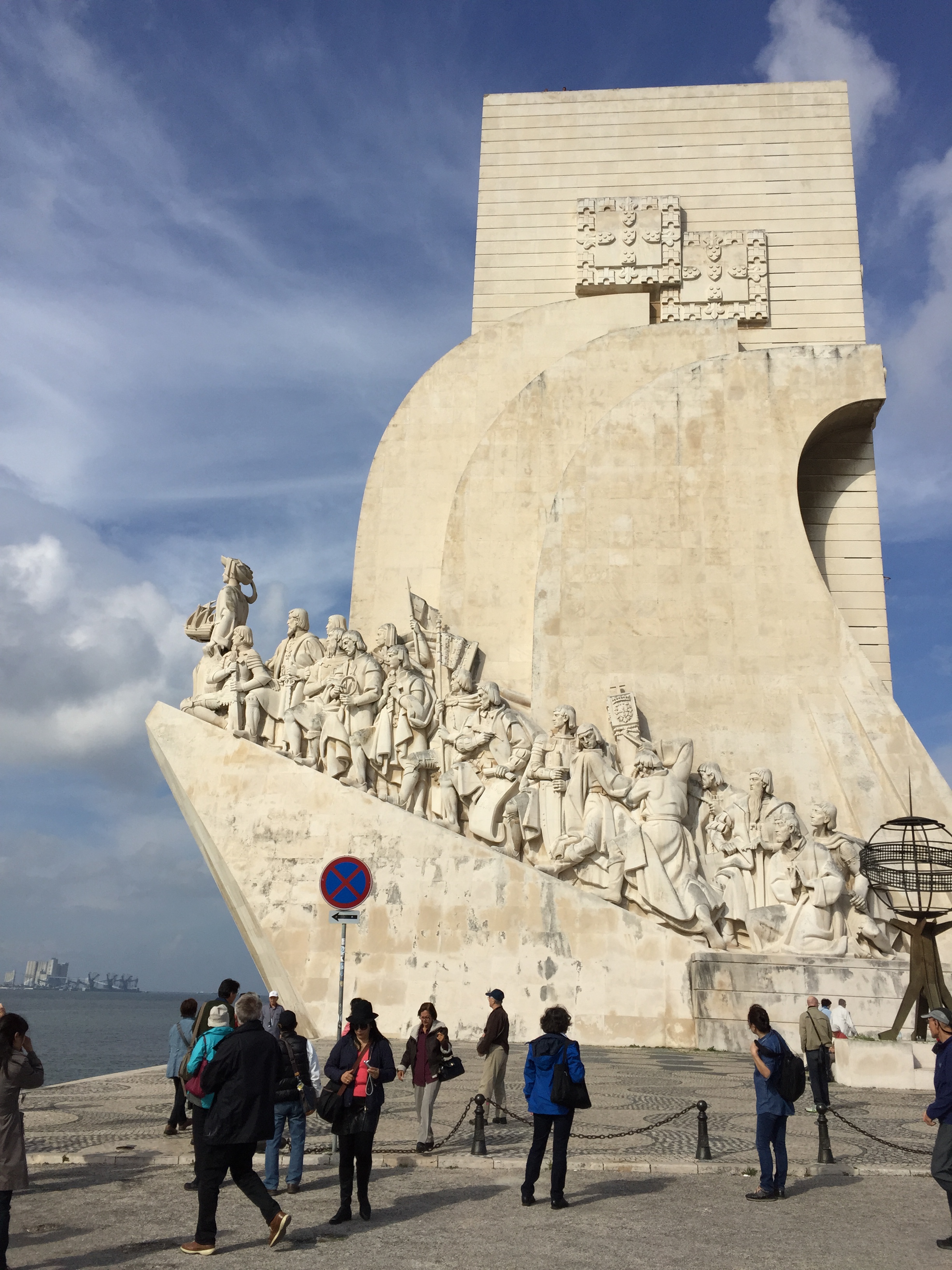
Monument of Discoveries
Towering above the Tagus river a few miles downstream from Alfama, the old city center of Lisbon, stands the towering Monument to the Discoveries, a tribute to the time when little Portugal was the country that could, its colonial empire a dominant power of the discovered world. Henry the Navigator stands at the apex of the monument, holding a model of the caravel that conquered the seas. Below a procession of scholars, mariners and clerics seem to be climbing toward him. The broad pavement leading to the monument is covered with an enormous tiled world map pinpointing all of the Portuguese discoveries. We are profoundly impressed by this reminder of a glorious past, but somehow at the same time it 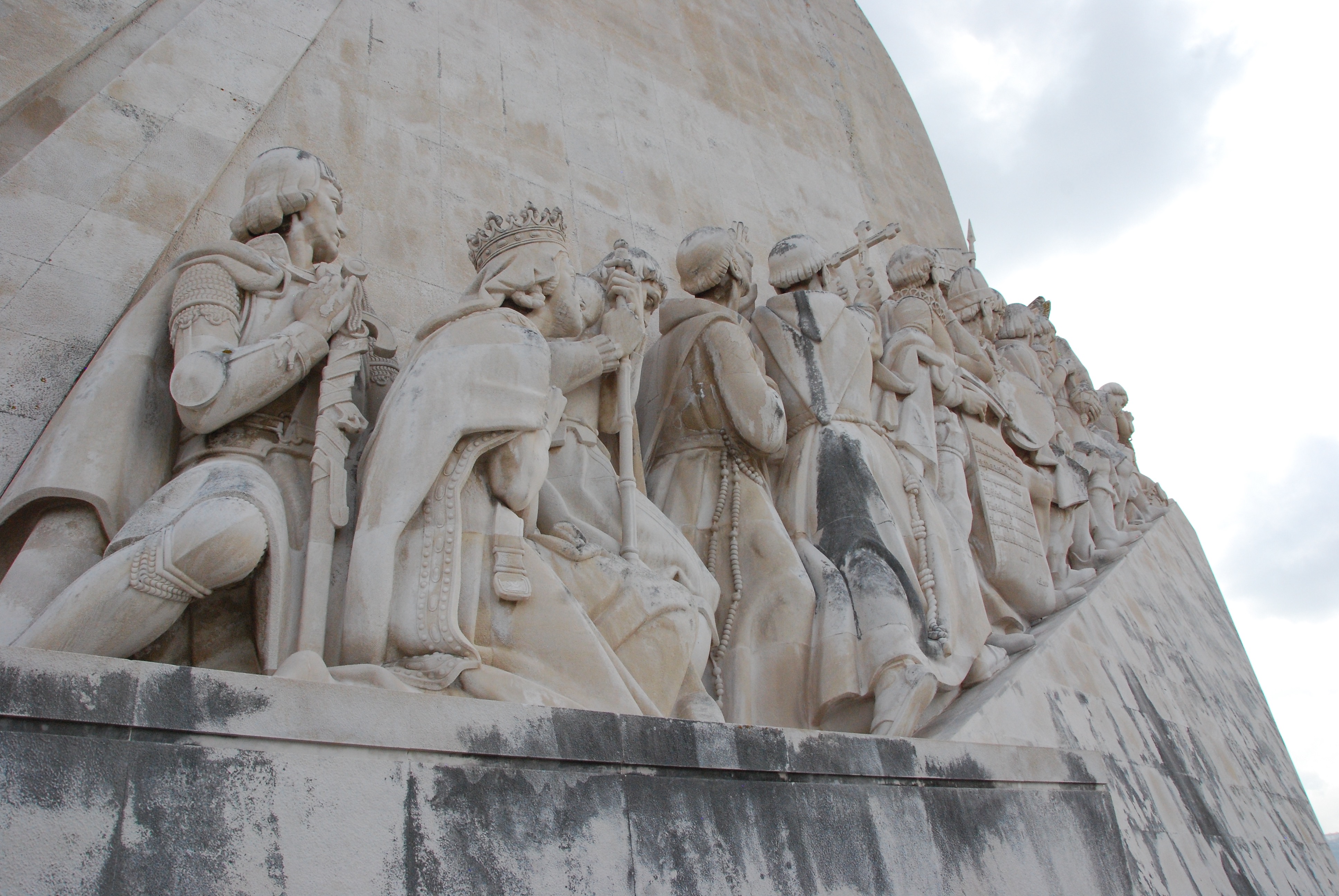 subtly conveys the impression that this spirit of conquest and vision still characterizes a people small in number but huge in heart and vision.
We are beginning a tour of Portugal on the Viking river cruise, “Portugal’s River of Gold,” but we will not board our ship, the Viking Torgil until we reach Porto tomorrow. This morning we are exploring Lisbon.
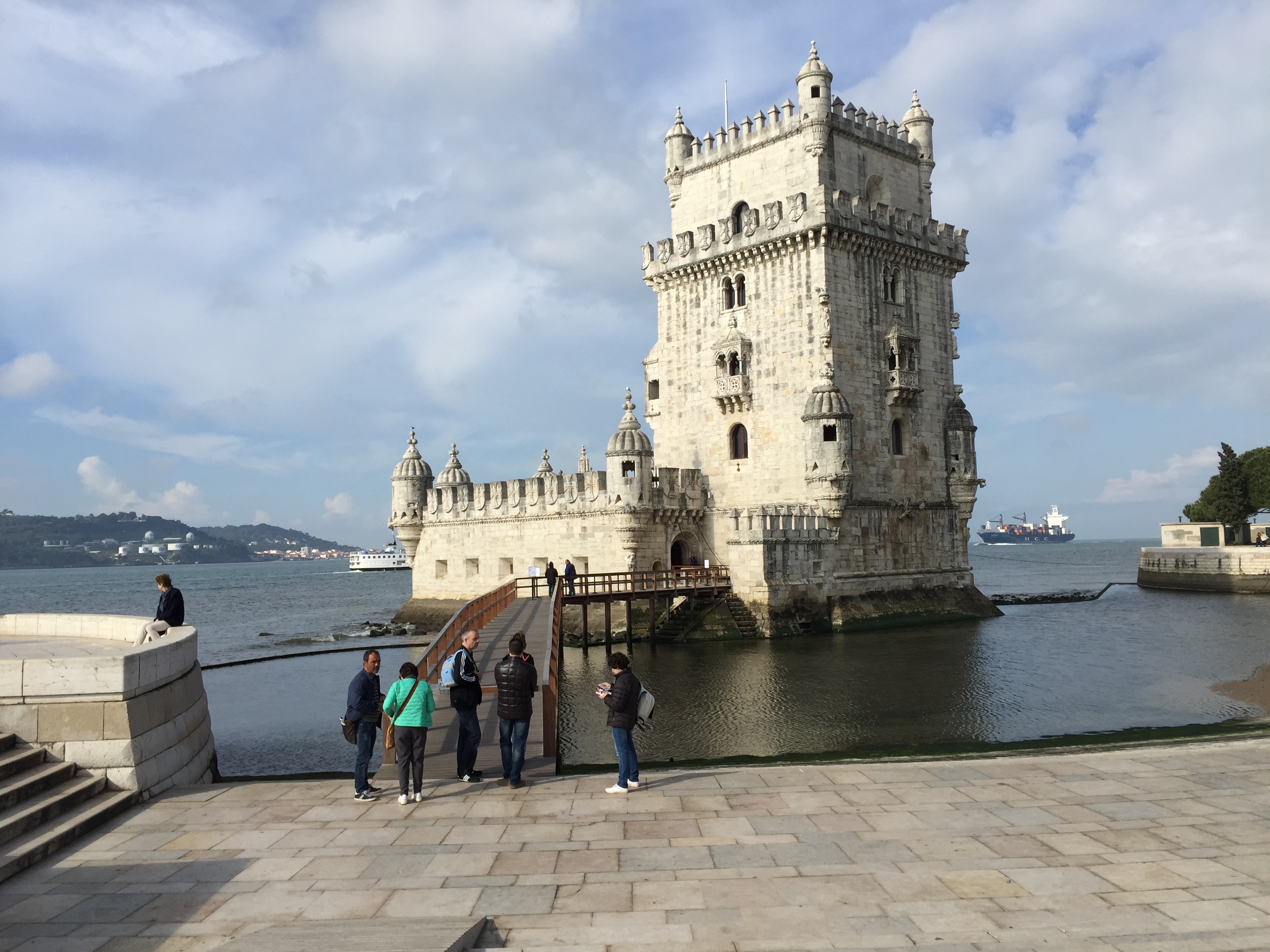
Tower of Belém
A little farther down river toward the Atlantic Ocean from the Monument to the Discoveries is the symbol of Lisbon, the Tower of Belém, a fortress built nearly five hundred years ago. This elegant building was a landmark for sailors coming home, not unlike the role the Statue of Liberty has performed in the United States. The Manueline (named for king Manuel I) high Gothic design has nautical decoration and elaborate ornamentation. The style celebrates Portugal’s wealth acquired through trade with India and other distant countries as well as from the colonies it established around the world.
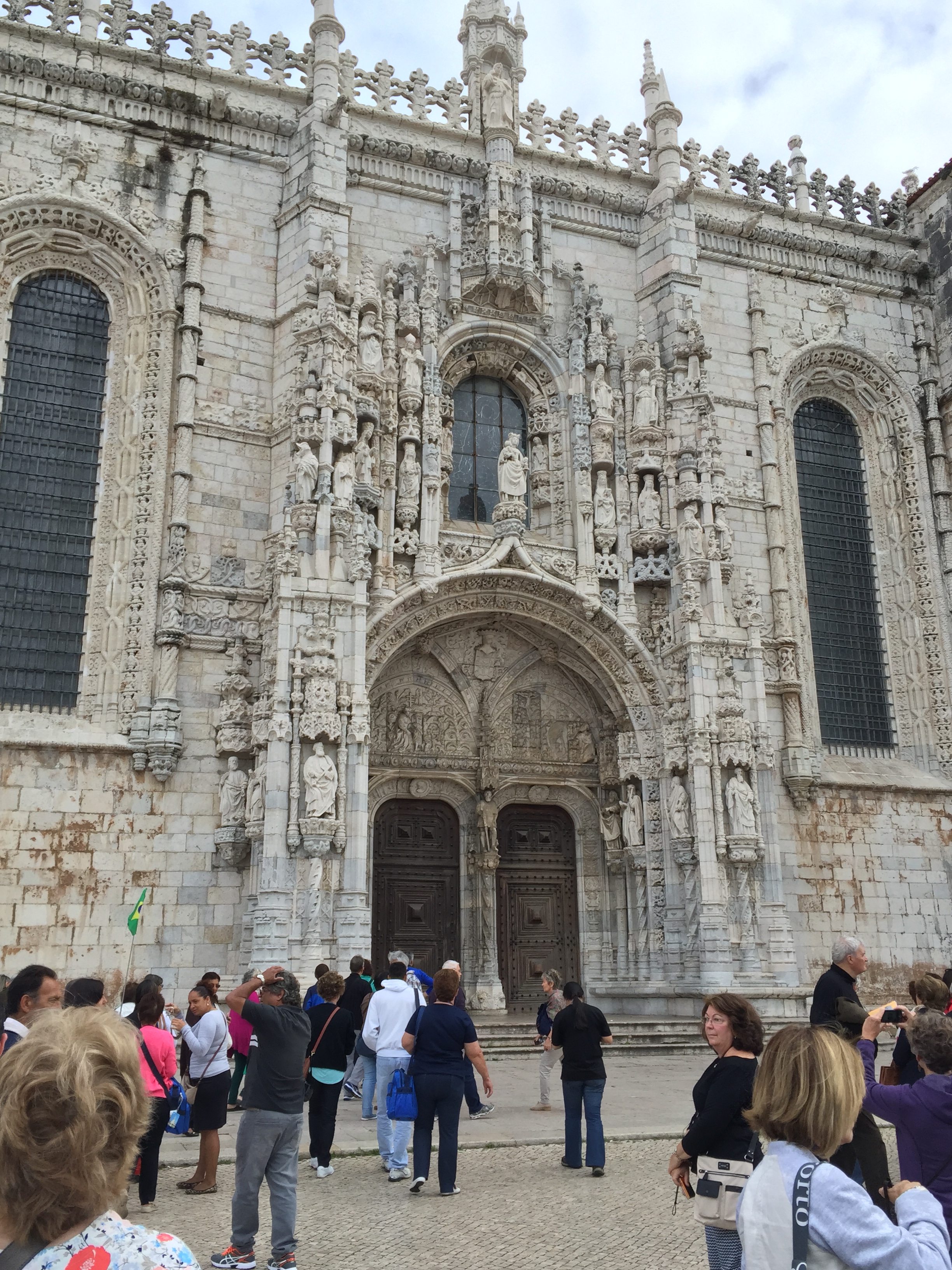
Jerinomos Monastery
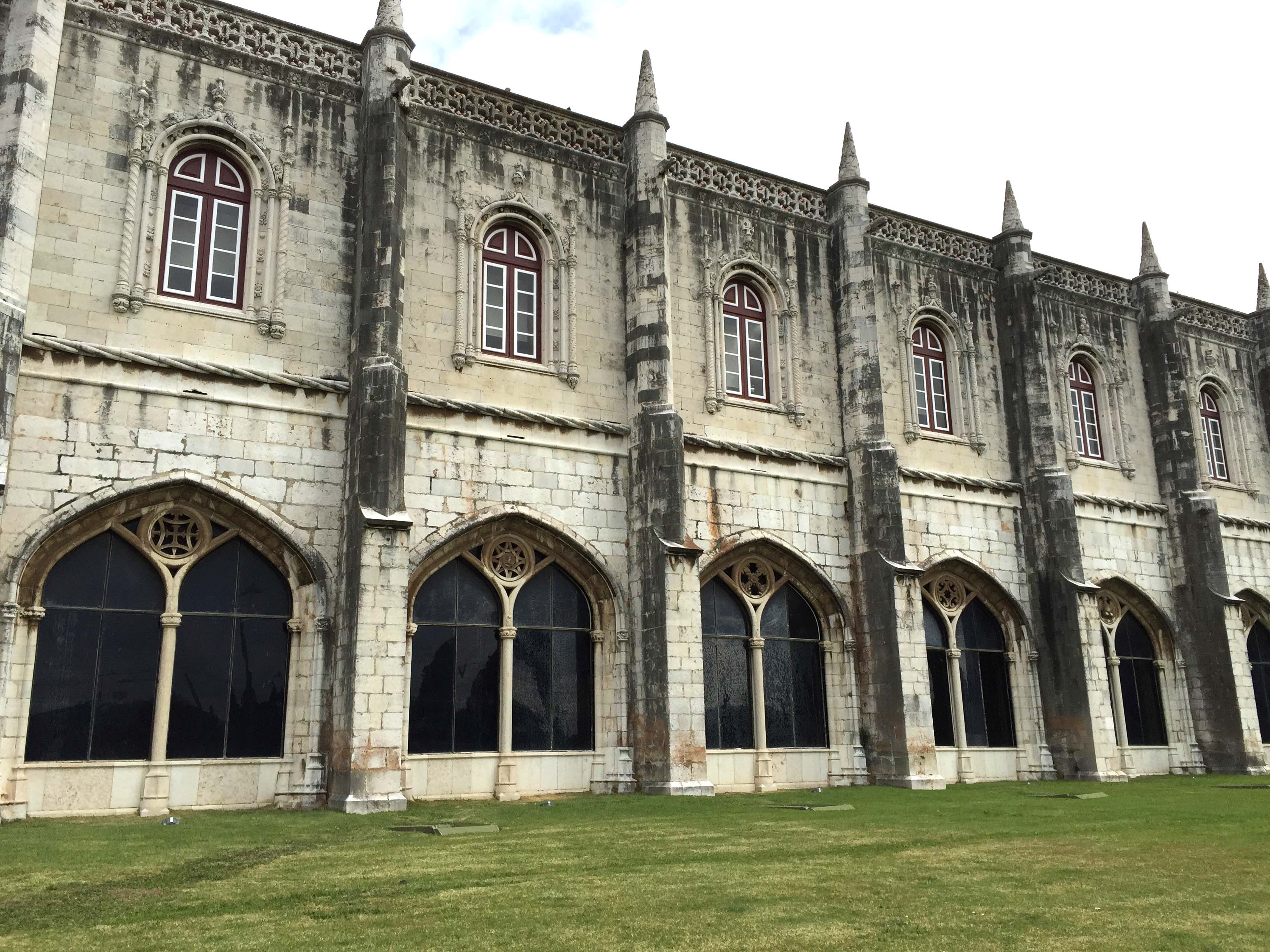
Across the wide boulevard, the massive Jerinomos Monastery dominates the landscape. The Gothic architecture is unusually beautiful, just a step down from the flamboyant Gothic in England and Italy. The Portuguese incorporated symbols of their seafaring history into the decoration. Traveling horizontally along the division between ground and first floors is a large rope pattern, a tribute to this item’s essential place in sailing. Also carved into the exterior decoration are artichokes, a tribute to the vegetable that saved the men from scurvy during long voyages. The church’s Gothic interior reflects the Moorish heritage of Lisbon. The Moors introduced palm trees from Africa. The columns represent the trunks of palms and the vaulting suggests palm fronds. The symbolism is immediately evident. They are both beautiful and delicate.
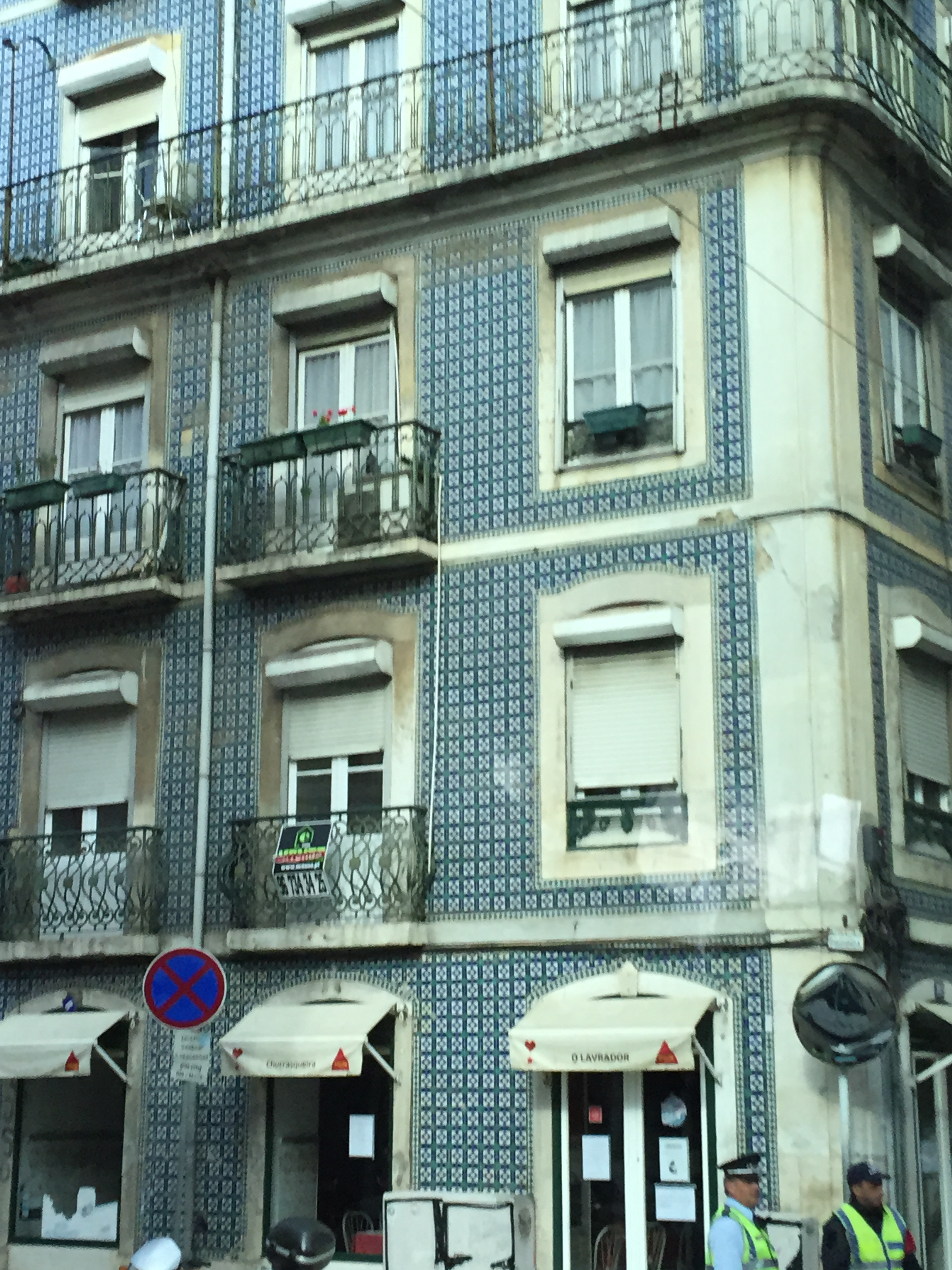
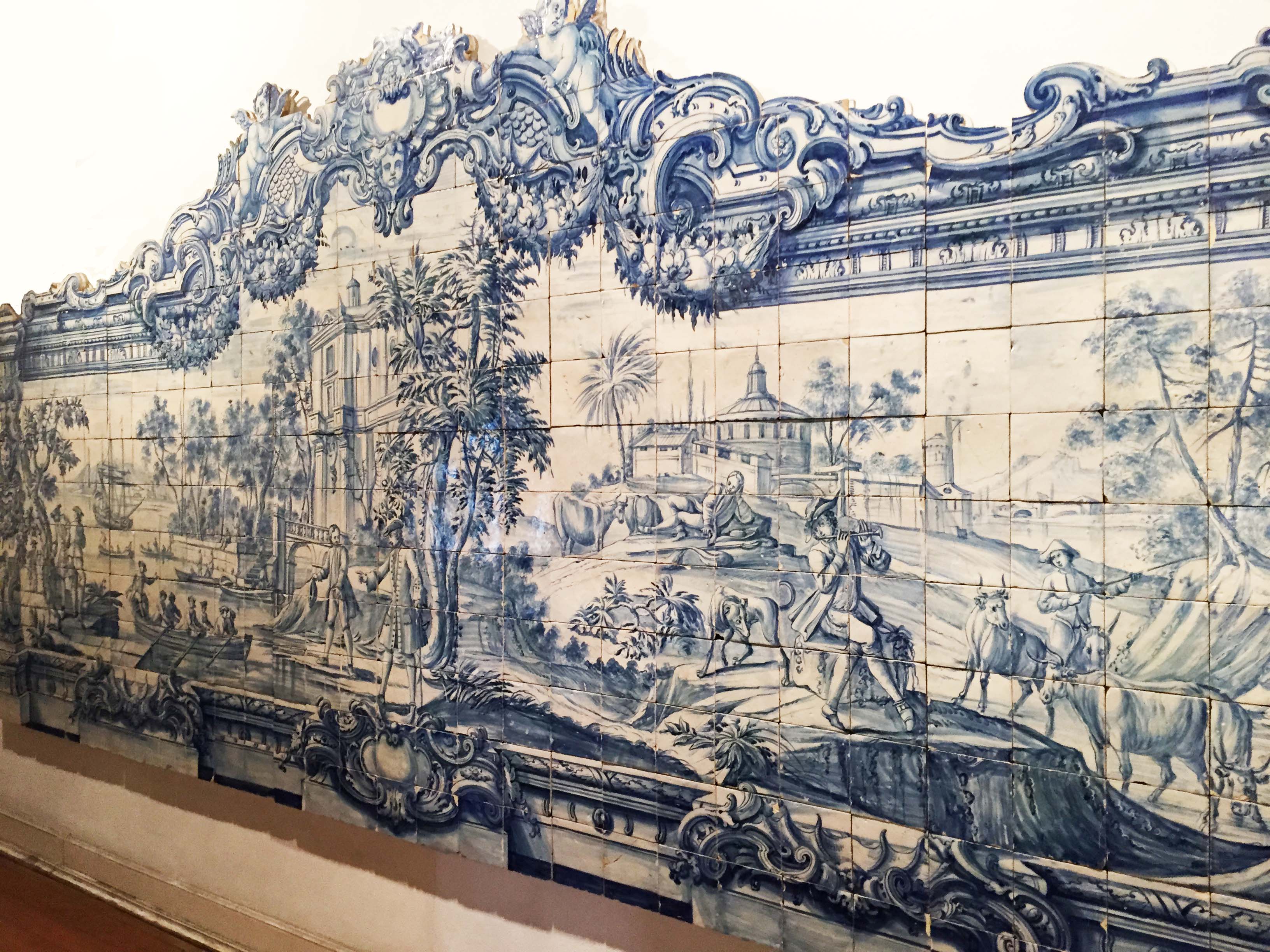
 Lisbon is a city adorned and decorated with ceramic tiles, called azulejos. From mosaic streets and plazas to wall murals and building façades, they are everywhere in churches, homes, palaces, restaurants, train stations and subway stations. They may depict pastoral or heroic scenes in blue and white, or intricate oriental rug-like patterns or just simply a wall composed of hundreds of same patterned tiles. This is another legacy of the North African Moors who ruled the country for about four hundred and fifty years beginning in 711. The ubiquitous tiles may not be unique to Lisbon, but they certainly define a major attribute of the city.
Lisbon is very hilly and the uninterrupted buildings along winding streets of the old city center made it seem maze-like. The oldest district of the city, the Alfama, has a rather haphazard pattern of streets that more often than not barely qualify as alleyways. The design is deliberate. Hardly wide enough for two people to walk abreast, most streets perpendicular to the river constituted an impossible access for invaders to the town. The Alfama is not attractive, but most interesting. Exploring it with a guide makes it easier to navigate and to appreciate.
We could profitably spend hours in the nearby city center and waterfront area. It seems that the majority of foreign visitors arrive on massive cruise ships and their experience in Portugal is limited to a day in Lisbon and perhaps one in Porto, the only cities that can accommodate the vessels. This is unfortunate because the interior of the country is equally fascinating.
In the afternoon we chose an optional excursion to the Tile Museum. This was a good choice. At the end of the tour, each person in our group painted a design on a tile which was later fired and brought to the ship near the end of our cruise.
Avenida Liberdade
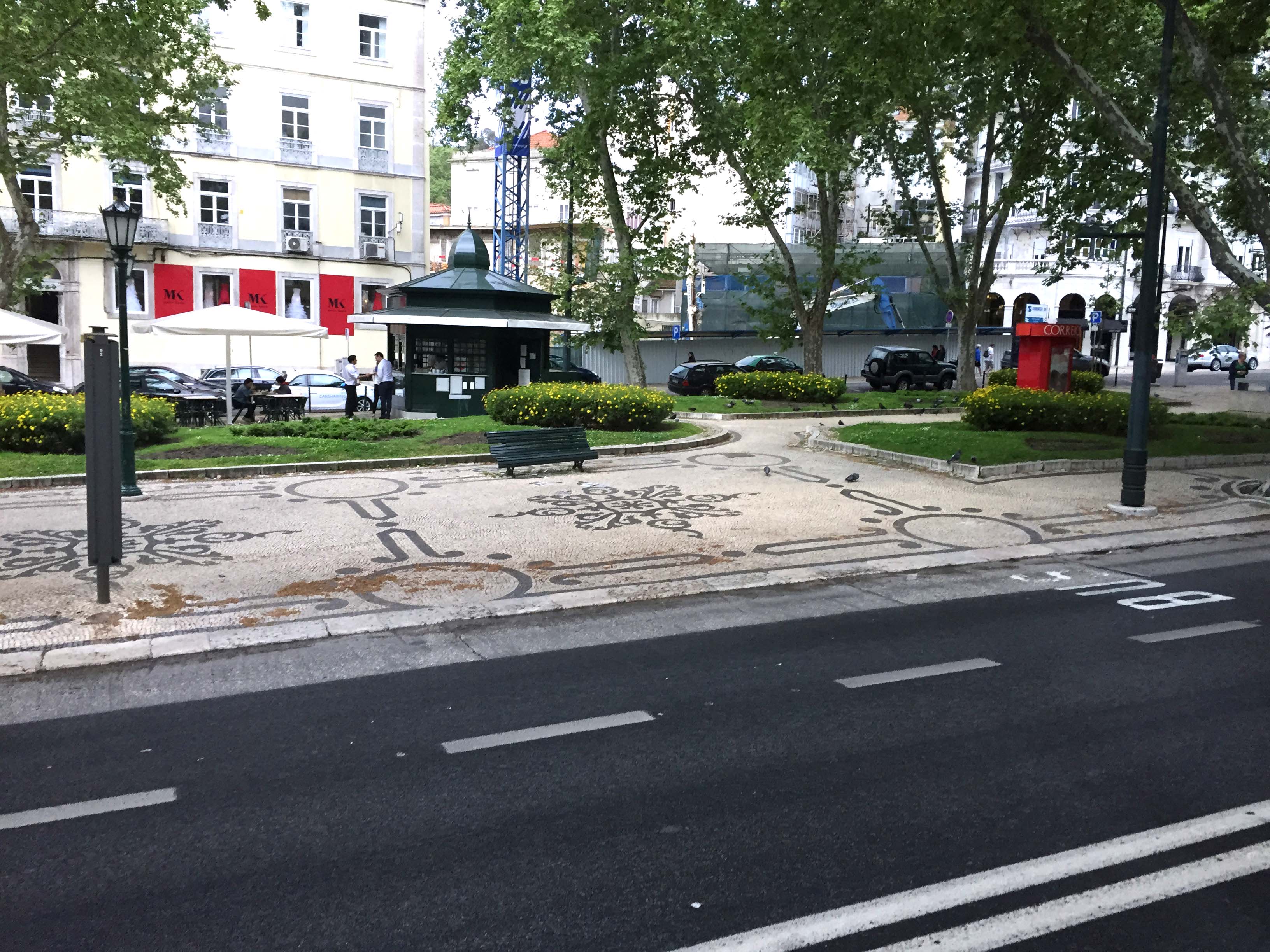
Our hotel is the Tivoli Lisboa on the lovely tree-lined Avenida Liberdade, within walking distance of the city center and waterfront. The walk is downhill, so an option is to ride the subway back up the hill or take a taxi.
There are two restaurants that we enjoyed. Both are near the Tivoli Lisboa. Just around the corner is the Picasso, a sidewalk cafe featuring outstanding soup and sandwiches. Turn west at the first street north of the Tivoli Lisboa hotel. We were persuaded to try one of their custard tarts and it was wonderful.
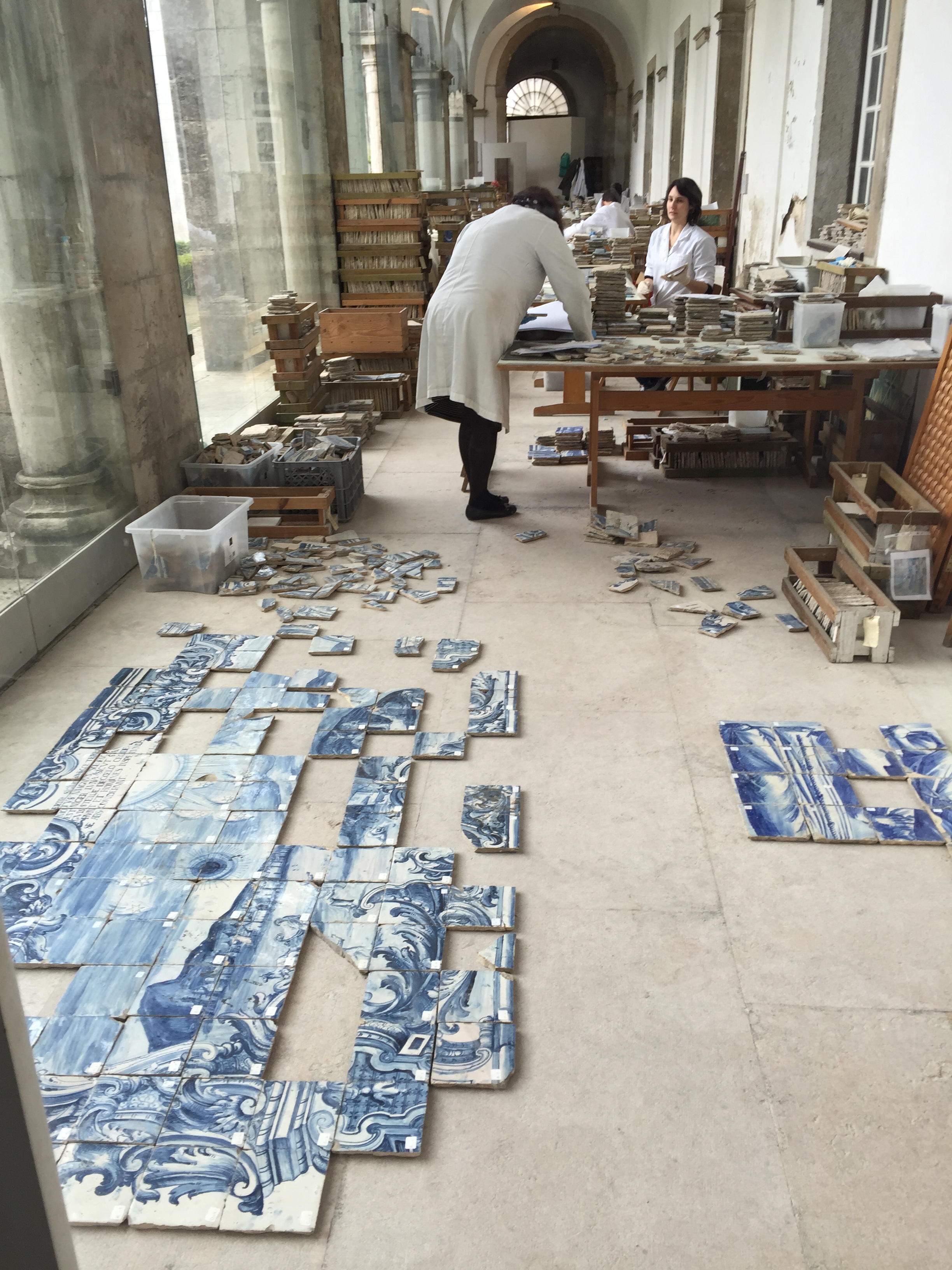
Tile Museum
For dinner we chose the Marisqueira De Santa Marta restaurant. It is located a block east of Avinda Liberdade near the corner of R. Barata Salgueiro and R. de Santa Marta. Barata Salgueiro is the first street north of the Tivoli Lisboa hotel. There are several terrible reviews of the restaurant on TripAdvisor, but our experience was excellent. Several people recommended it to us. Our local guide said that it was her family’s favorite. In Portugal many restaurants place starters on the table automatically. They are not free. If you eat them, you pay for them. Also, the Portuguese eat late. The restaurant does not open until 7:00 pm.
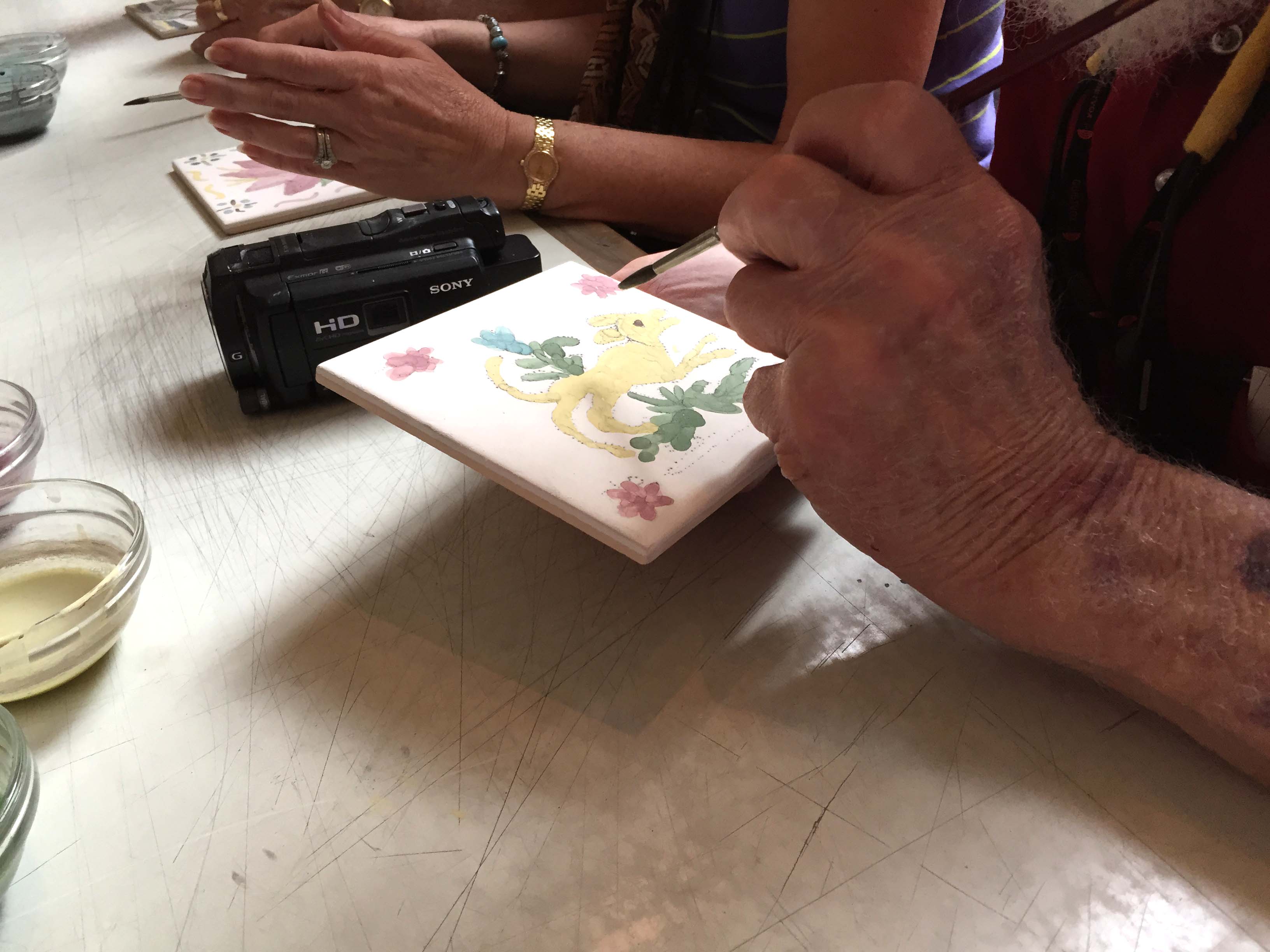
Painting Tiles
Interesting links:
http://en.wikipedia.org/wiki/Padr%C3%A3o_dos_Descobrimentos
http://www.aviewoncities.com/lisbon/padraodosdescobrimentos.htm
http://www.golisbon.com/sight-seeing/discoveries.html
Tower of Belèm
http://www.aviewoncities.com/lisbon/torredebelem.htm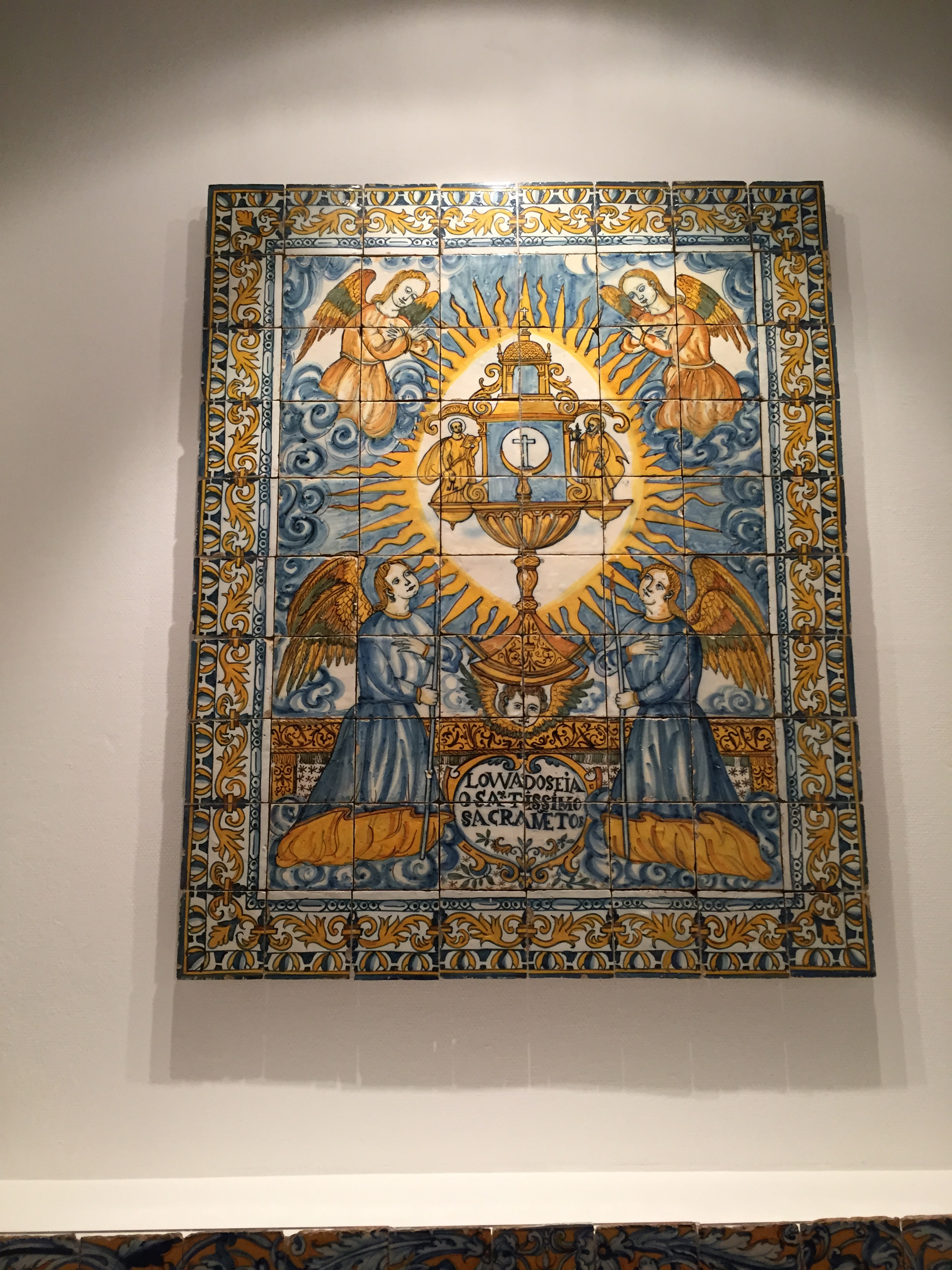
http://www.golisbon.com/sight-seeing/belem-tower.html
http://www.torrebelem.pt/en/index.php?s=white&pid=168
Jeronimos Monastery
http://www.golisbon.com/sight-seeing/jeronimos.html
http://www.mosteirojeronimos.pt/en/
http://en.wikipedia.org/wiki/Jer%C3%B3nimos_Monastery
http://www.aviewoncities.com/lisbon/mosteirodosjeronimos.htm 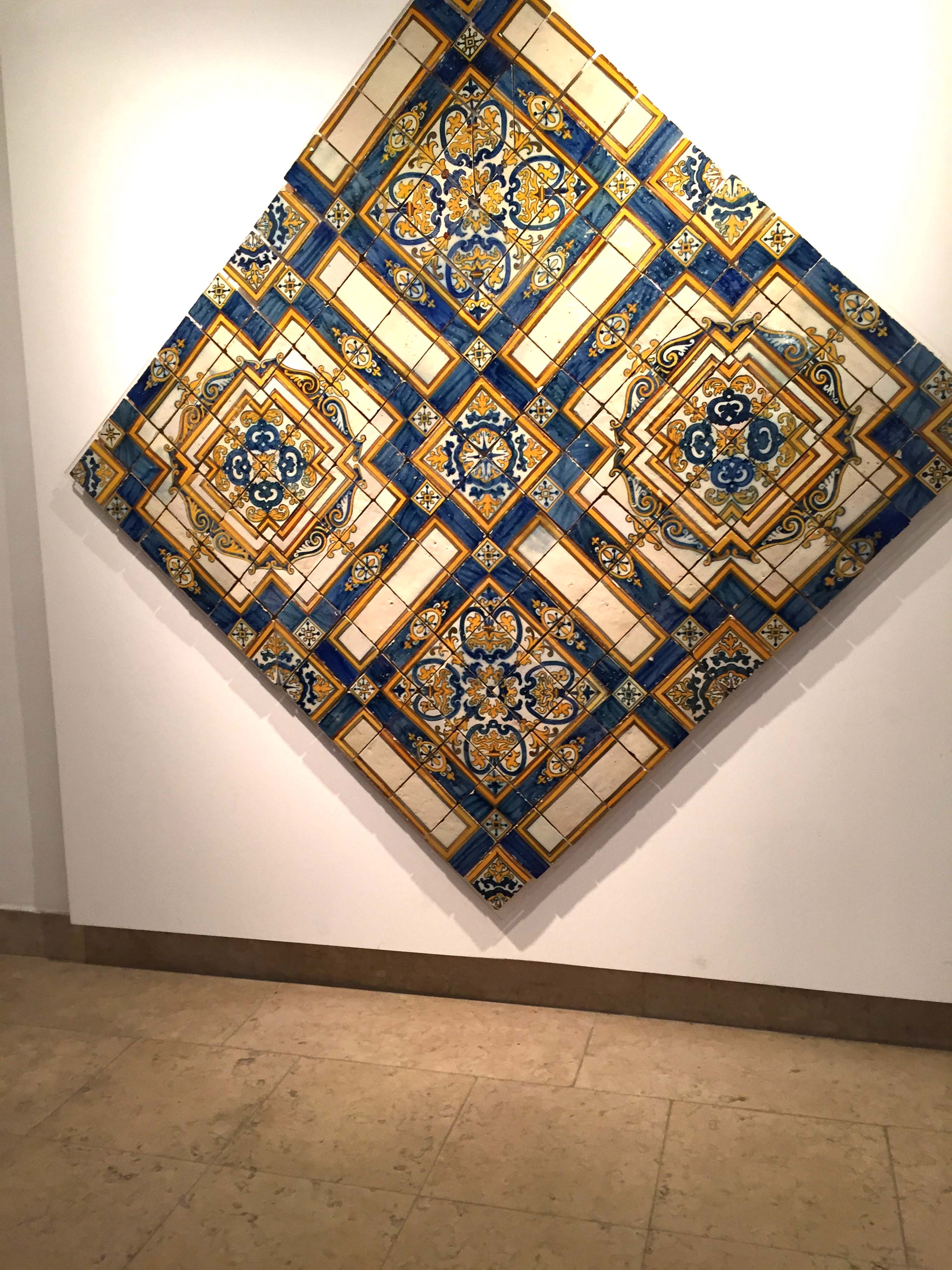
Ceramic tiles
http://www.golisbon.com/culture/azulejos.html
http://www.golisbon.com/sight-seeing/tile-museum.html
http://en.wikipedia.org/wiki/Azulejo
Coimbra
We travel by motor coach from Lisbon to Porto where we will board our ship. Viking owns 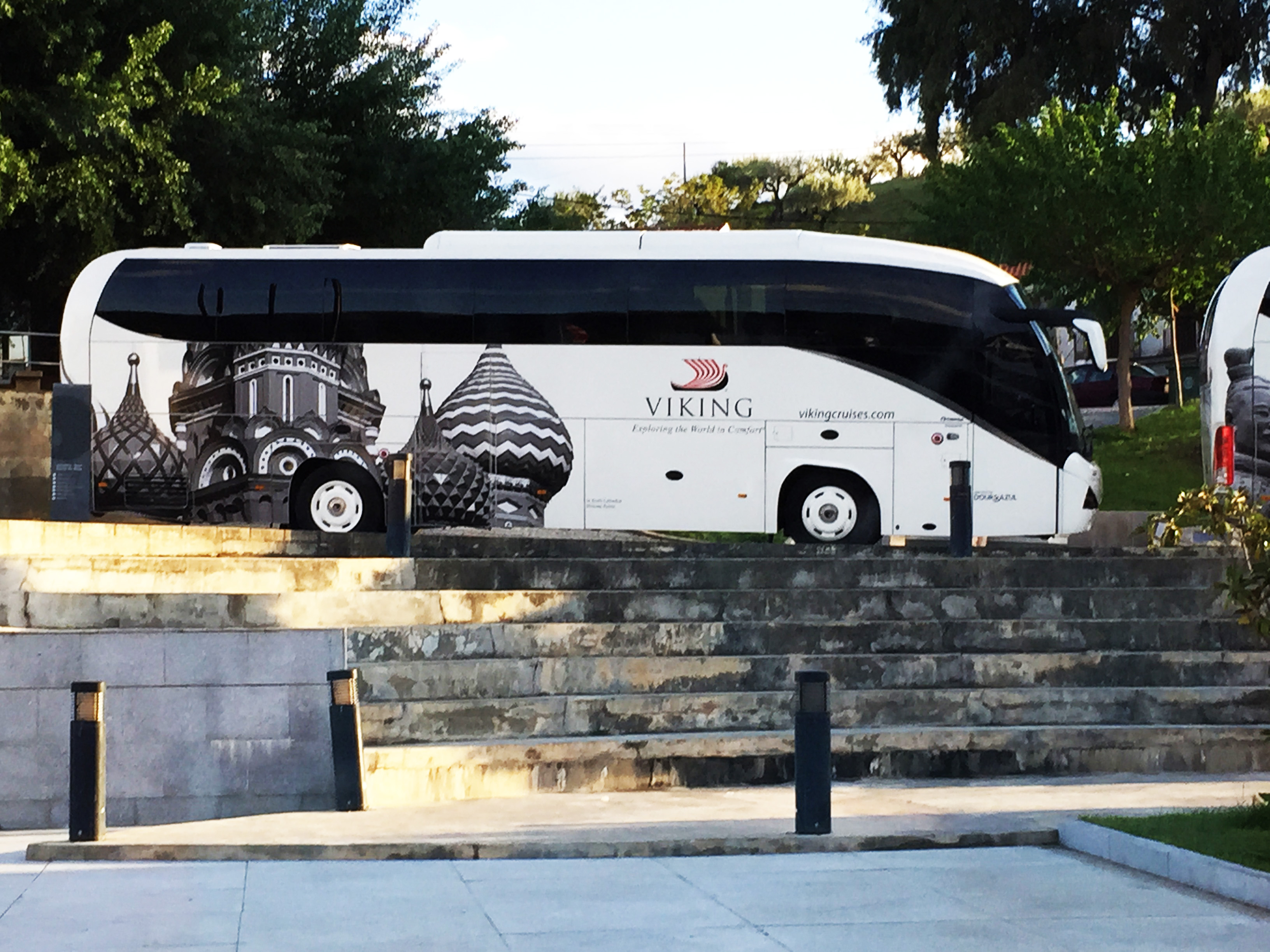 their own coaches which insures that ground transportation will always be the best available. Each day of the trip we will have the same bus and driver. We don’t have to search for placards in the front window to identify the coach to which our group is assigned. Ours has a picture of St. Basil’s Cathedral in Moscow on the side, making it easy to find.
A visit to the University of Coimbra and Fado concert at lunch will be our primary events today. The university is the oldest and 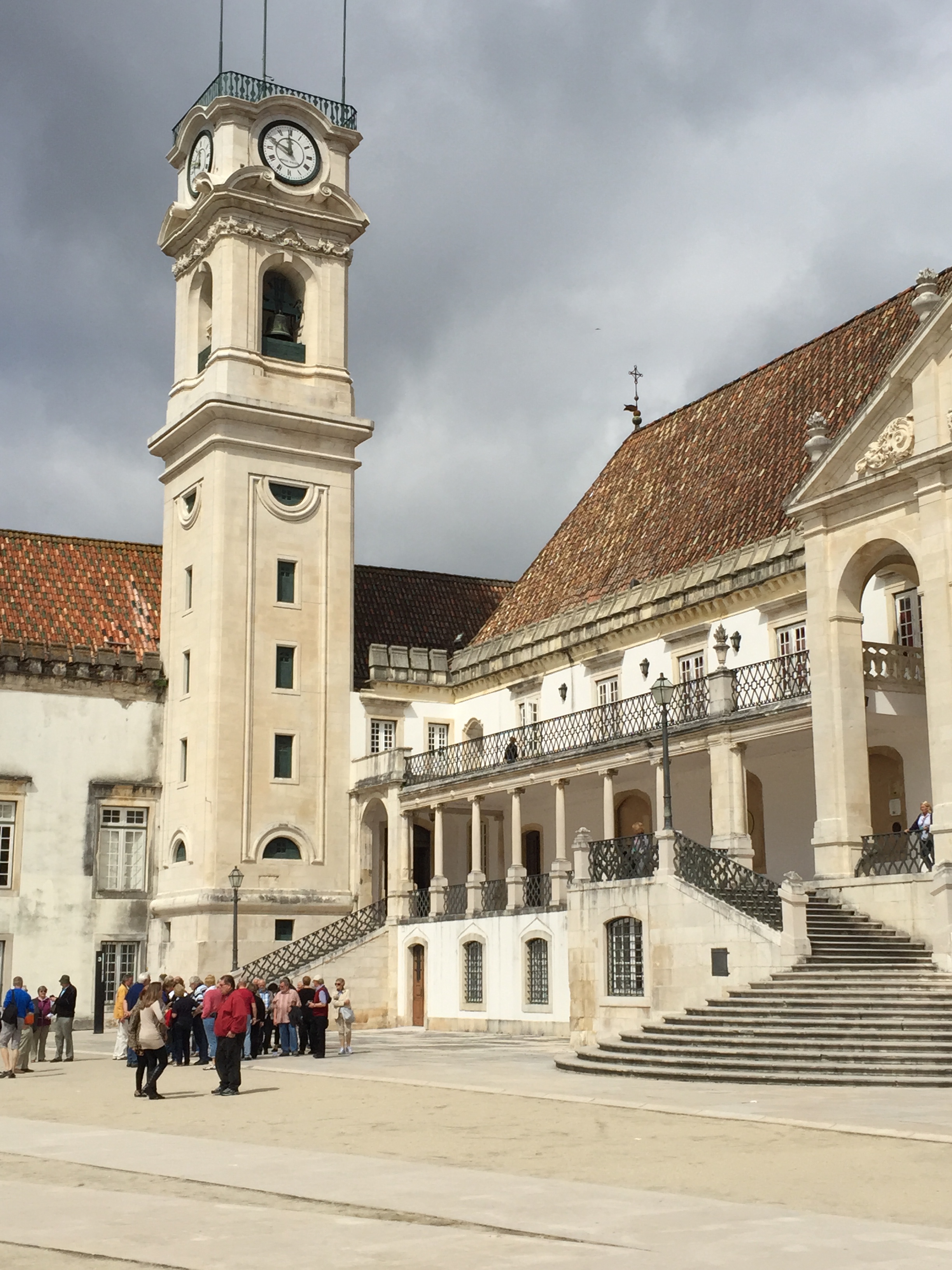 largest in the country. It has been located here since
 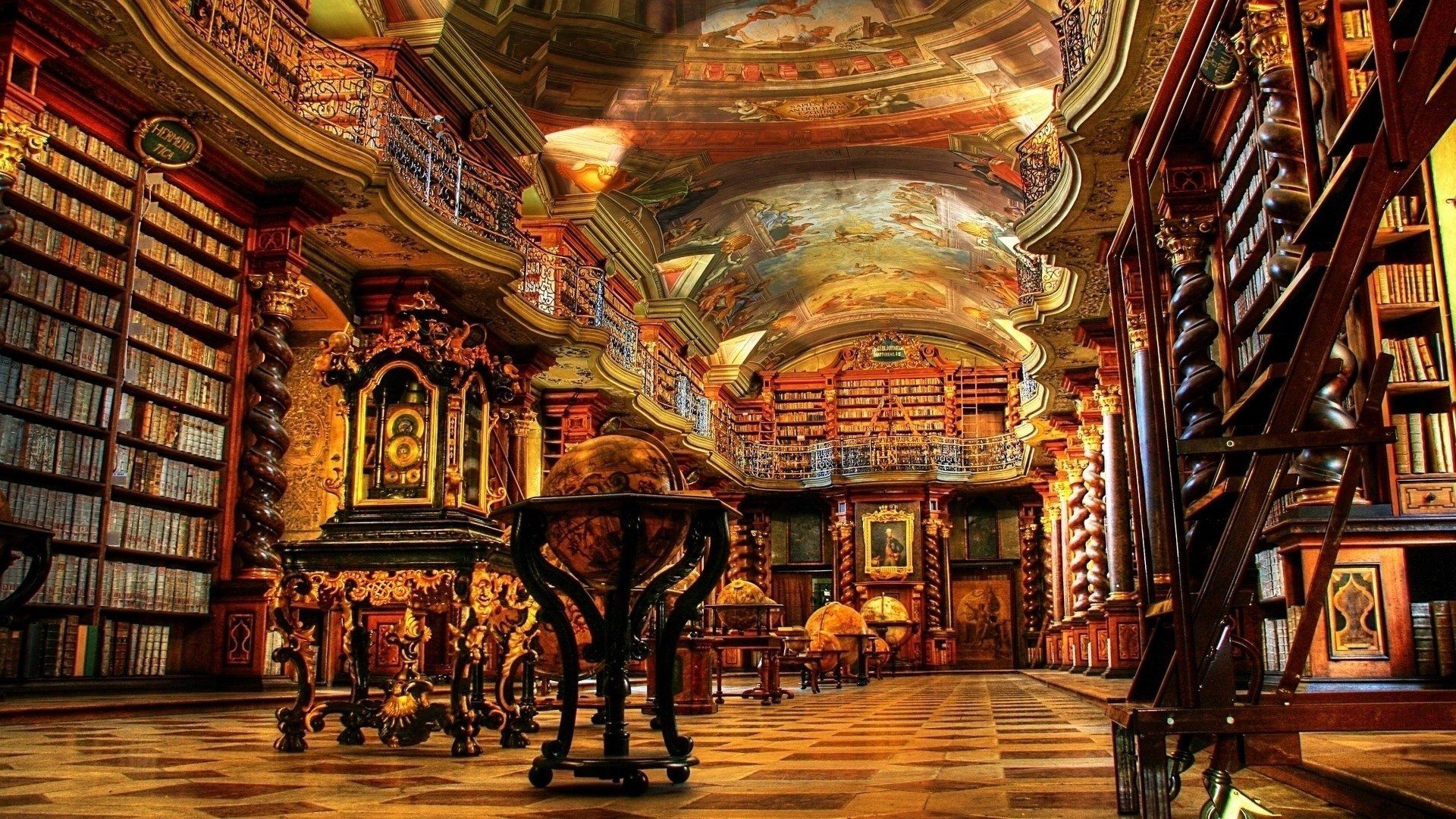 1537. The old library, built in 1717, is in a row of buildings surrounding the old heart of the university. It is spectacular. Pictures and description are in a link at the end of this section. It even houses bats that eat moths and insects that might harm the ancient books.
Over the centuries many student traditions have developed and are still practiced. The most important one is the Queima das Fitas, or burning of the ribbons. 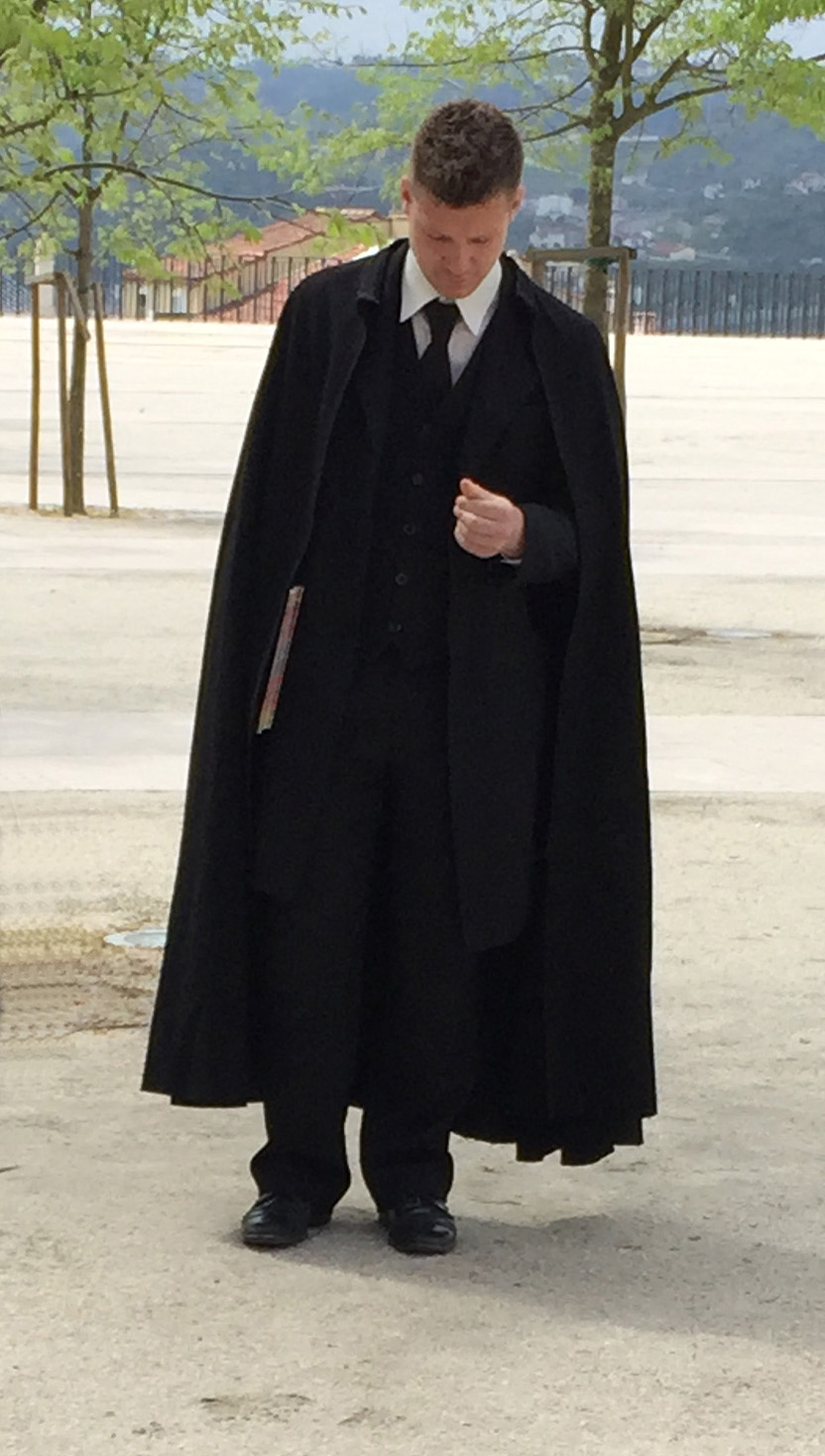 The festival lasts for eight days in May and is one of the biggest in Europe, incorporating parades, Fado concerts and parties. Each student has a capa, a long black cape and is given ribbons to represent the faculties (law, medicine, science) with which the student will study. These ribbons are attached to the robes and may also be represented by patches worn on the inside right side of the cape. These ribbons are burned during Queima das Fitas just before graduation to symbolize the end of one segment of life and the beginning of another. The robes are no longer worn to classes, only for ceremonies and special occasions. Some robes may appear to be shredded at the hem. Each tear represents a significant love relationships.
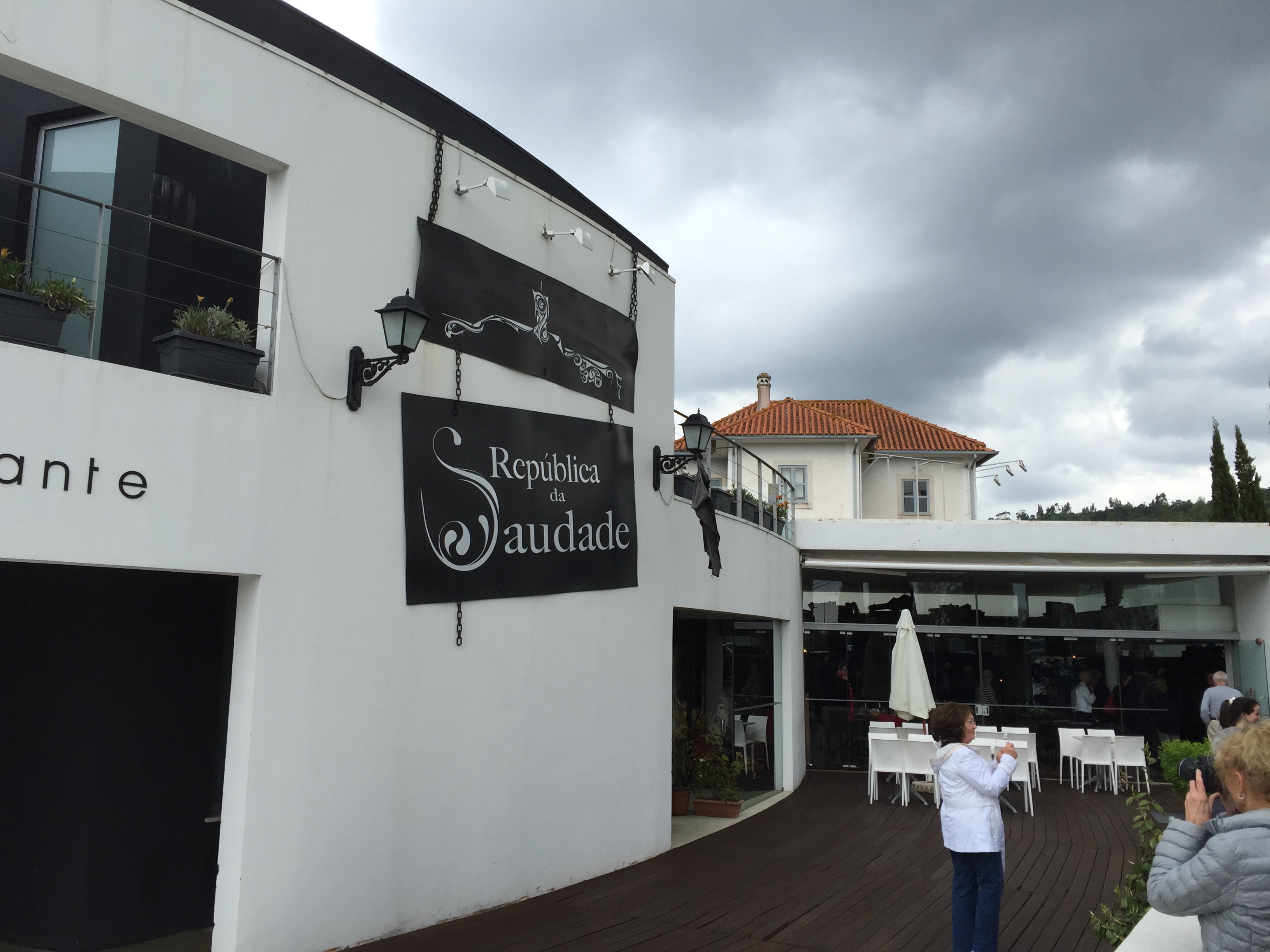 Lunch is at Republica Saudade restaurant. As we approached the door of the restaurant, two students stand on opposite sides of the walkway, their capes draped on the ground for us to walk over as we enter the building. This is a gesture of honor and welcome.
Fado is the distinctive music of Portugal. It probably originated with sailors singing 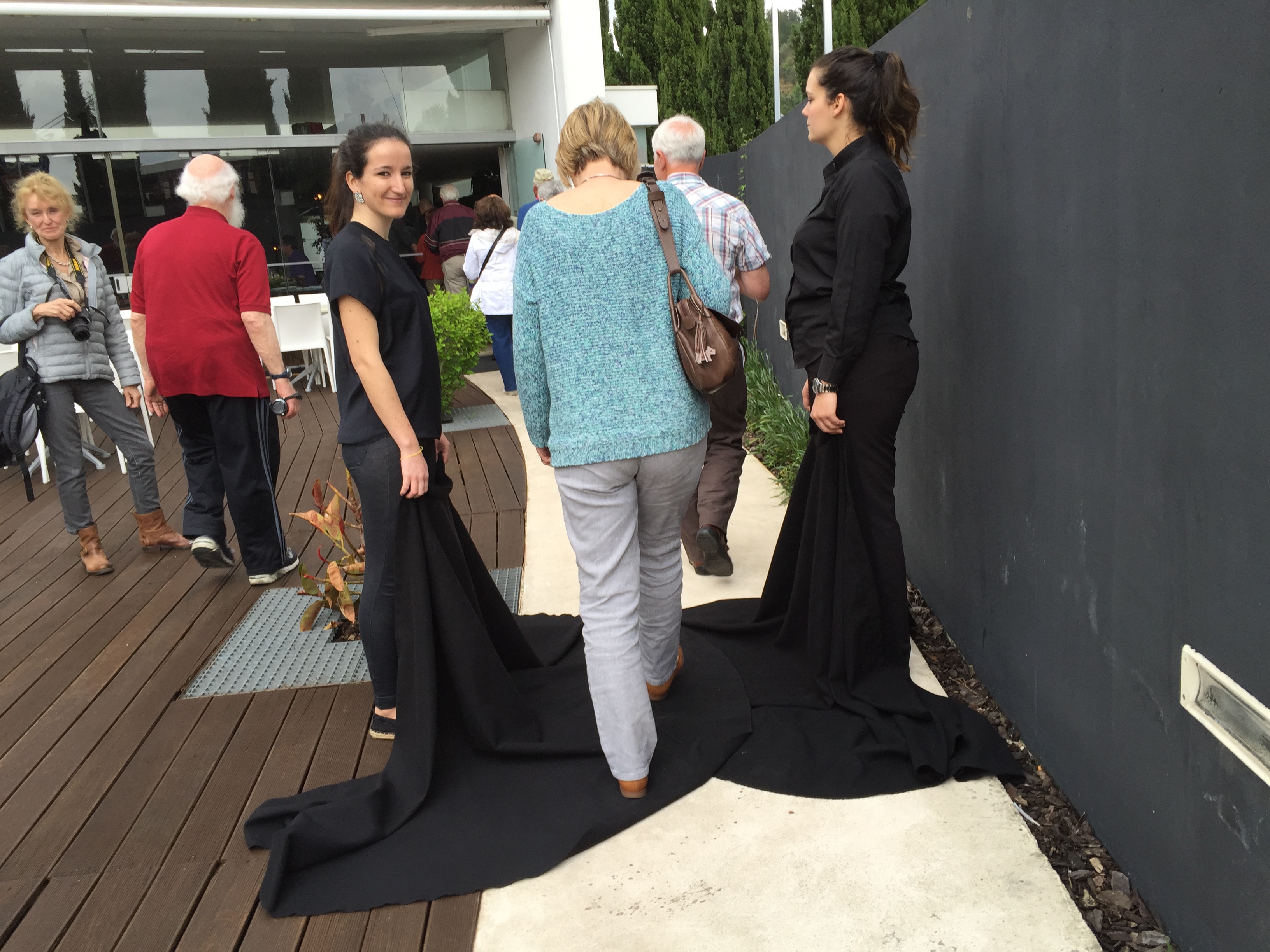 about their sadness from being away from loved ones and longing to return. Traditionally the instruments are a Portuguese guitar and an acoustic guitar. The Portuguese guitar is a twelve-stringed instrument and looks like a mandolin on steroids. The sound is beautiful. In many parts of Portugal, the solo vocalist is female, but in Coimbra it is normally a male. Also the Coimbra Fado is happier in content, even humorous. The musicians who
 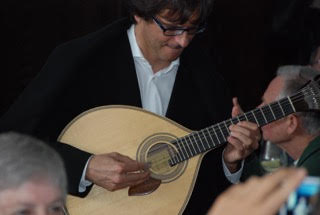 performed for us at lunch were extremely talented. This was one of the musical highlights of the trip. To hear what Fado music sounds like, listen:
https://www.youtube.com/watch?v=on9lKHZc5jA
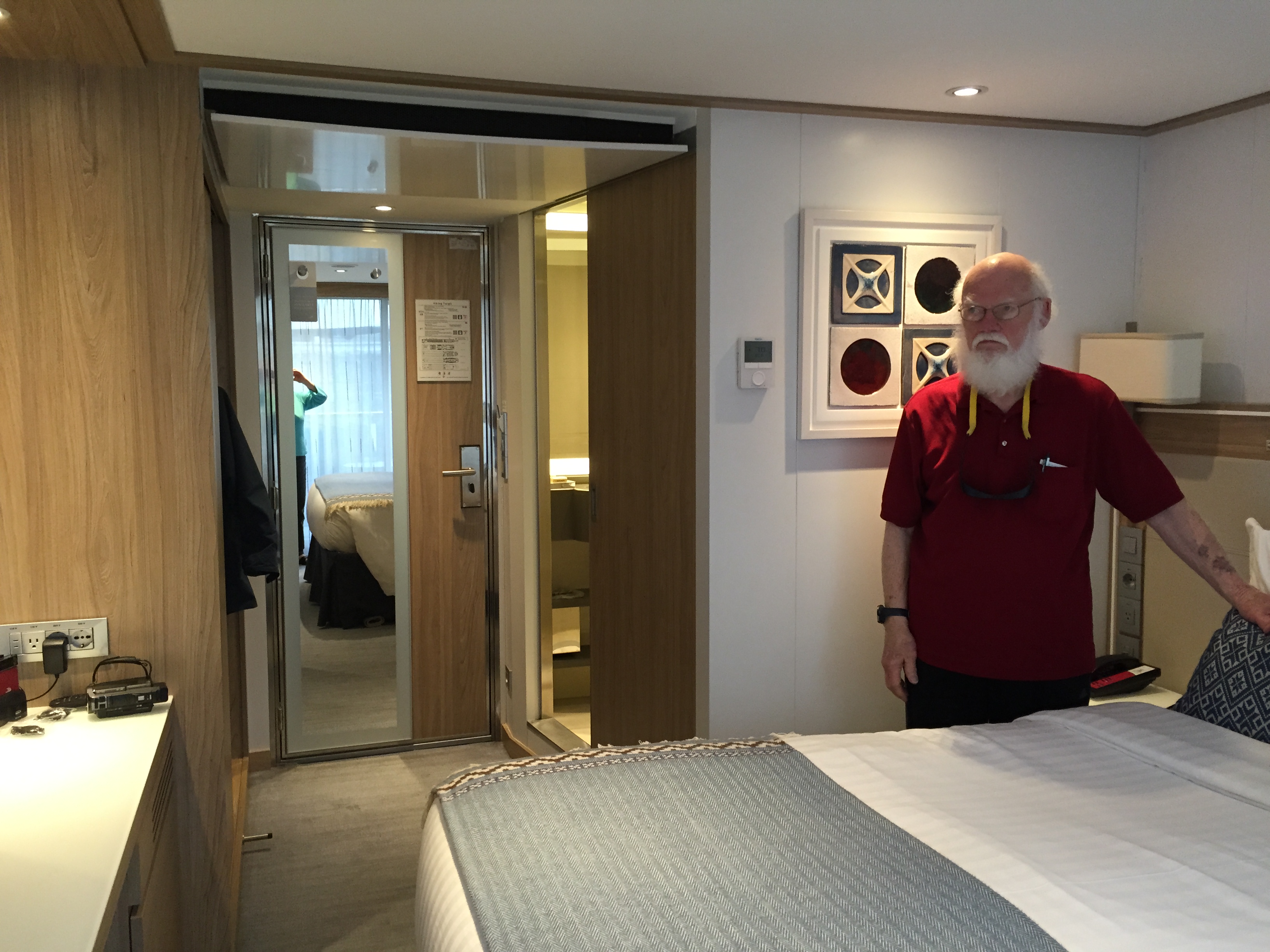
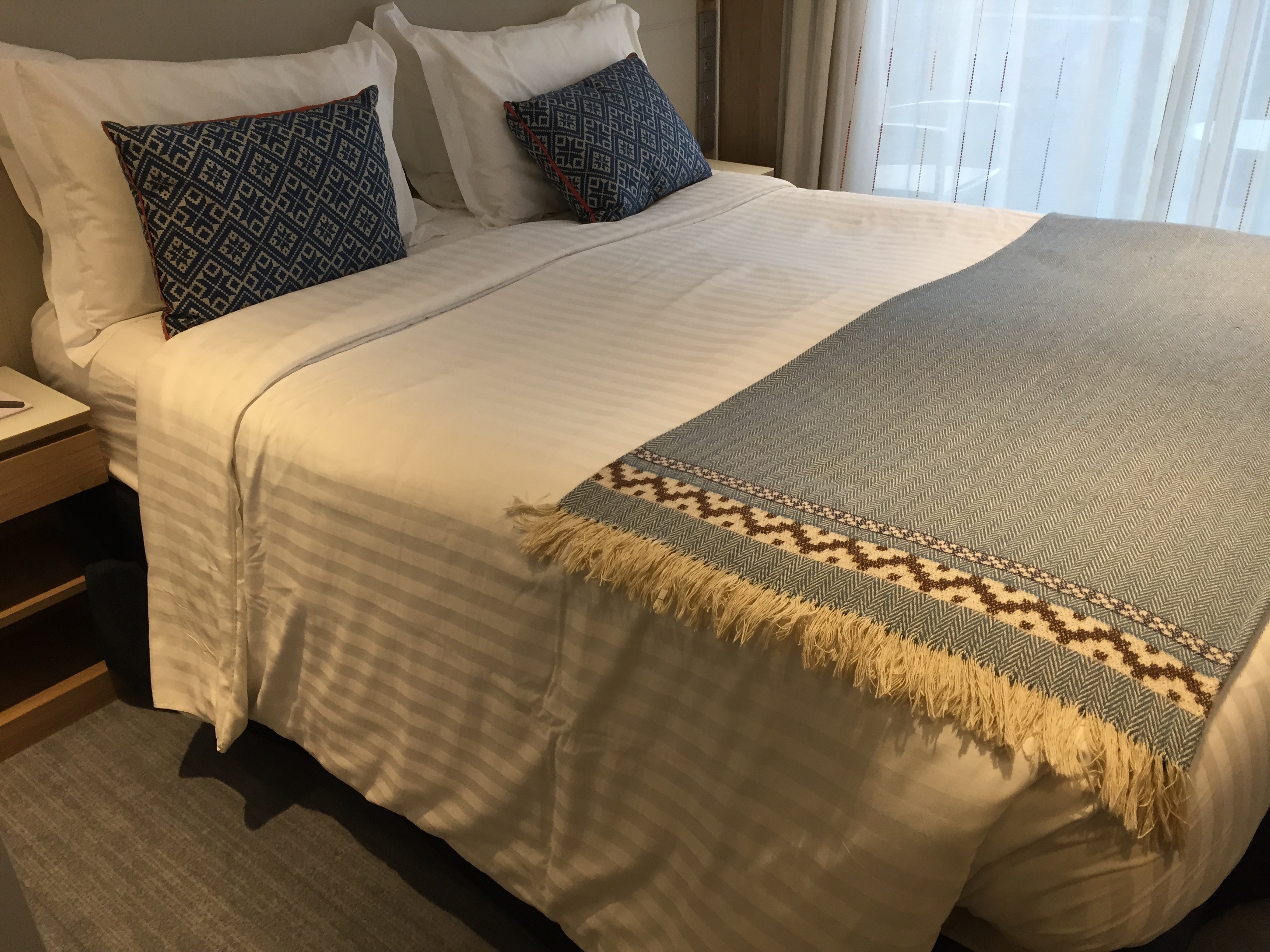
Viking Torgil cabin
We are excited to arrive in Porto and settle into our cabin on the impressive Viking Torgil. The cabin is extremely nice with French balcony and comfortable double bed. The restaurant and lounge are as inviting as we have experienced. We are going to love living here for the next few days.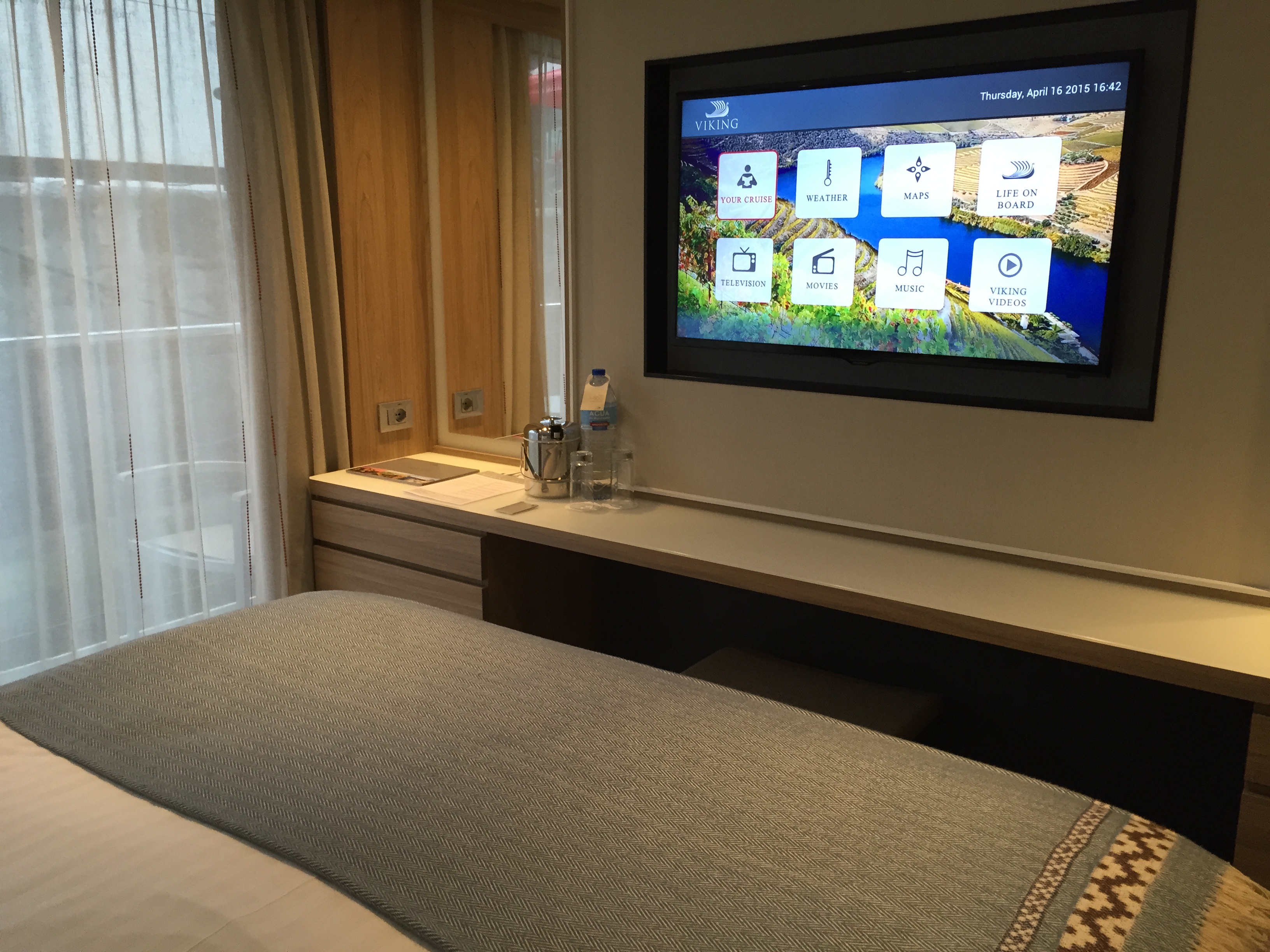
University and traditions
http://sivanaskayoblog.com/the-university-city-of-coimbra/
http://en.wikipedia.org/wiki/University_of_Coimbra
http://en.wikipedia.org/wiki/Queima_das_Fitas
http://en.wikipedia.org/wiki/Praxe
Porto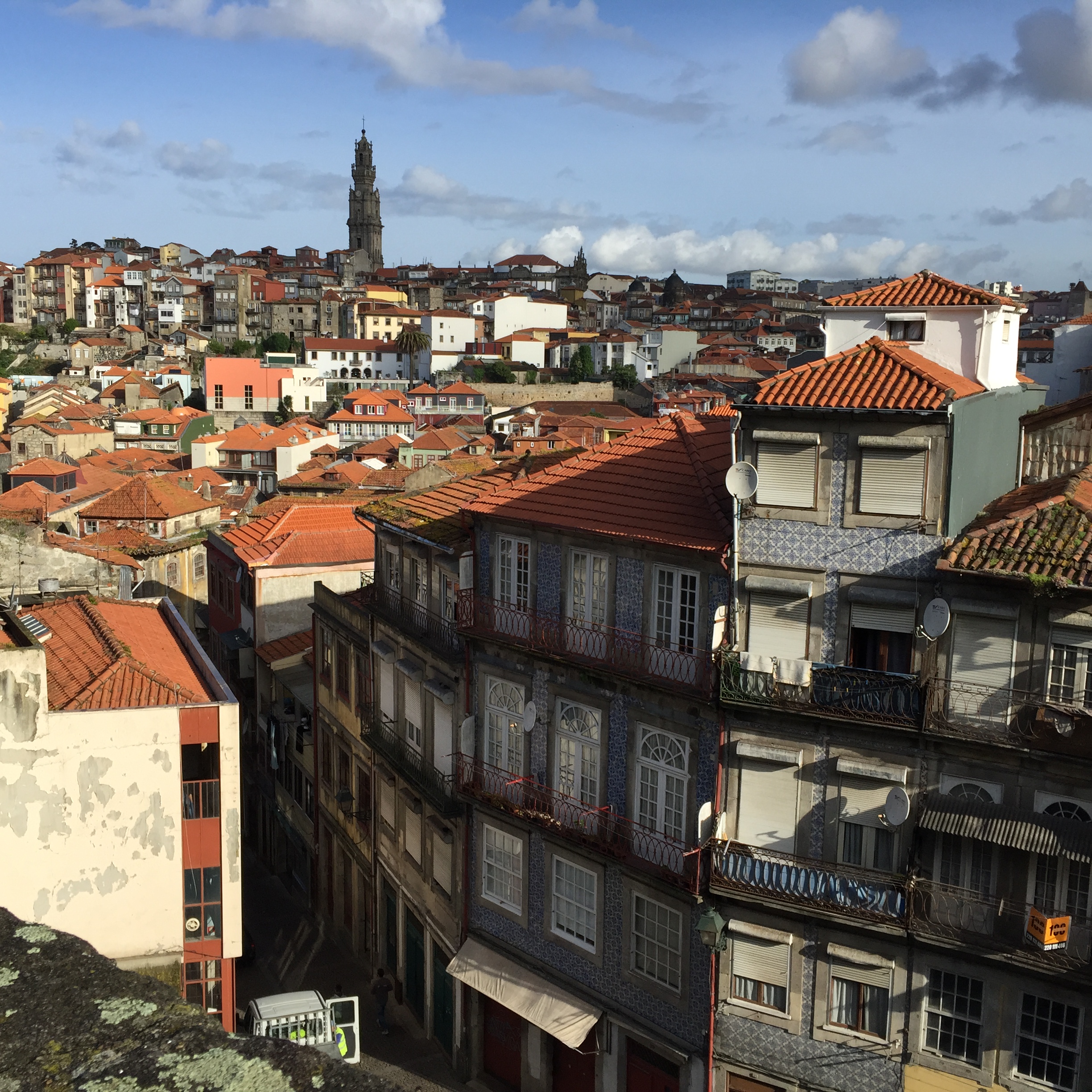
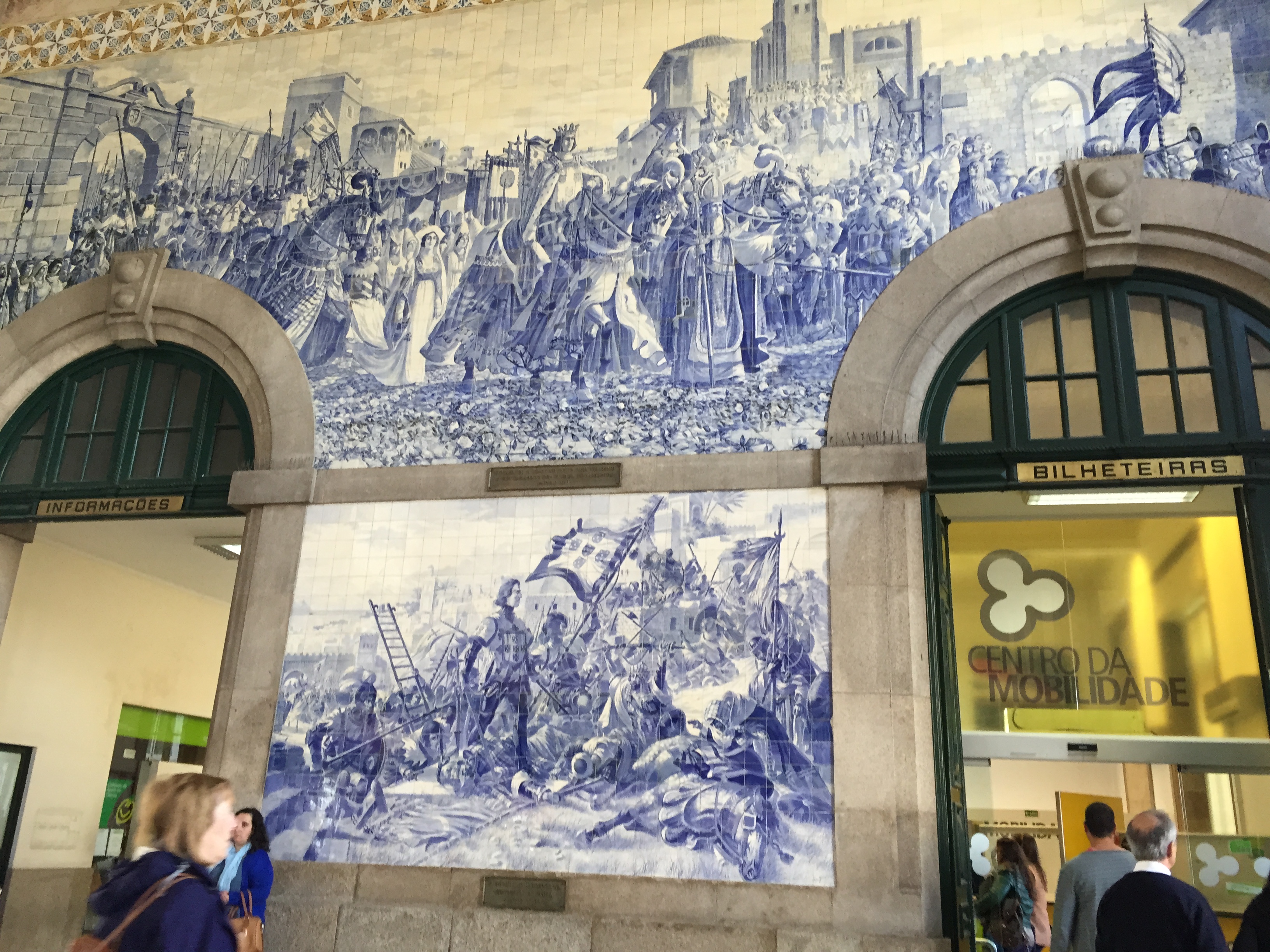
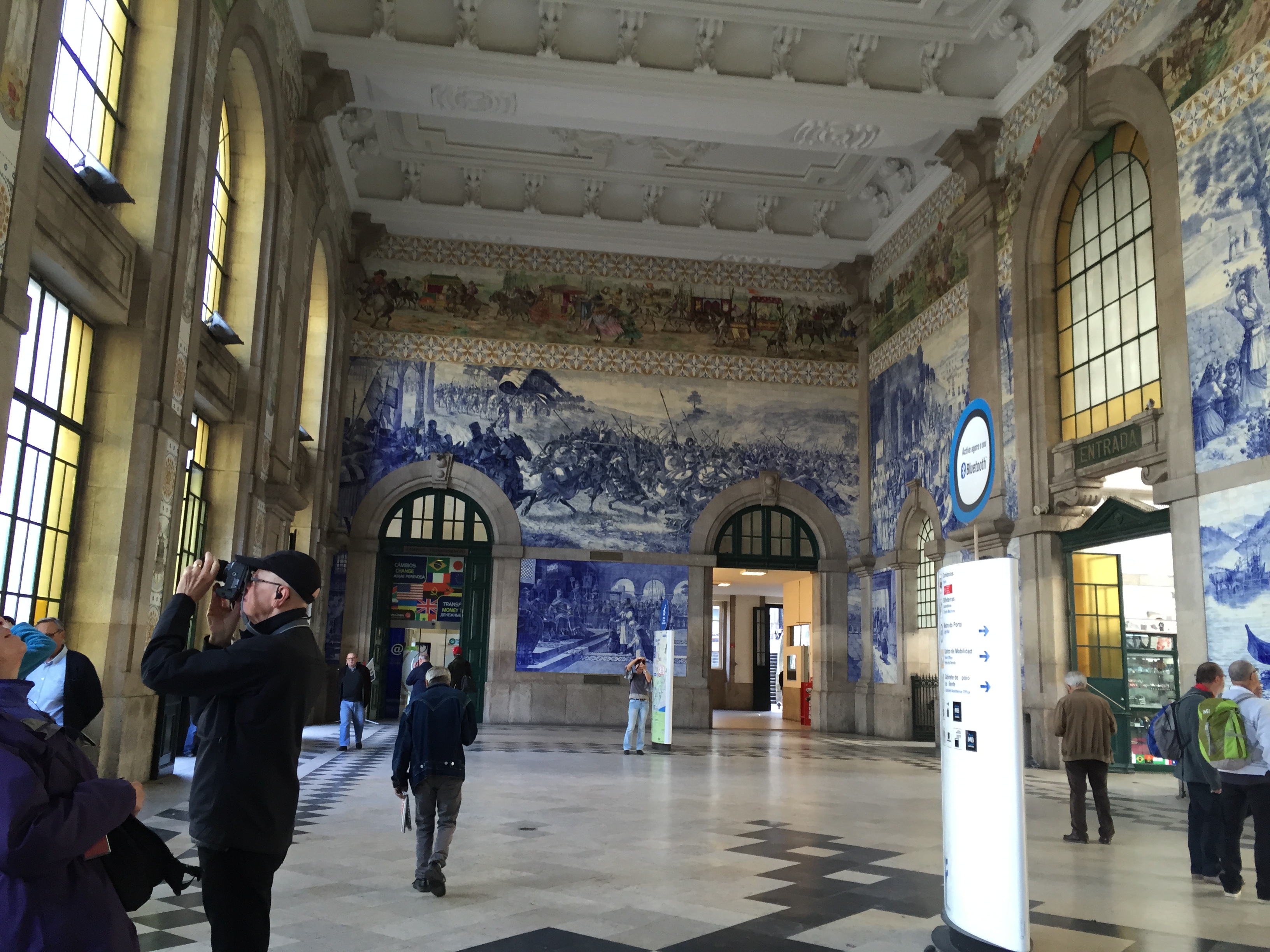
We begin the day with a guided tour of Porto, the second largest city in Portugal. It is located in the northwest of the country within sight of the Atlantic ocean. Starting at the Cathedral at the top of the hill, we walk down to the São Bento train station. This is no ordinary building. The tile-lined panels of the vestibule are magnificent. Twenty thousand individual tiles make up the murals on the walls.
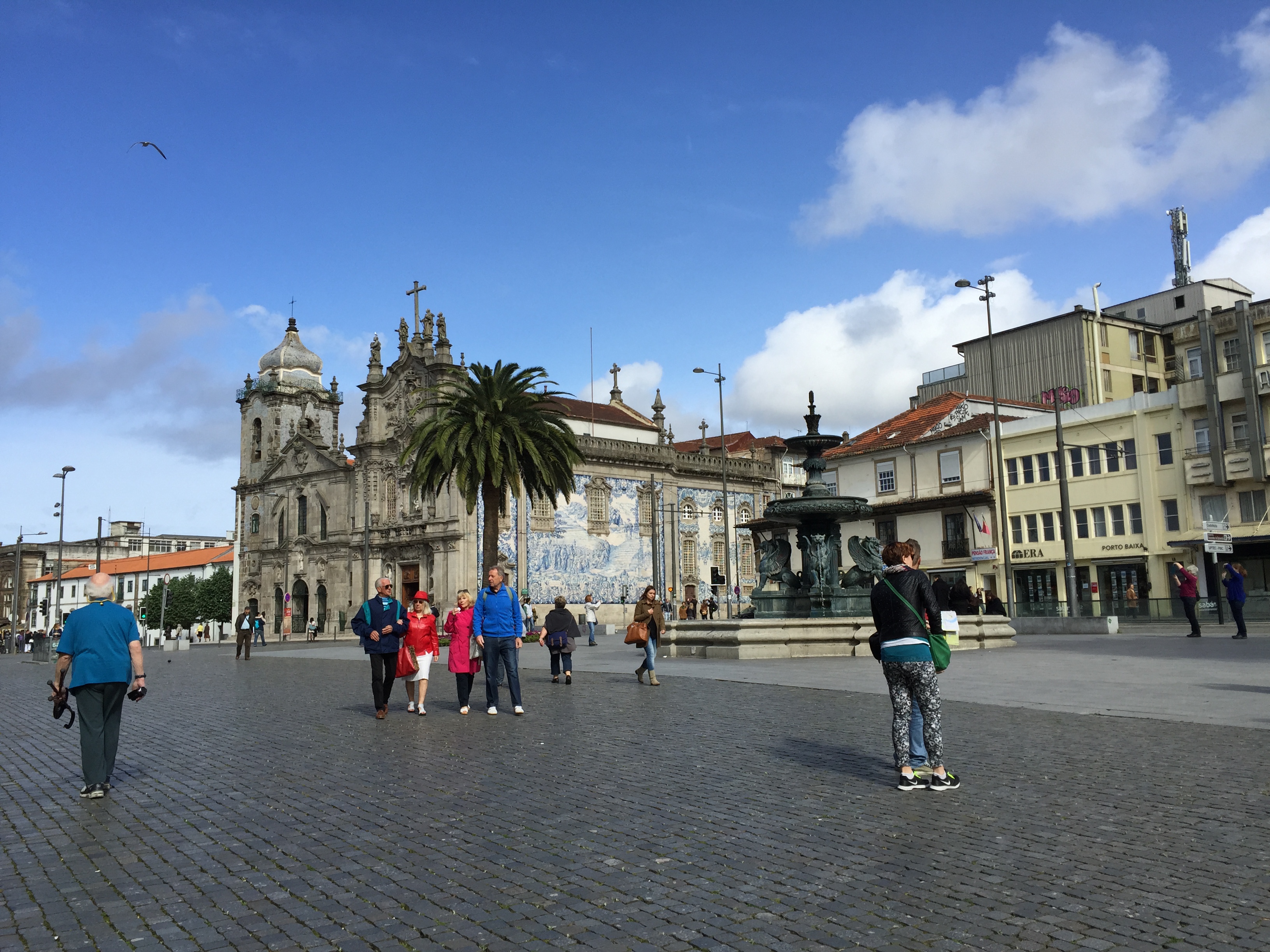
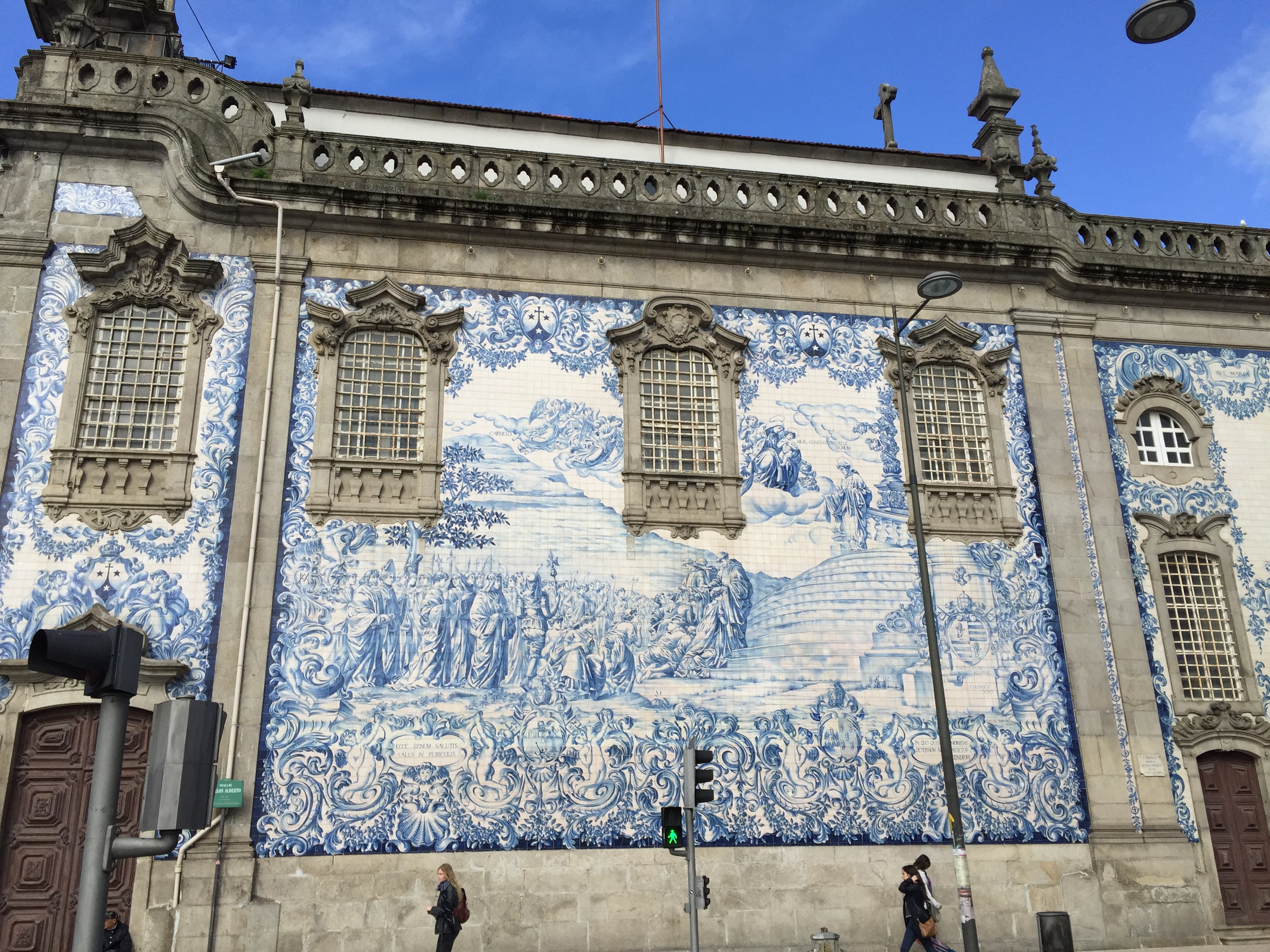 We conclude our short city tour with free time at the Lion’s Square. On one corner is a Baroque Carmelite church, which we chose to visit. Along our walk back to our pick up spot, we duck into the Lello Bookstore, for which claims are made that it is the 3rd best in the world. The beautiful art nouveau façade and spectacular interior are matched by the books themselves. There are 120,000 books in the collection, many rare and valuable ones are not for sale, but are on display.
JK Rowling lived in Porto for several years, teaching English. She lived near the bookstore and it was probably an inspiration that found its way into the Harry Potter series. When she left Porto for Edinburgh, she had finished three chapters of the first book.JK Rowling lived in Porto for several years, teaching English. She lived near the bookstore and it was probably an inspiration that found its way into the Harry Potter series. When she left Porto for Edinburgh, she had finished three chapters of the first book.
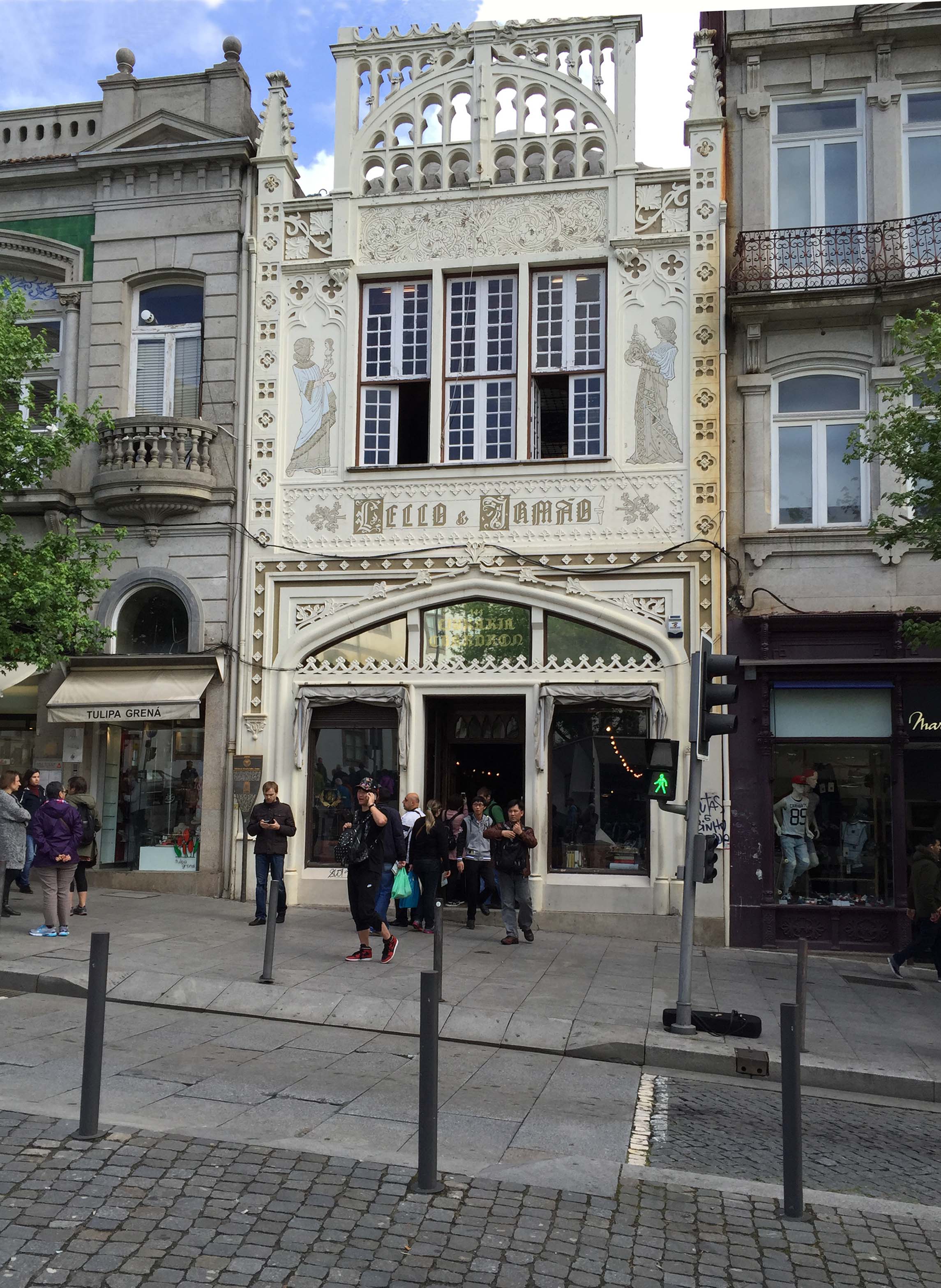
Lello Bookstore
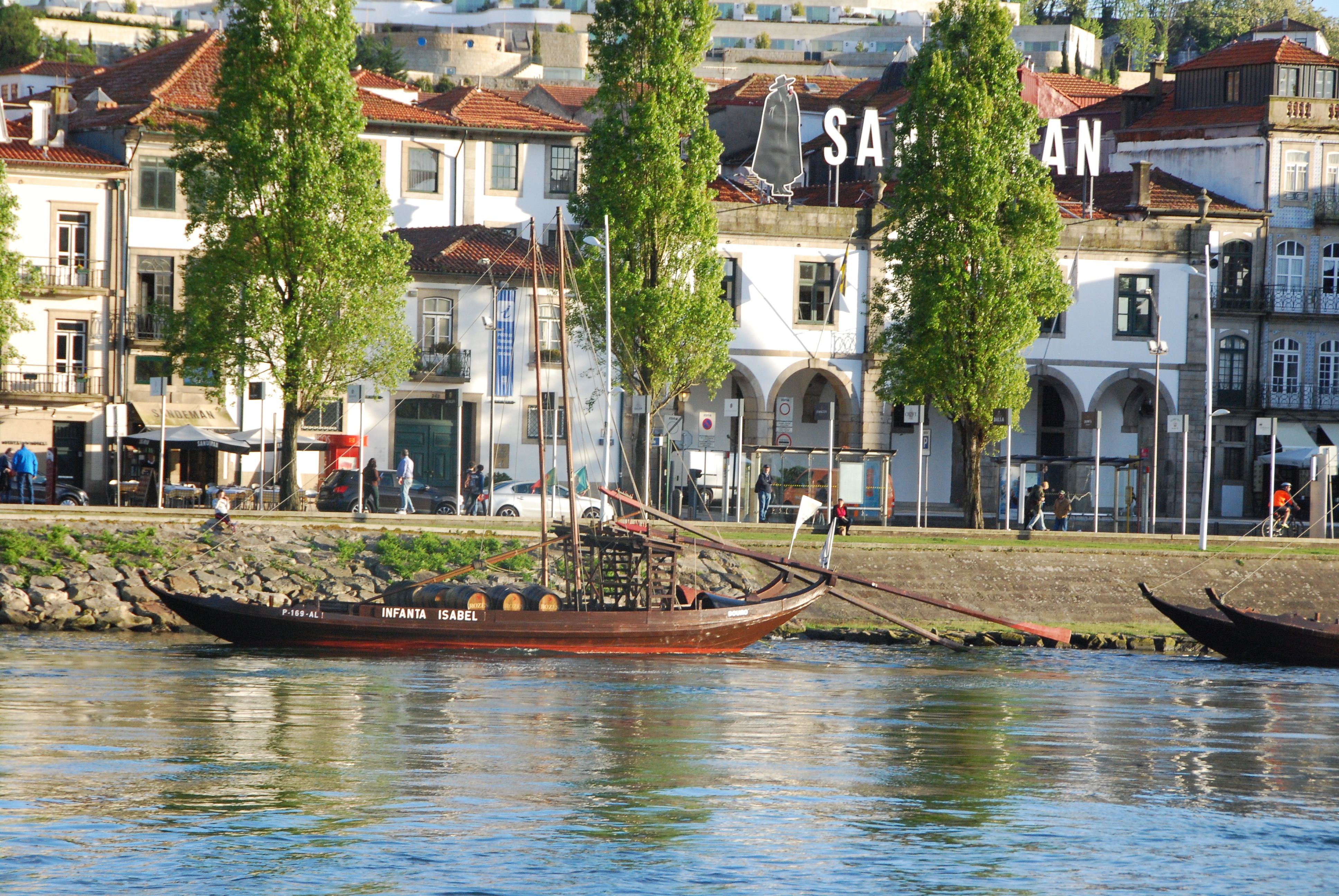
Portugal produces the world’s supply of Port wine. Warehouses line the Duoro near our ship’s mooring. Before lunch we visit a warehouse a short distance inland. Huge 81,000 liter oak barrels age the new wine for three years, then it is transferred to smaller barrels for further aging. We saw one barrel that contained wine that had been aging for 148 years.
This afternoon the Torgil sails to Bitetos. We will enjoy a few relaxing hours aboard ship. Many characteristics of river cruises appeal to us, and one of them is the balance between structured sightseeing and time to rest, relax and assimilate what we have already experienced.
Many characteristics of river cruises appeal to us, and one of them is the balance between structured sightseeing and time to rest, relax and assimilate River cruises are not about opulent, self-contained monster ships. They are about exploring the countries you visit and having a floating hotel transport you to the places of interest. There is no changing hotels every night or two, no searching for restaurants and usually no sitting on a motor coach for long hours. Our buses pick us up at dockside, drive no more than an hour or two to our destination and return us to our ship. Except for a few optional opportunities, daily excursions are included in the cost of the cruise. There are no overpriced land excursions that are obligatory on ocean cruises if you expect to see anything.
 Tonight dinner is at Alpendurodo Monastery. The centuries-old buildings have been refurbished beautifully with 17th and 18th century furnishings and converted into a hotel and restaurant. Period- costumed attendants greet us and escort us through some of the rooms before leading us to dinner in a medieval dining hall. The meal was excellent. The itinerary promised a Fado concert. What we got was good, but disappointingly brief. Nevertheless, this is a highlight experience.
Porto
http://wikitravel.org/en/Porto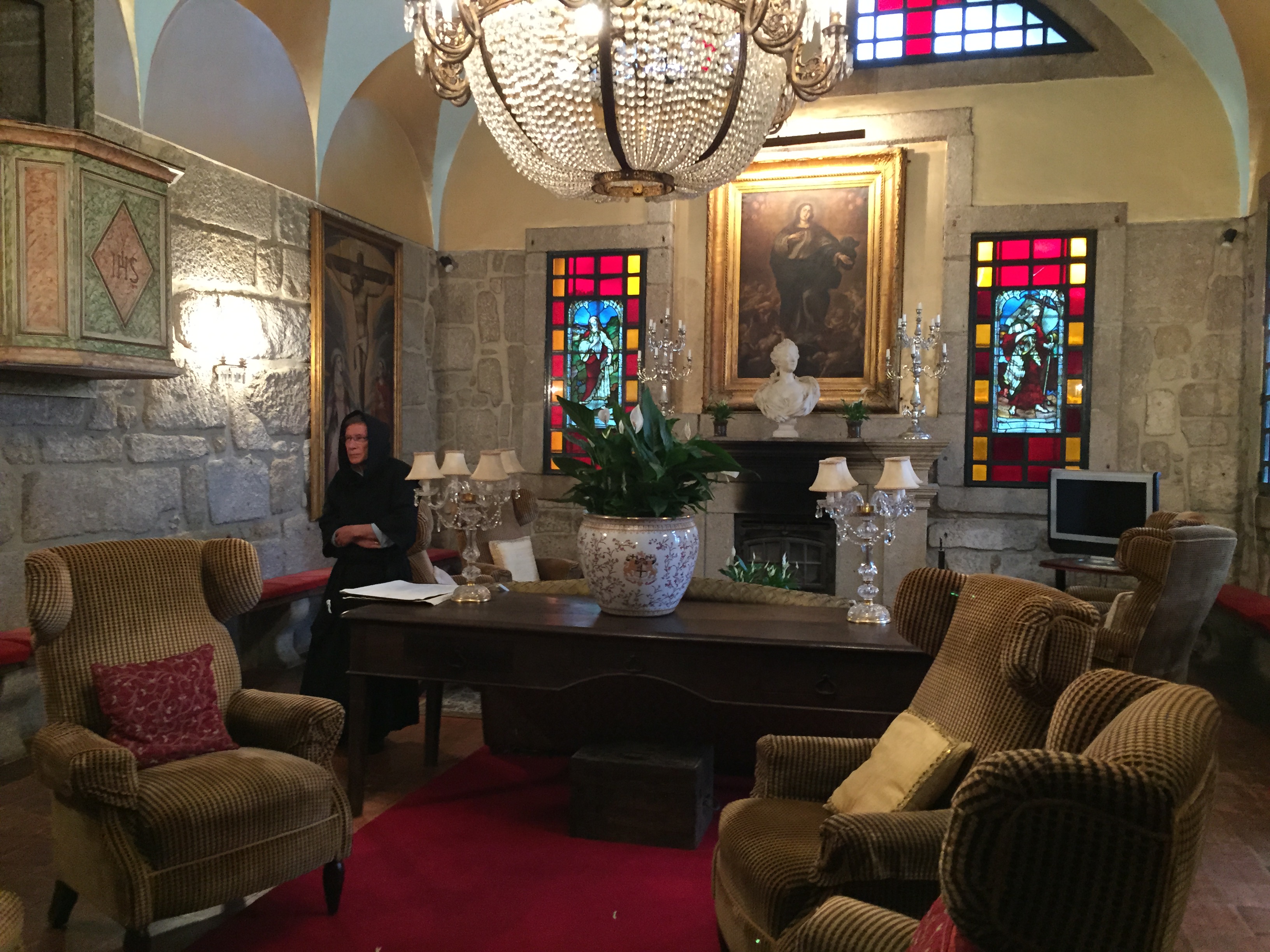
http://deweyinportugal.blogspot.com/2013/12/edited-ff-10-porto-walking-tour-monday.html
Train Station
http://www.ezportugal.com/porto-portugal/attractions-porto-portugal/sao-bento-train-station-porto
http://en.wikipedia.org/wiki/S%C3%A3o_Bento_railway_station
Lello Bookstore
http://www.ezportugal.com/porto-portugal/attractions-porto-portugal/lello-bookshop-porto
Alpendurodo Monastery
http://www.conventoalpendurada.com/sss/index_ing.htm
Régua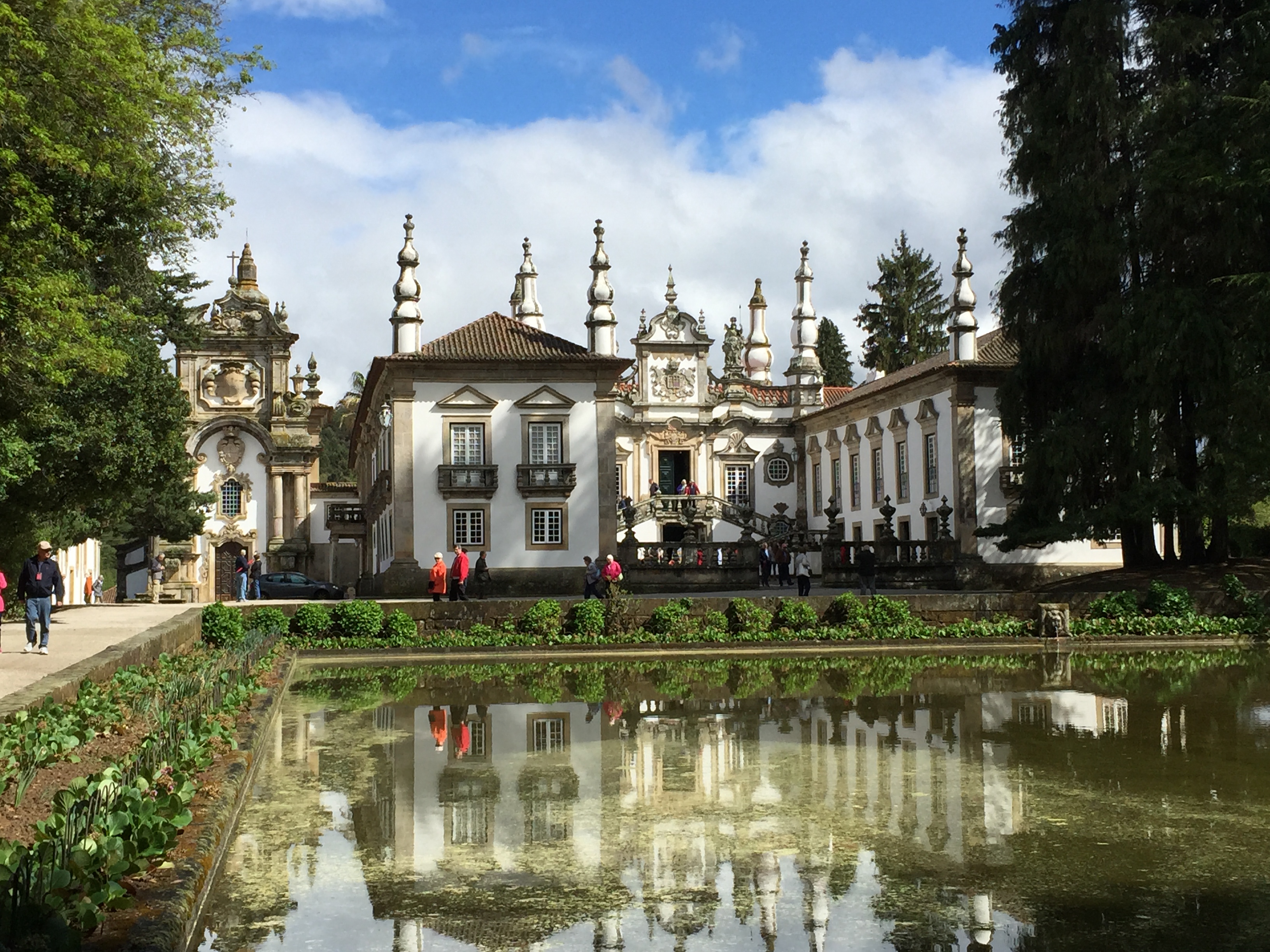
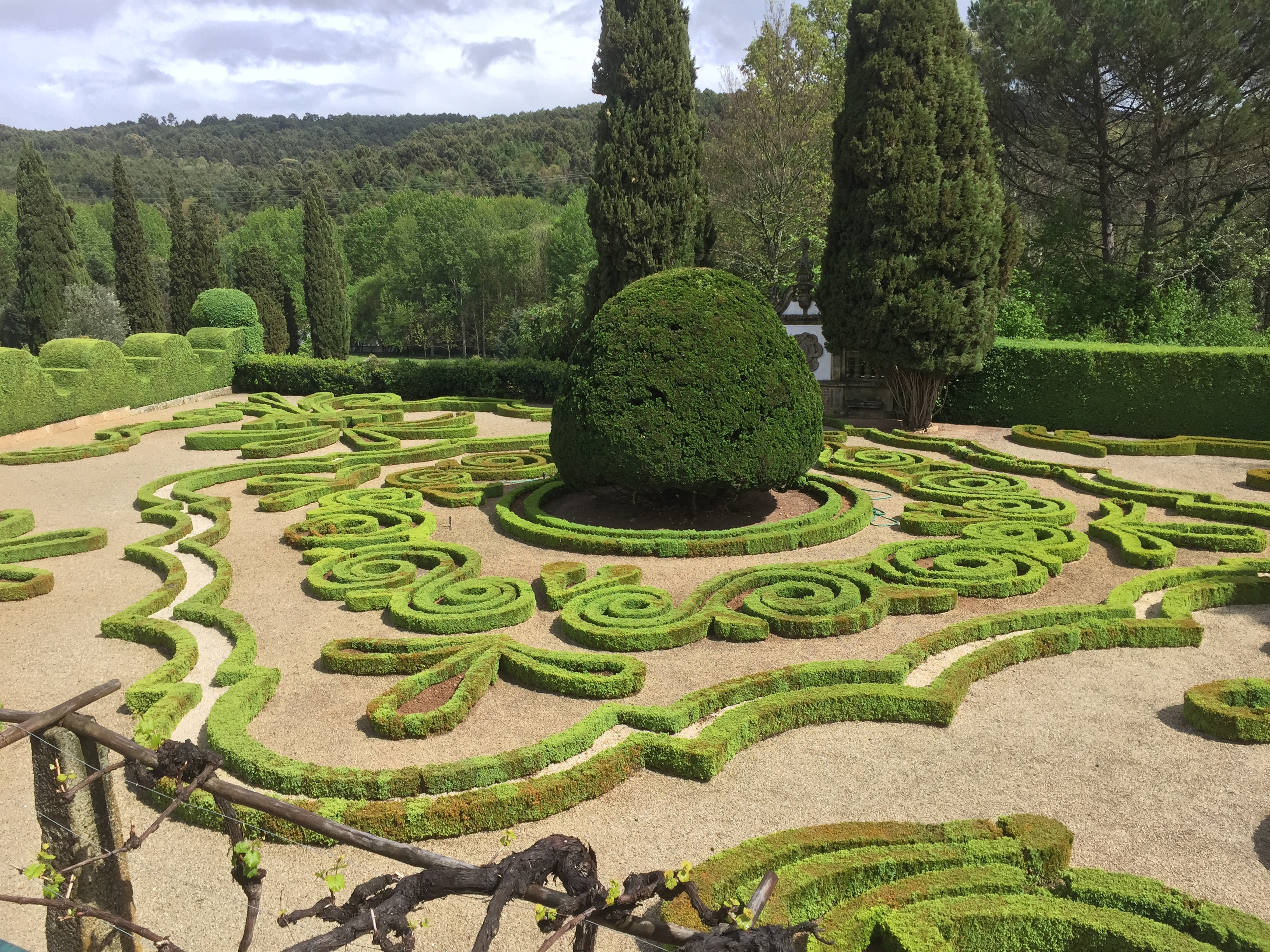
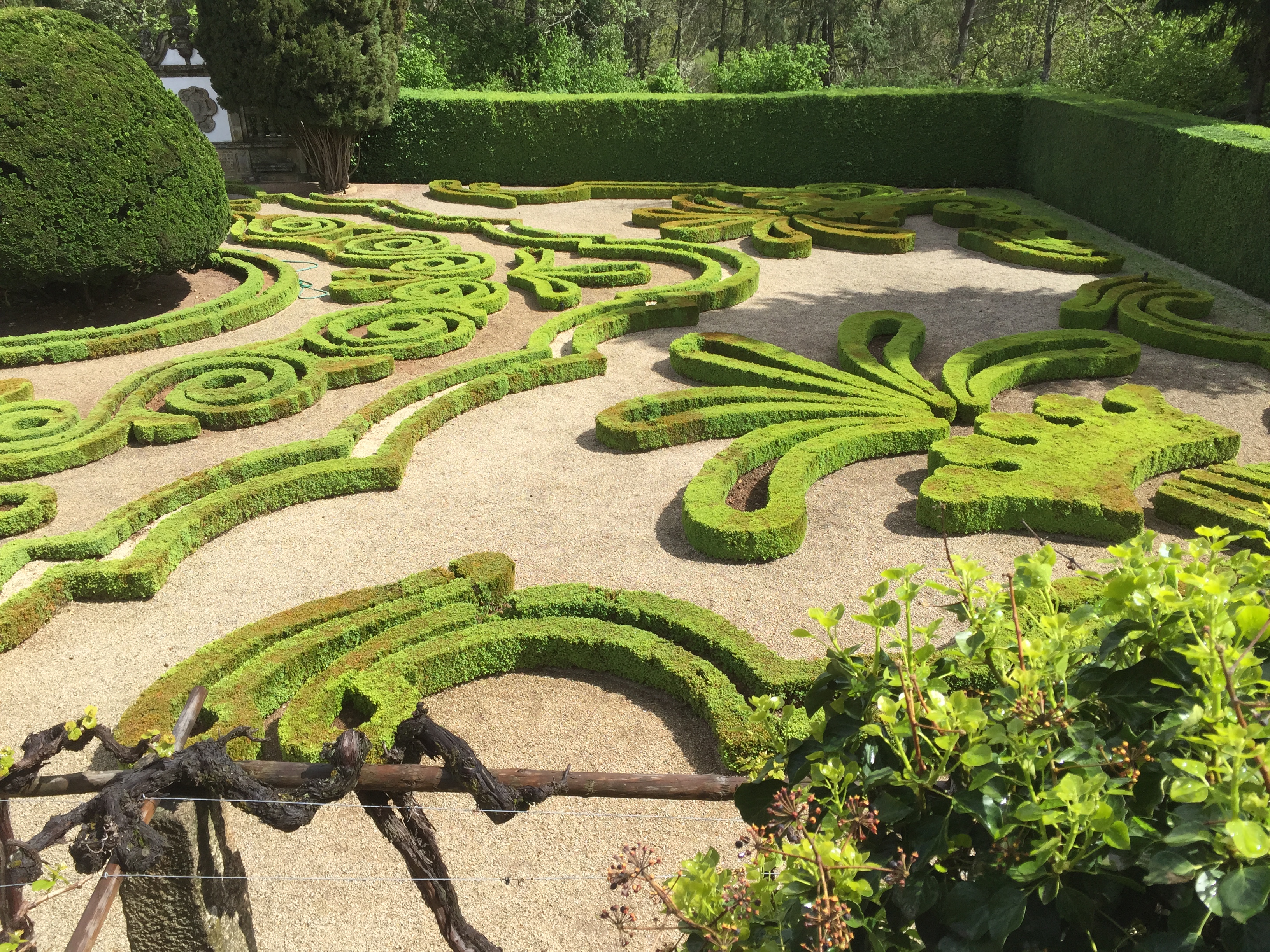
Since we were late getting back to the ship last night, we welcome a morning cruise that allows us to sleep in a bit. What luxury! This will be a comfortable leisurely day with two destinations. First we visit the Mateus palace. It is built in the baroque style of architecture. We have visited many baroque churches with elaborate and ornate decorations, but not a home. Surprisingly, 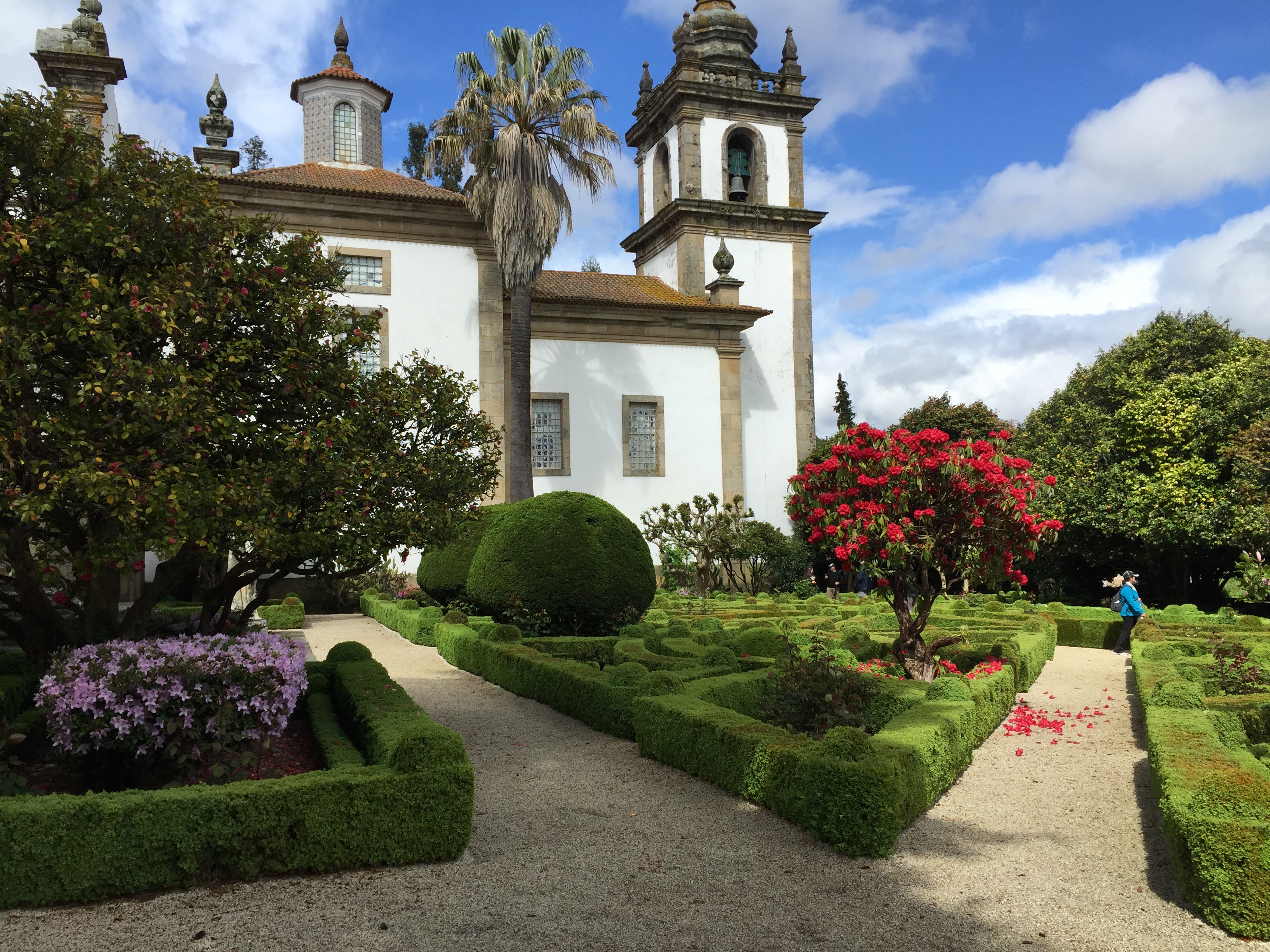 the interior is somewhat plain, but the characteristic symmetry is evident in every room. Opposite walls of each room are exactly alike. The formal gardens are the showcase of the estate. There are not many blooming flowers and shrubs, but the elaborate patterns of the sculpted hedges are masterpieces.
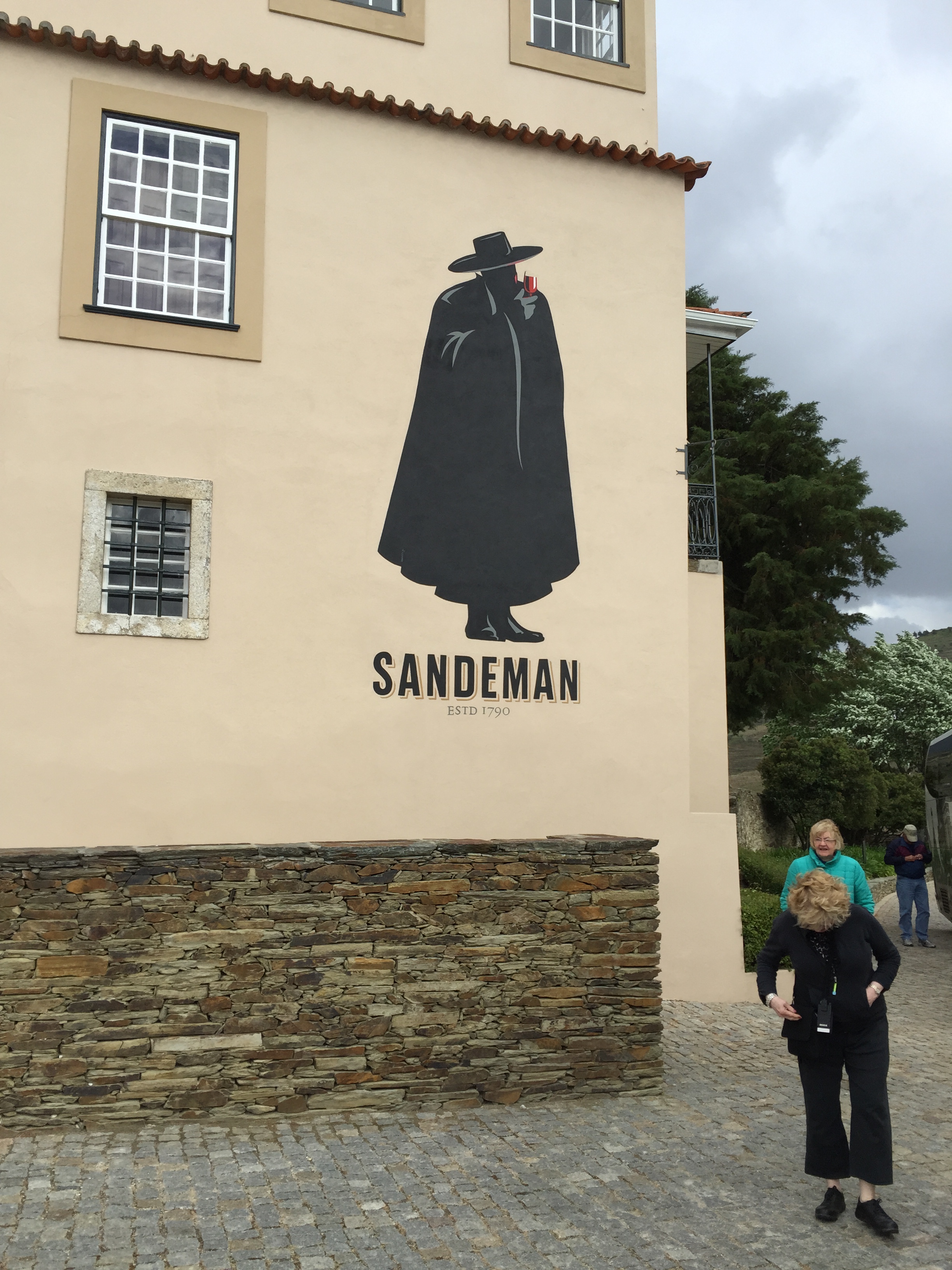
We drive to the Quinta de Seixo winery through dramatic scenery surrounded on every side by hillside vineyards. This is one of the locations of the company that produces the Sandeman label. The views from the hilltop are spectacular, but the tour of the facility is not a pleasant experience. They have chosen to leave the corridors in almost complete darkness, perhaps to simulate wine cellars. Phone flashlights make it a little easier find our way. We cannot hear or understand our winery guide. Other than the incredible drive, this wasn’t a good expedience.
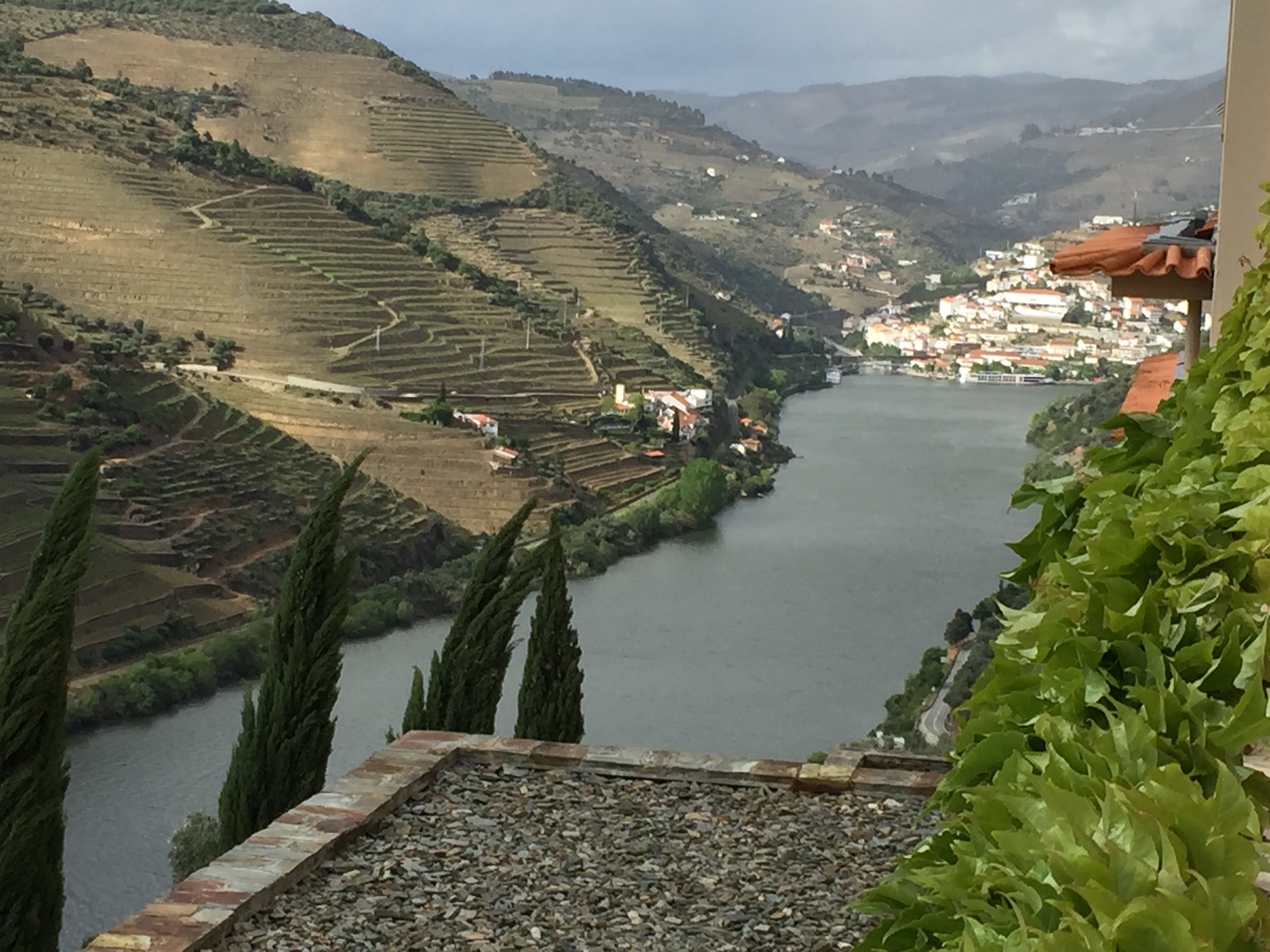
Near Quinta de Seixo winery
Mateus Palace
http://www.casademateus.com/fund_ing.htm
http://www.golisbon.com/portugal/cities/vilareal.html
Castelo Rodrigo
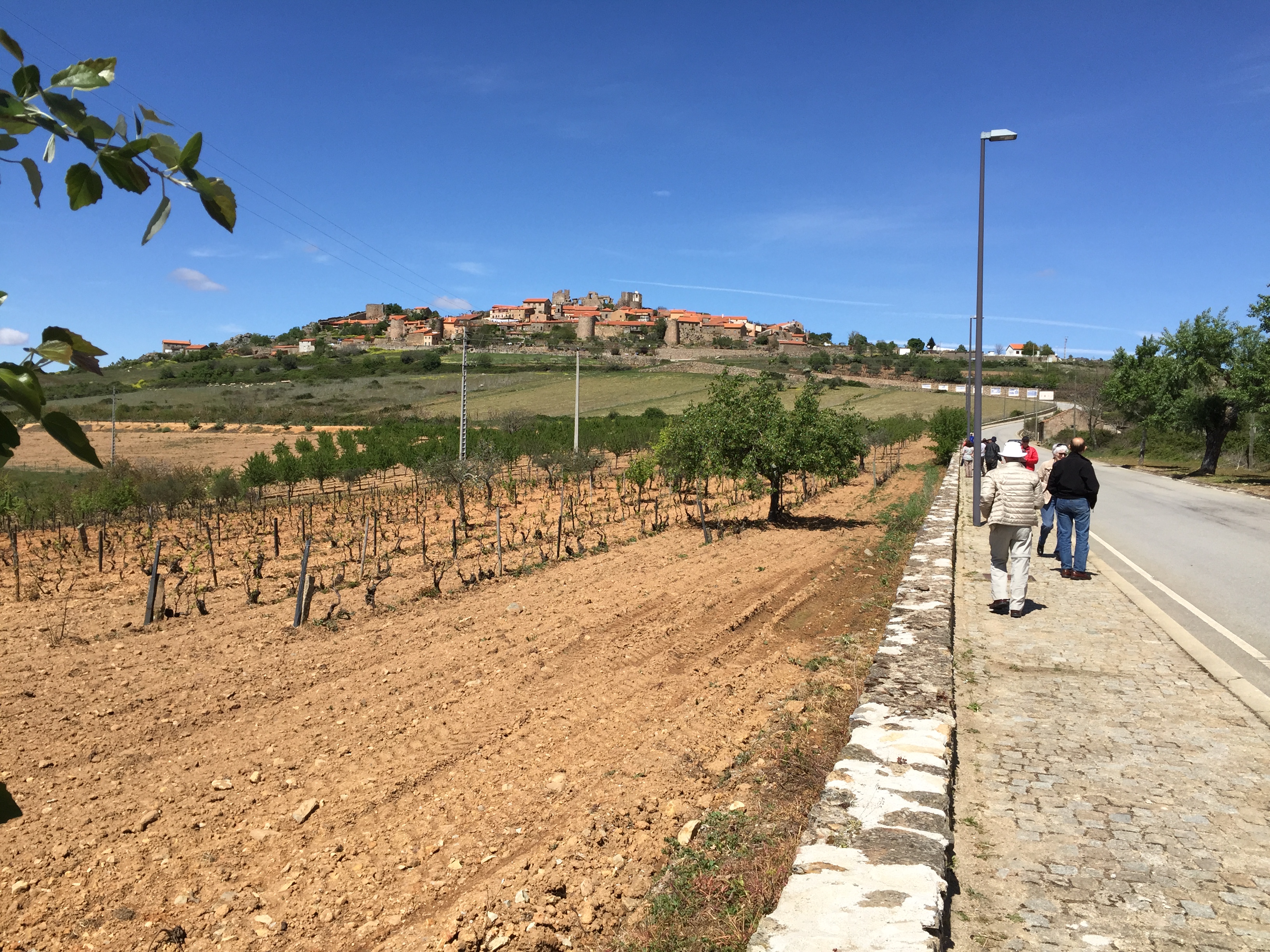
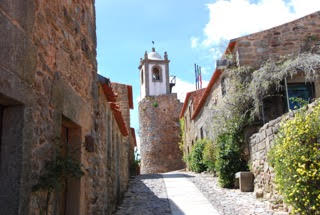
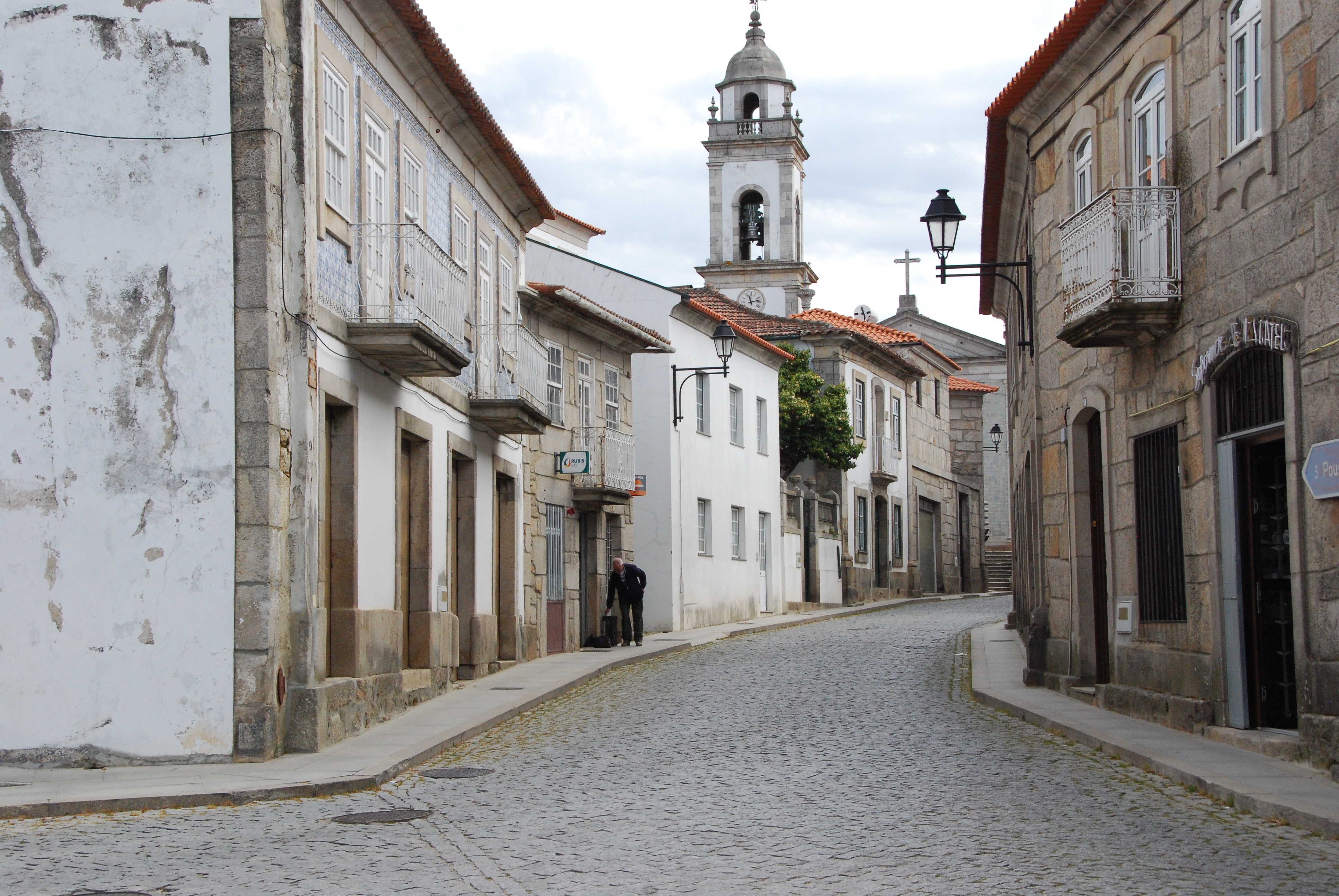
Castelo Rodrigo is a 45 minute drive from the ship. It is a village of 66 inhabitants and two tourist stores. Our material from Viking indicated that the walk through the village is difficult. Although the cobble stone streets are almost impossibly rough, there is a smooth center sidewalk along most of them. If you choose not to walk downhill to the Jewish Quarter, it will not subtract much from the visit. The village sits on top of a hill with lovely vistas all around. The buildings are hundreds of years old. We walk along the main street to the church and from there downhill to the old Jewish Quarter. During the Spanish Inquisition and perhaps later, Jews were either expelled, executed or converted. This village was a refuge for some of them. Although they publicly converted to Catholicism, town officials tolerated Jewish worship inside homes. The terrain is arid, but olive and almond trees thrive.
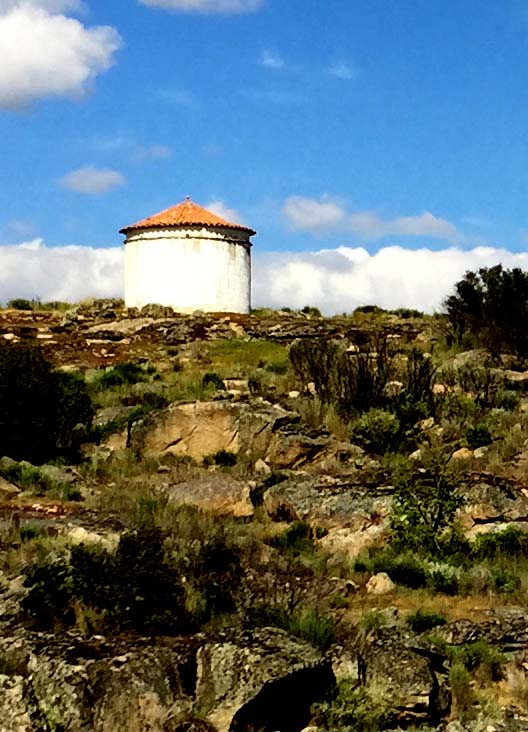 On the hillsides along the drive to Castelo Rodrigo are strange round buildings that look like a very short silo. These are pigeon houses. Farmers raise the pigeons for the guano used to fertilize the trees. The soil looks like it is so poor that not a whole lot could grow except the olive and almond trees.
Tonight a local family musical group performed for us. It is hard to describe the folk music sound. We had fun listening and ended the night with a conga line snaking around the lounge.
Salamanca
Today we go to Spain. We have reached the end of the navigable part of the Duoro, so we will travel two hours by motor coach to reach Salamanca. This will be the longest and hardest day of the trip. Salamanca is a city of about a quarter million and the economy is driven by the university and tourism.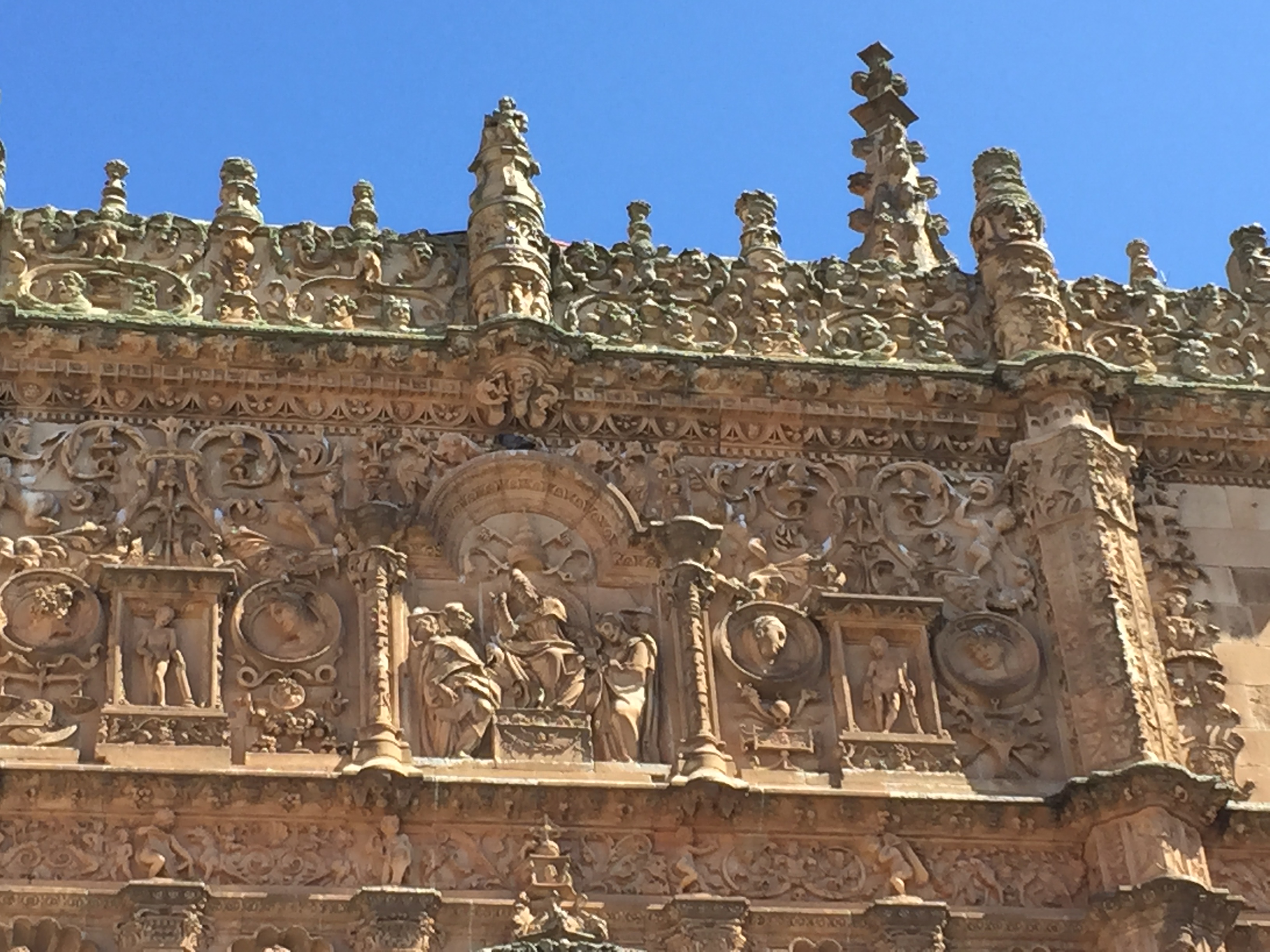 The University of Salamanca, founded in 1134, is the oldest in Spain. The enrollment of 32.000 includes 4,000 international students and teachers who come here to study Spanish.
Viking has set up headquarters for the day in the hotel where we will have lunch. We start with some free time for shopping this morning rather than a guided tour, because some shops will be closed later for siesta.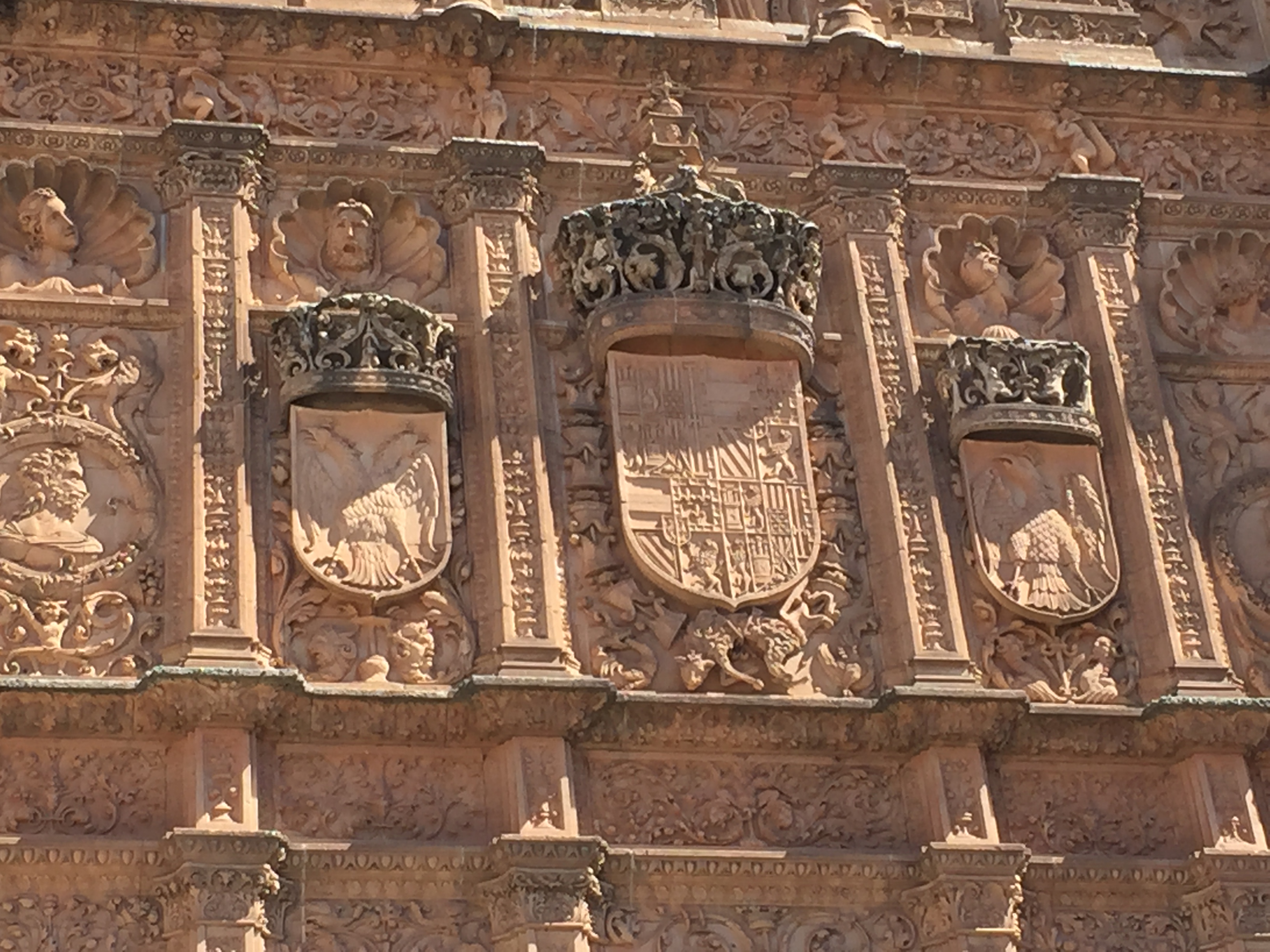 We have a city map with the walking tour highlighted in one color and shopping streets highlighted in another color. We want to find a specific little store that features reasonably priced silver jewelry. It is just beyond the Plaza Major and across from San Martin church. It is more of a booth than a store, being only as wide as a doorway and about six feet to the back wall. It is worth the searching.
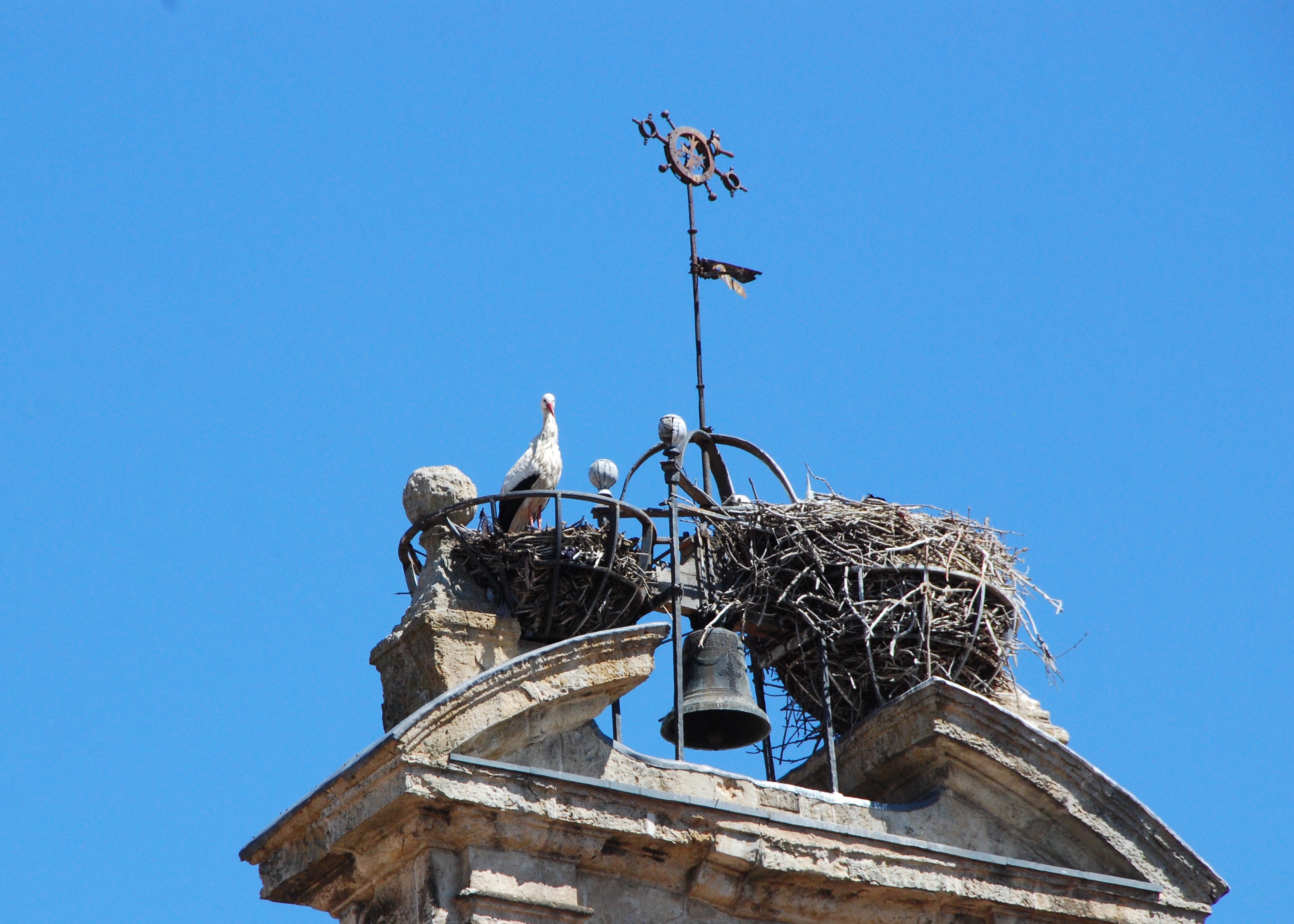 Looking up to the top of San Martin’s bell tower we see a stork’s nest with storks in it. Storks are plentiful around here. They choose a place to build a nest and return every year to the same nest and add a little to it.
We are just steps away from the northwest corner of Plaza Major. Located in the heart of Salamanca, it is a large square completely 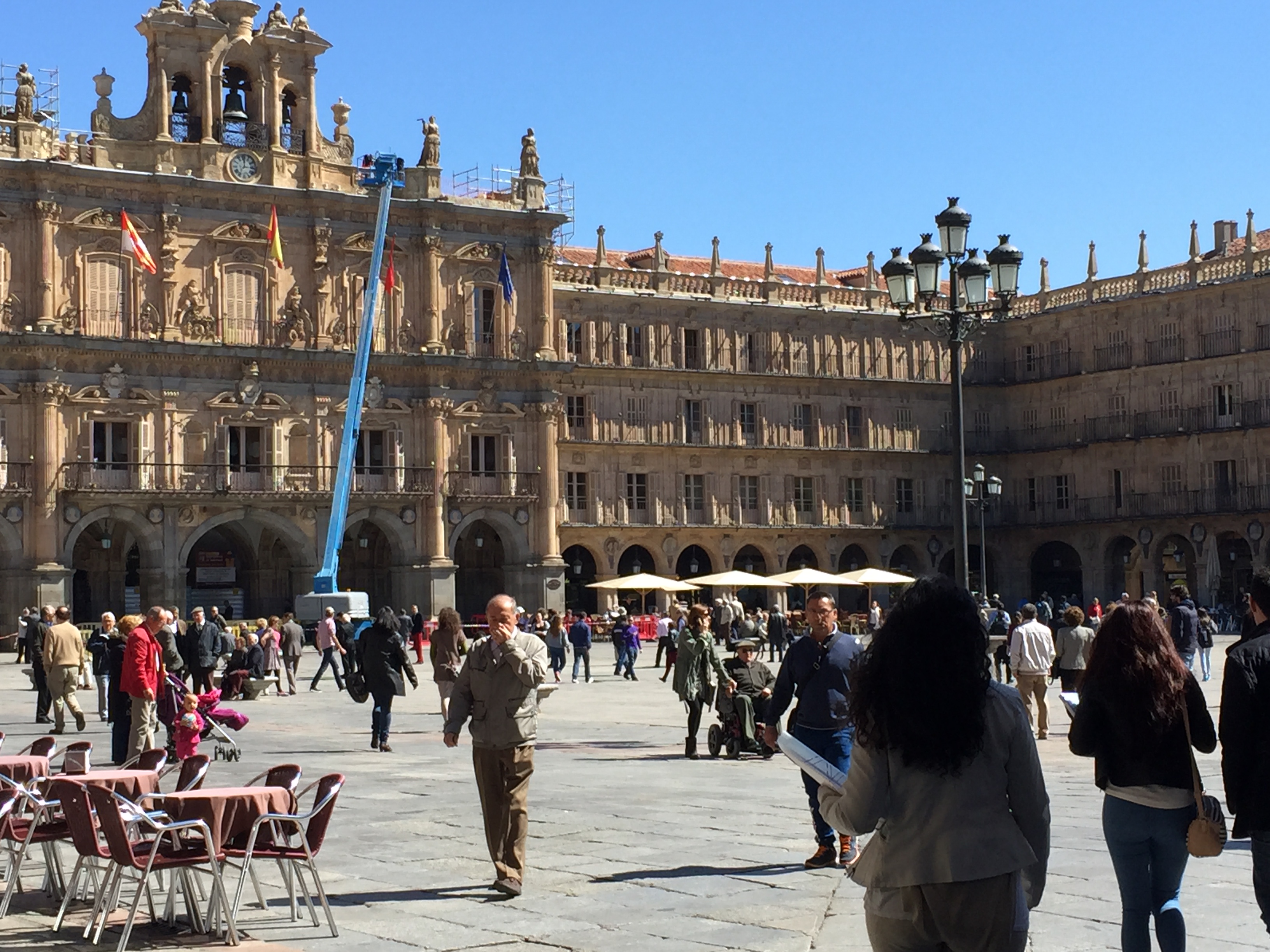 surrounded by buildings including the city hall, shown at left. Arcades cover the sidewalks along the periphery buildings facing inward toward the open square.
Lunch is a buffet banquet at the hotel. We are in a large room with a stage for performers in one corner. The food is marvelous Spanish specialties. At the end of the meal three ladies sing and dance Flamenco. This is easily a top five highlight 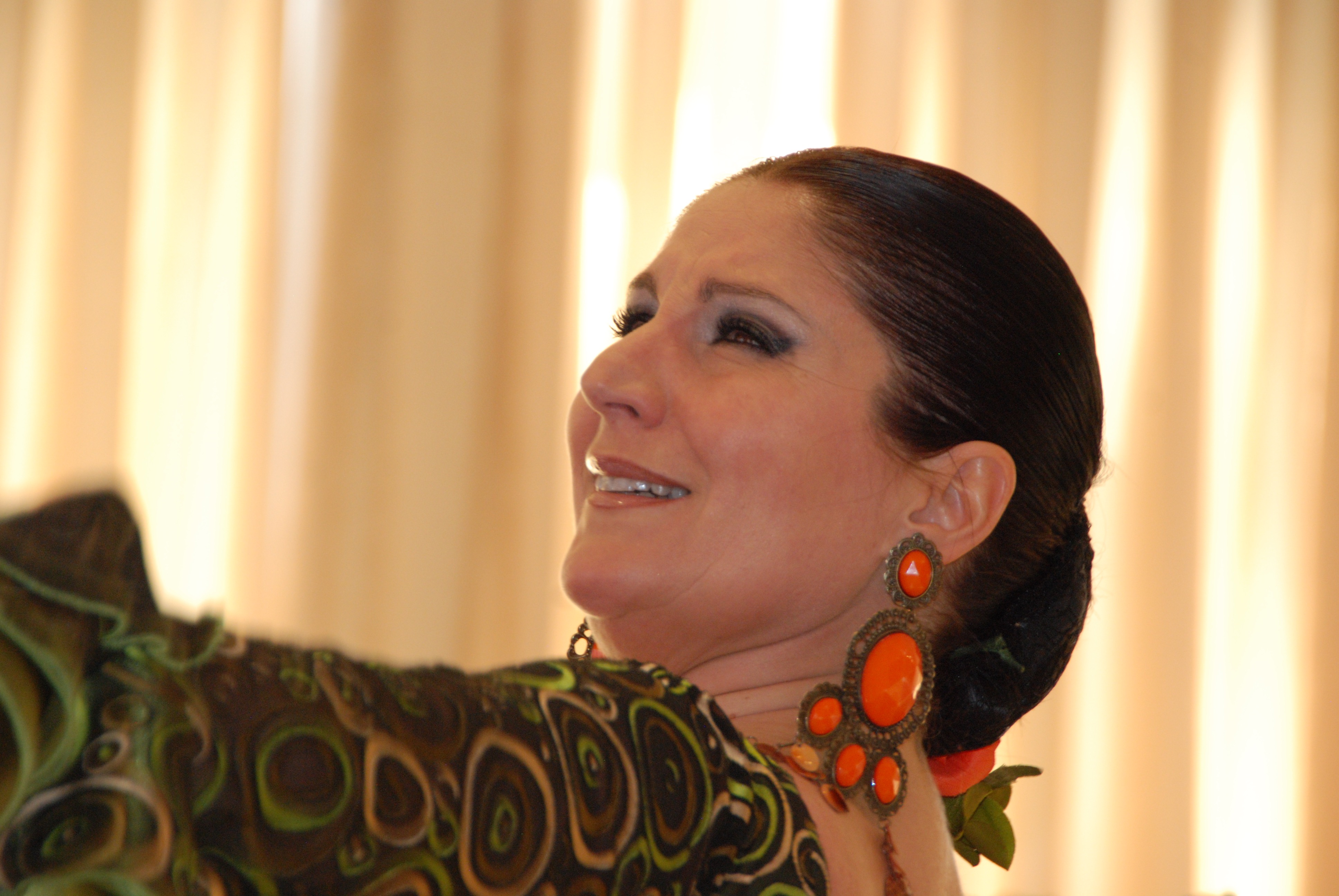 of the cruise.
From the hotel our local guide leads us back down the shopping street, Calle Toro, to Plaza Major. From there we walk a short distance to the University and end the tour at the Cathedral.
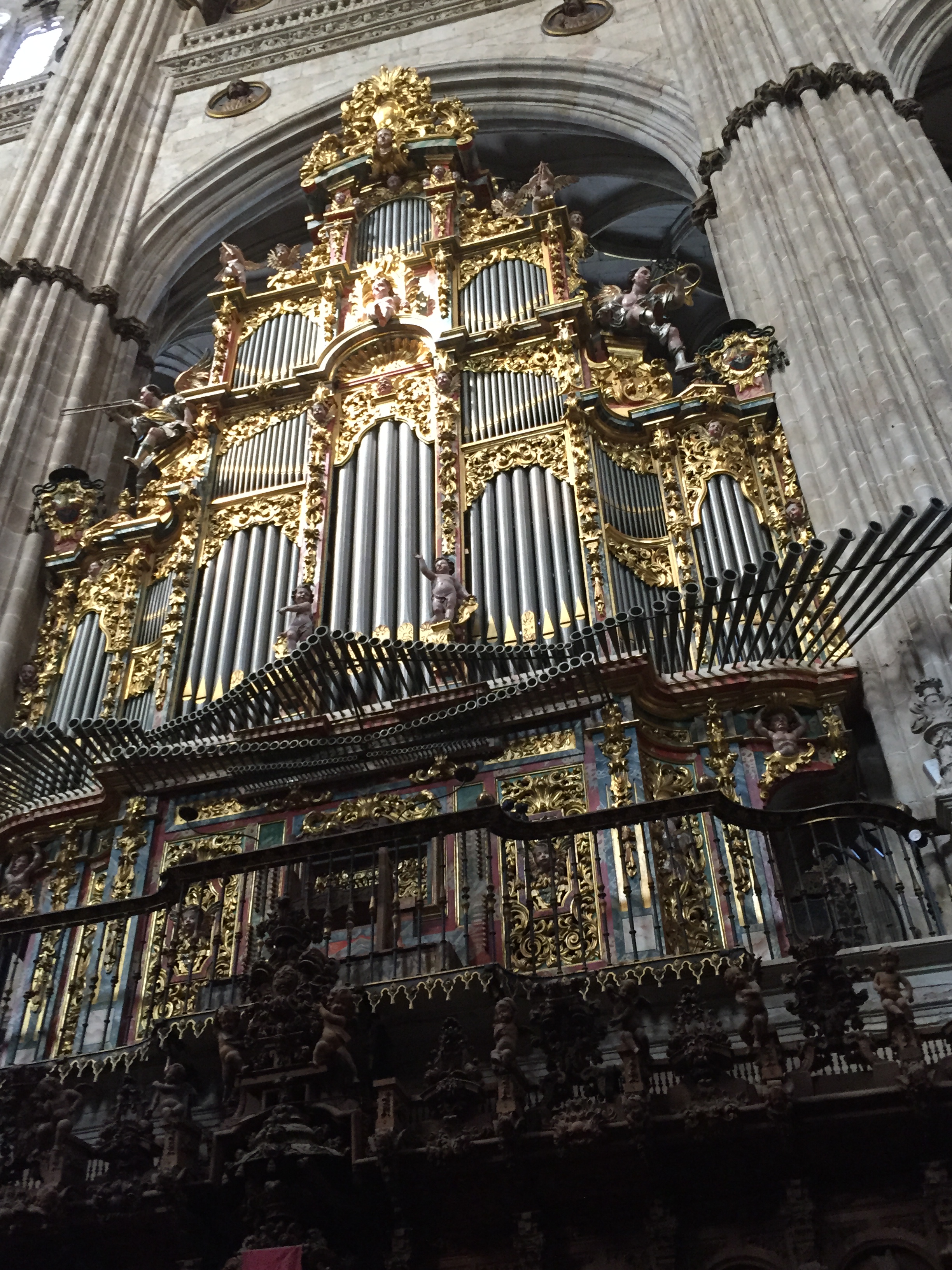
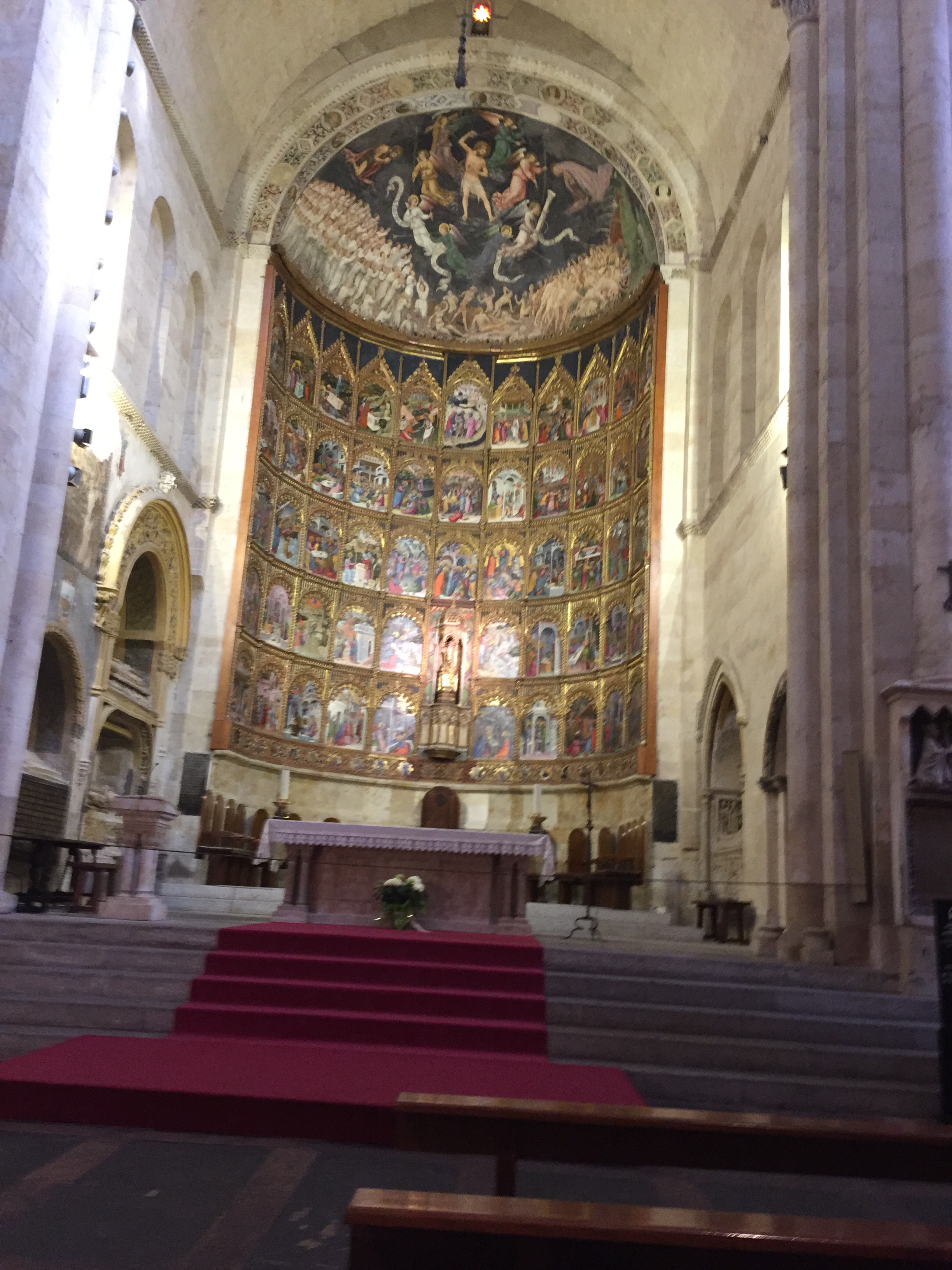
We have some free time before departure, and we chose to go into the Cathedral. There 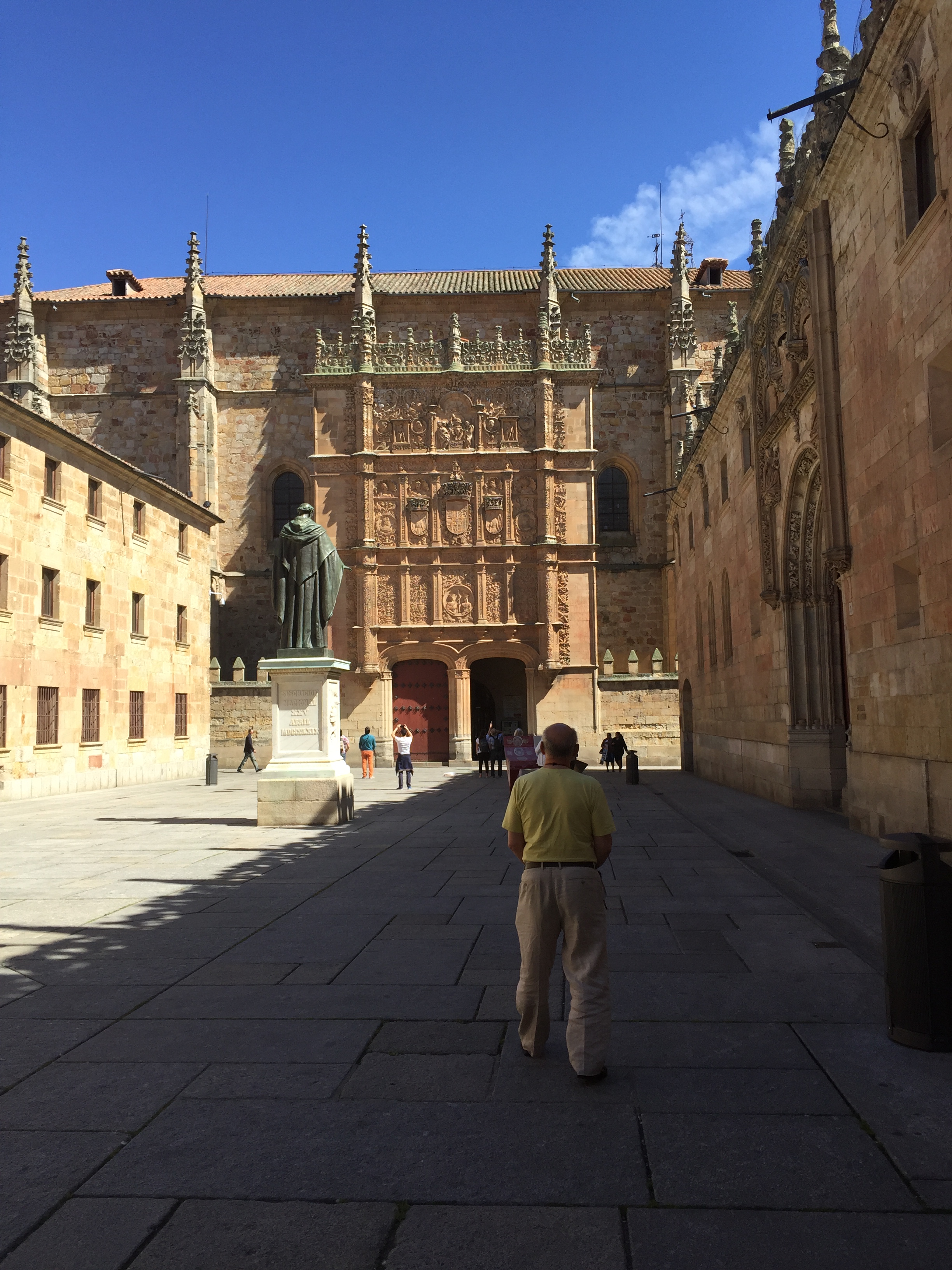
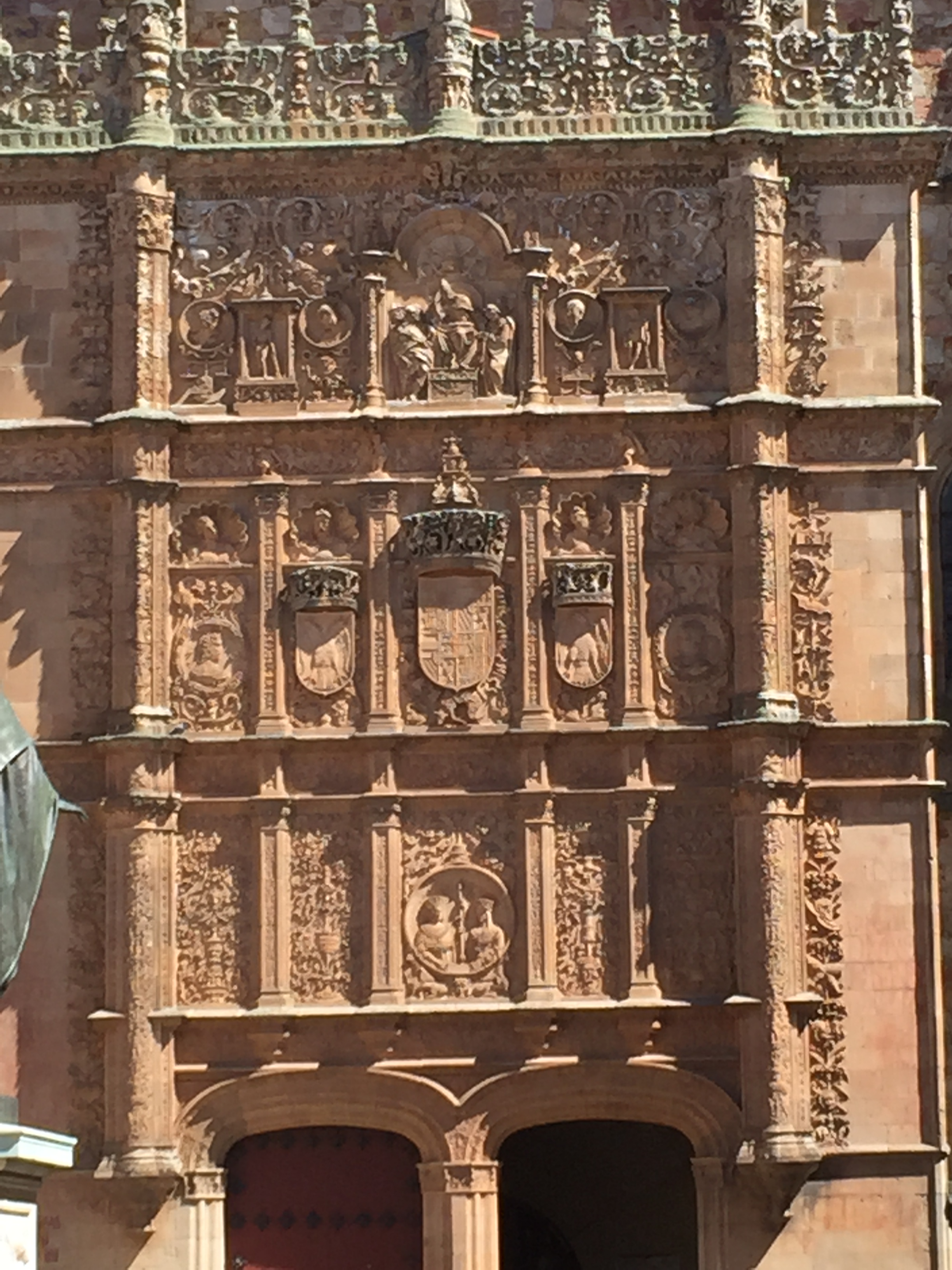 is an admission fee of 4€, but we considered the experience worth the fee. This is the most unusual church we have visited. The main nave is divided in the middle with a relatively small altar area beyond. Adjacent to this is another large nave more typical of European Catholic churches. The beautiful wall panels behind the altar visualize the life of Christ.
Don’t miss the carving that looks like an astronaut on the north exterior of the Cathedral.
Salamanca
http://en.wikipedia.org/wiki/Salamanca
University
http://en.wikipedia.org/wiki/University_of_Salamanca
https://www.salamanca-university.org/Salamanca-University.htm
Cathedral
https://en.wikipedia.org/wiki/New_Cathedral,_Salamanca
Astronaut
Favaios
 One of the joys of travel is to anticipate and experience unexpected delights. For us Favaios was our happiest day. We drove for an hour up to this small village with a population of about 1000 at an elevation of 2400 feet. The village produces Muscatel wine, one of the only places in Portugal where it is produced. For several years they were prohibited from making the wine, because there was a law that no enhanced wine, like Port or Muscatel could be made above 1000 feet. After extensive lobbying, the village regained permission to make the wine. The process is similar to Port except that wine spirits are added after day 3 instead of brandy. The fermentation is interrupted by this addition to preserve the sweetness of the wine.
 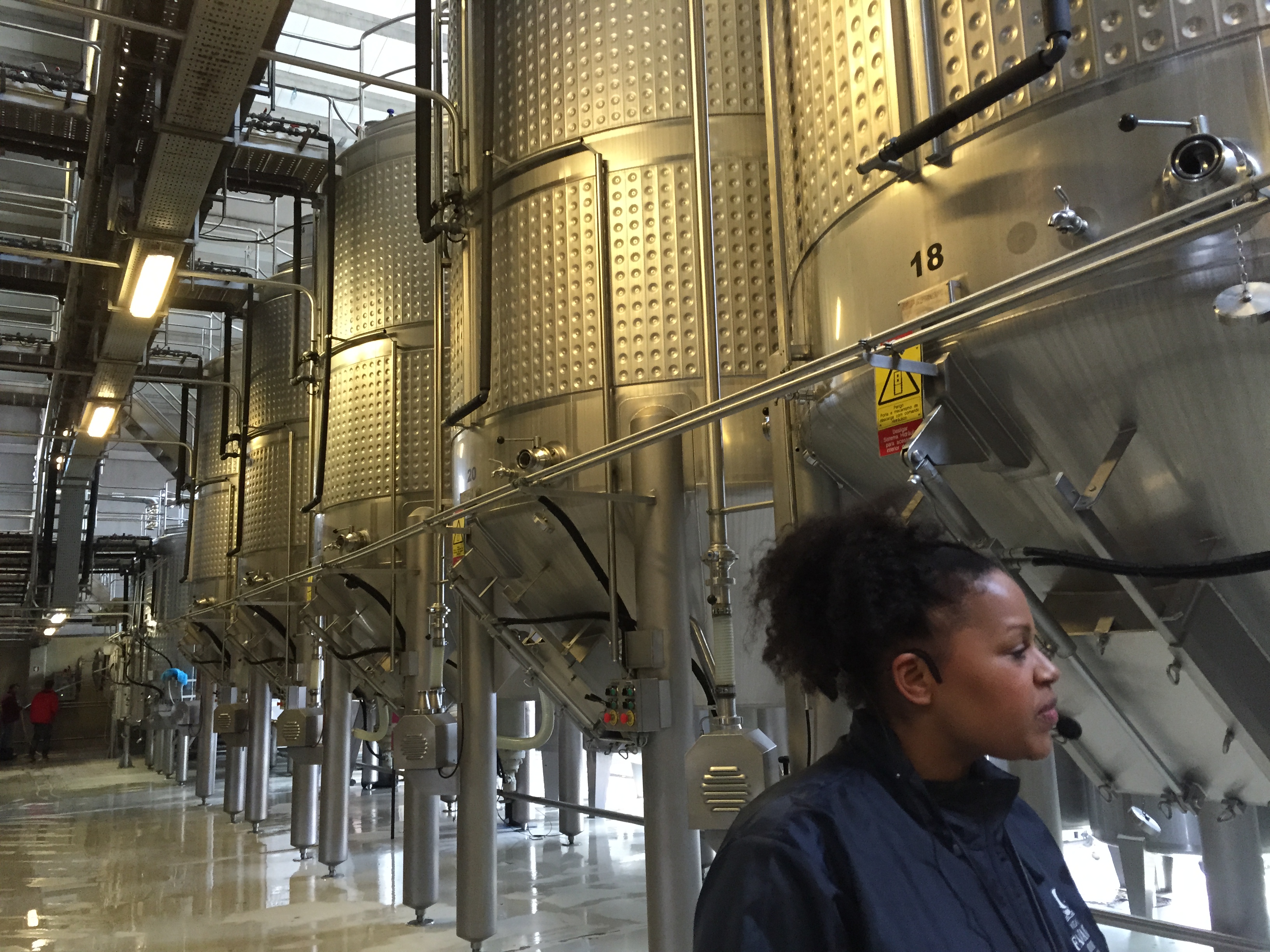 Farmers were having difficulty selling their product, so they combined into a cooperative and grapes from all vineyards are processed together and the wine sold under the same label, simply Favaios.
The village motto, Pao y Vinho (Bread and Wine) indicates that bread is also an important product. There are several bakeries in the town, most of them have very small centuries-old brick or stone 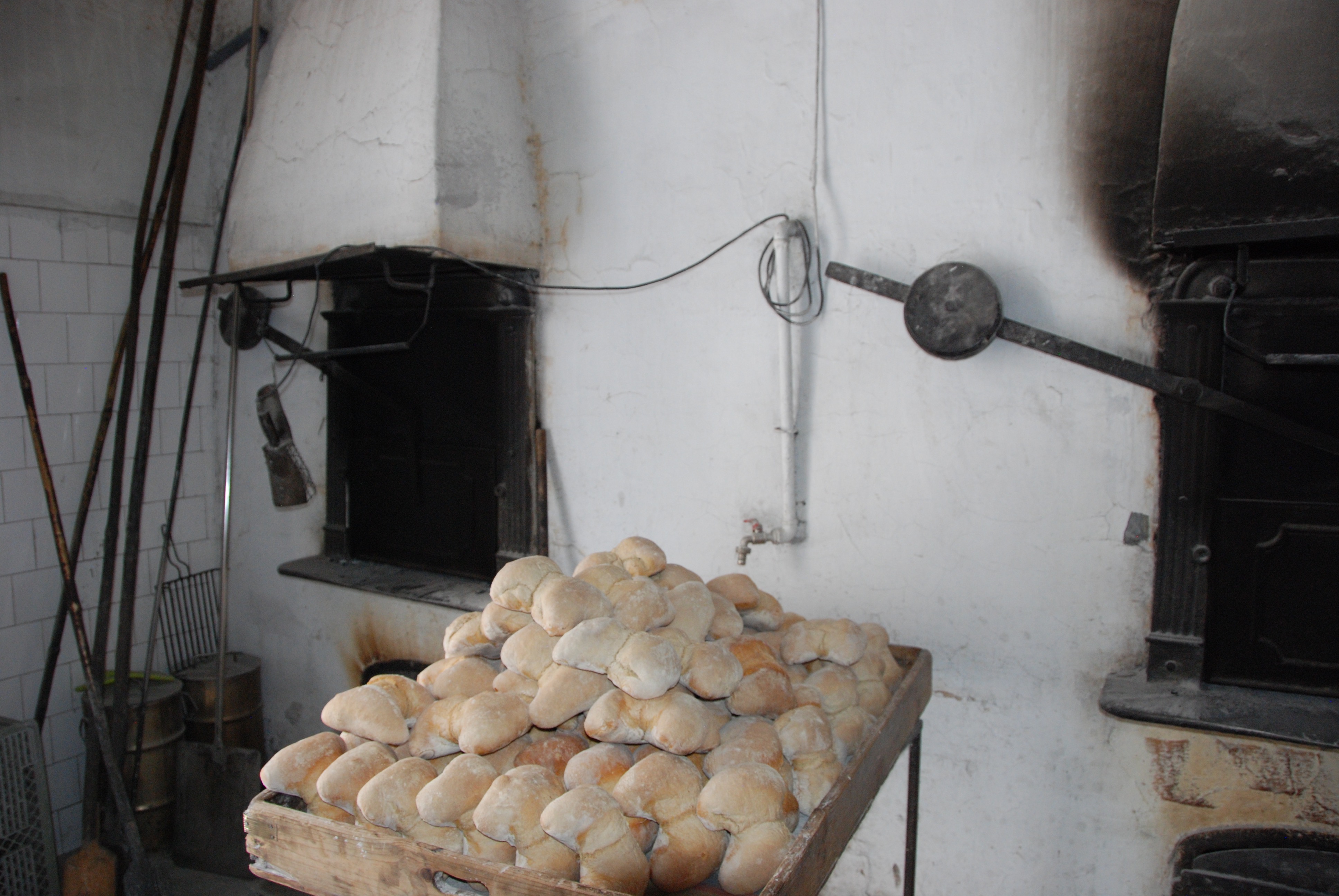 wood-fired ovens. They all make the same dough recipe formed into two fist-sized loaves joined together. We visited one of these very simple bakeries. All of the bread for the day had been baked, so we did not see any of the process, but did have a sample of the fresh loaves. The town produces about 10,000 loaves a day which are distributed all over the area.
The wine and bread museum is very impressive for a village so small.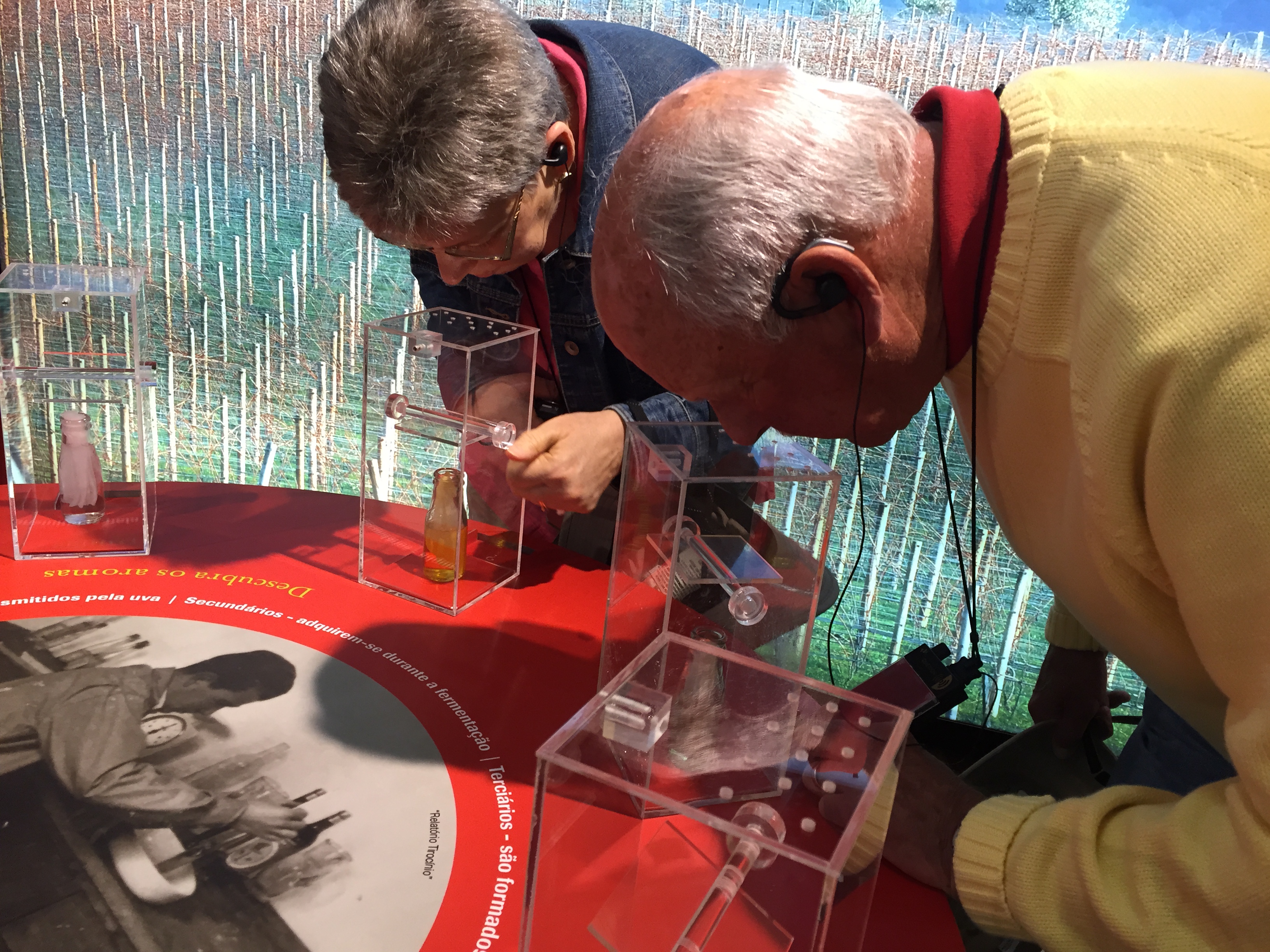
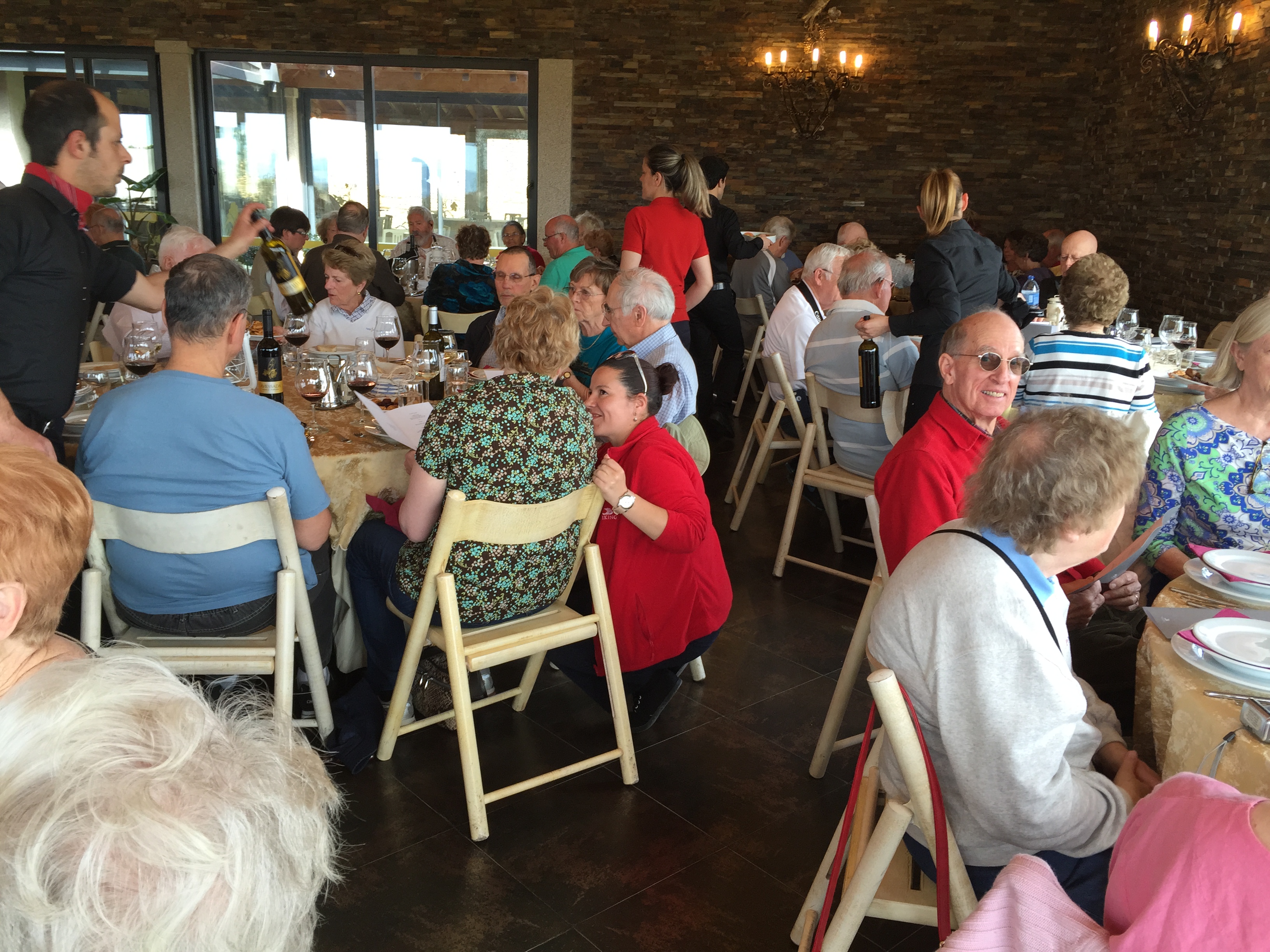
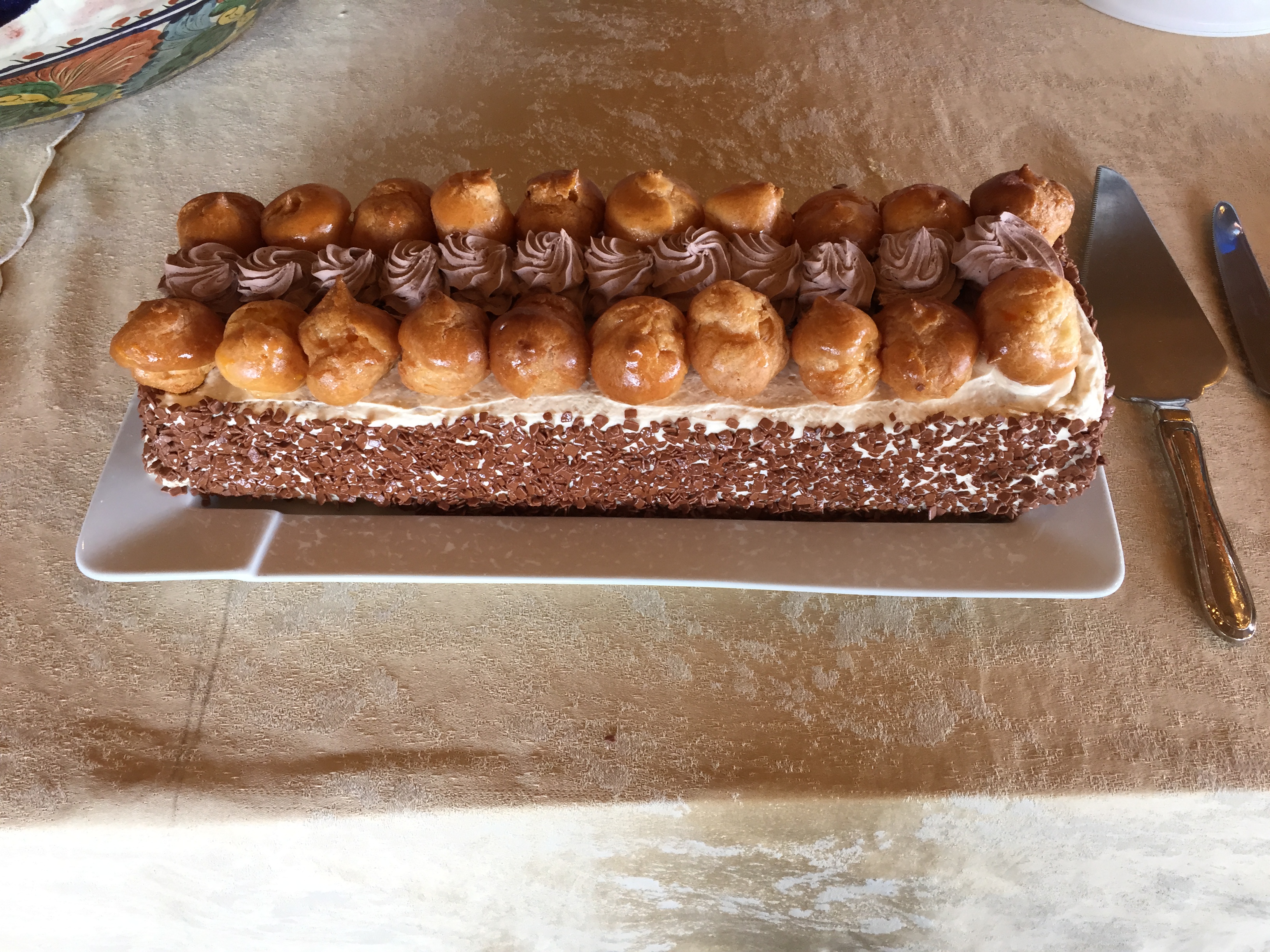
The climax of the day is lunch at a Quinta (vineyard) owned by one of the main families that established the wine cooperative. Upon arrival a band of three men playing a drum, accordion and tambourine welcomed us. They led us to an area behind a stone barn with a spectacular view of the valley below covered in a blanket vineyards. We were given a glass of wine and invited to a table of hors d’oeuvres. After all three buses arrived, we were taken into the barn, which is a museum, and then to a dining hall for lunch. Dazzling, enticing starters, cabbage soup, vegetables, and a sampling of at least three meats presented us difficult choices. Beautifully decorated cakes, pies and sweet creations filled an extensive desert table.
 When everyone had ended their gastronomic indulgence, the band returned and played several Portuguese songs that invited clapping and participation. During the next to last number, as on the ship a couple of nights ago, everyone joined in a Conga line and ended up going through an arcade of other dancers until everyone had walked through the tunnel of people forming the arch of outstretched arms.
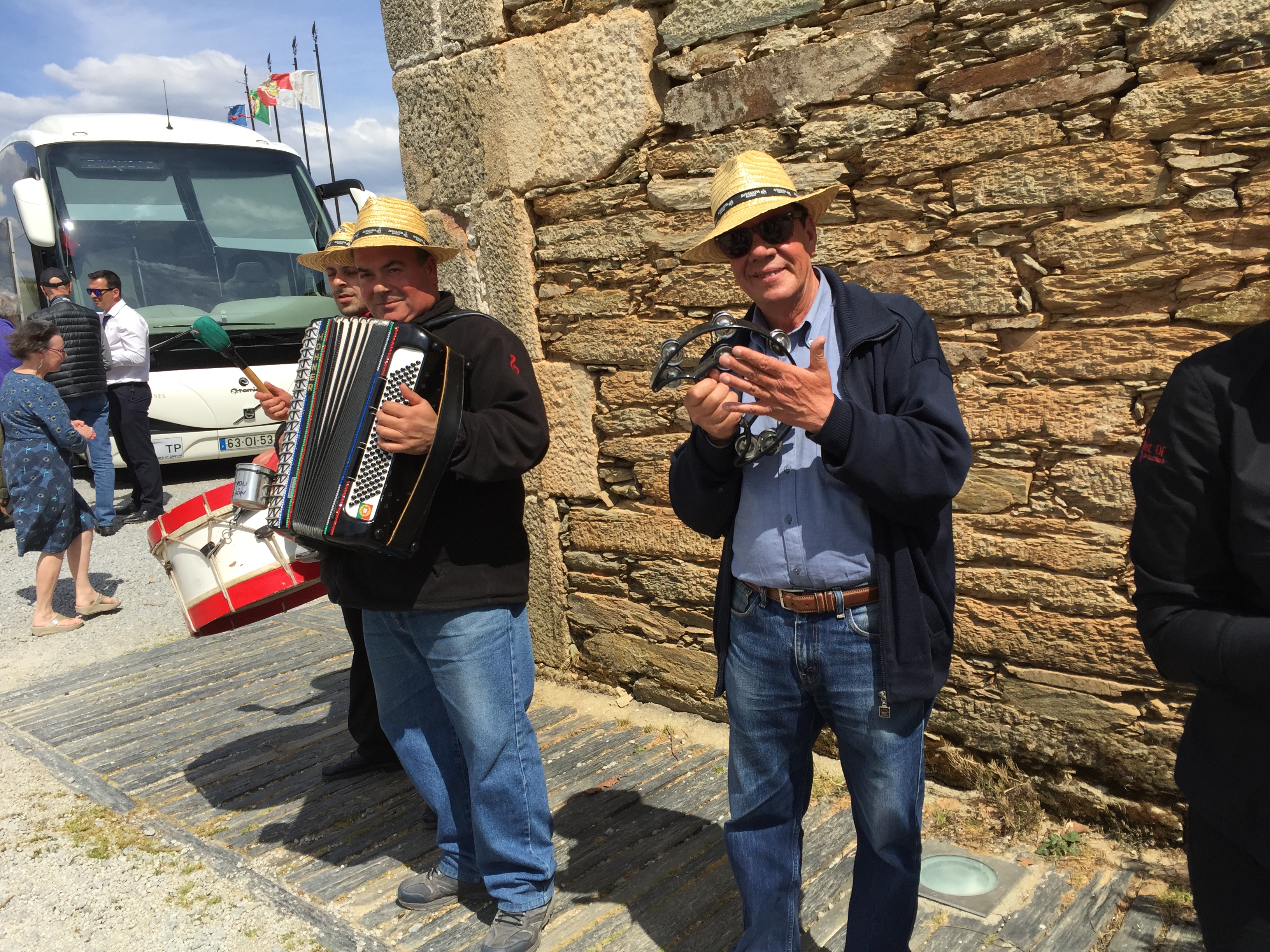 We were all caught up on the festive party atmosphere as we sauntered back to our motor coaches accompanied by the music of the little band. What a wonderful day! River cruises seem to generate more exciting experiences like this than other modes of travel.
Lamego
 We are thankful for a light day today. We leave at 9:30 for Lamego, a half-hour drive from the ship. We will be gone only three hours and back to the ship in time for lunch leaving plenty of time to nap and pack as much as possible before dinner.
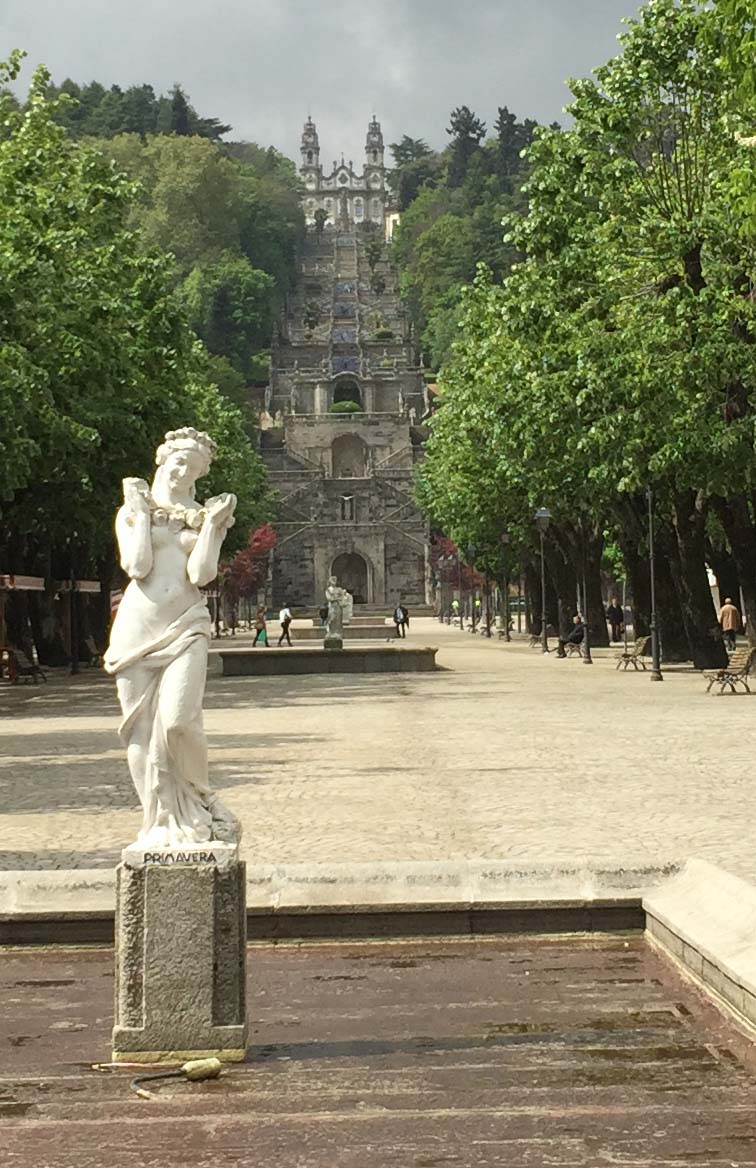
Our first destination is the Sanctuary of the Lady of Remembrances church, sitting high on a hill beyond the central plaza that extends from one end of the town center to the other. In the Baroque church there is little evidence of Jesus, but all of the paintings, statues and windows depict events in the life of Mary. Behind the altar is a statue built into the decoration showing Mary nursing Jesus. This was taboo during the Inquisition, but is revered today.
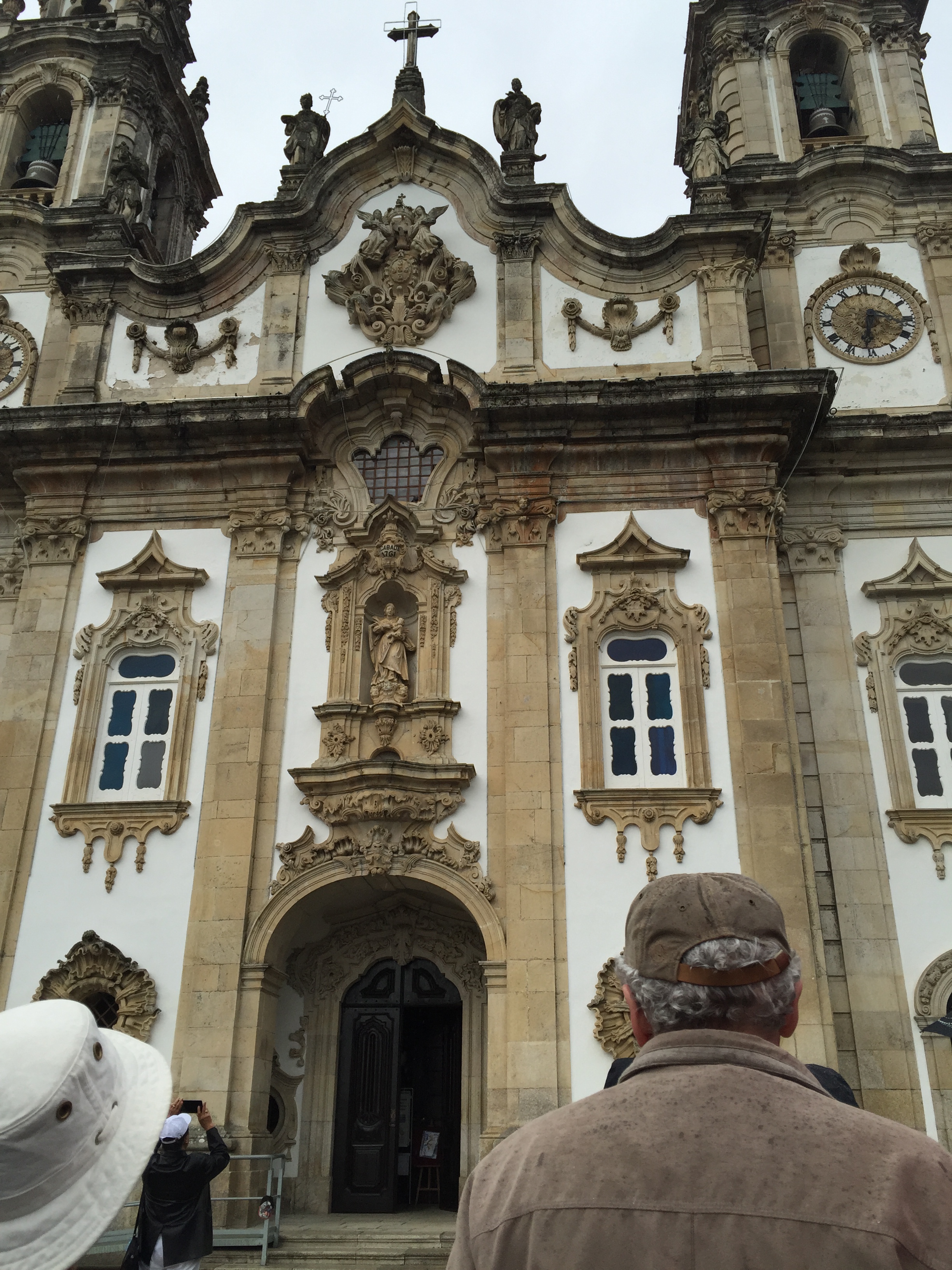 Six hundred twenty steps lead from the main town plaza to the church and pilgrims climb the steps on their knees. Most of the pilgrims are women. They are wishing to get pregnant or for some healing for a child. The adventurous souls from our ship who chose to walk down the steps testified that it was not all that difficult. Frequent landings break up the descent into more manageable segments and interrupt the monotony.
The other two places of interest in Lamego are the Farmer’s Market and the Museum. Several of our group accompanied the ship’s chef to the market to shop for produce for our dinner. Those who chose the
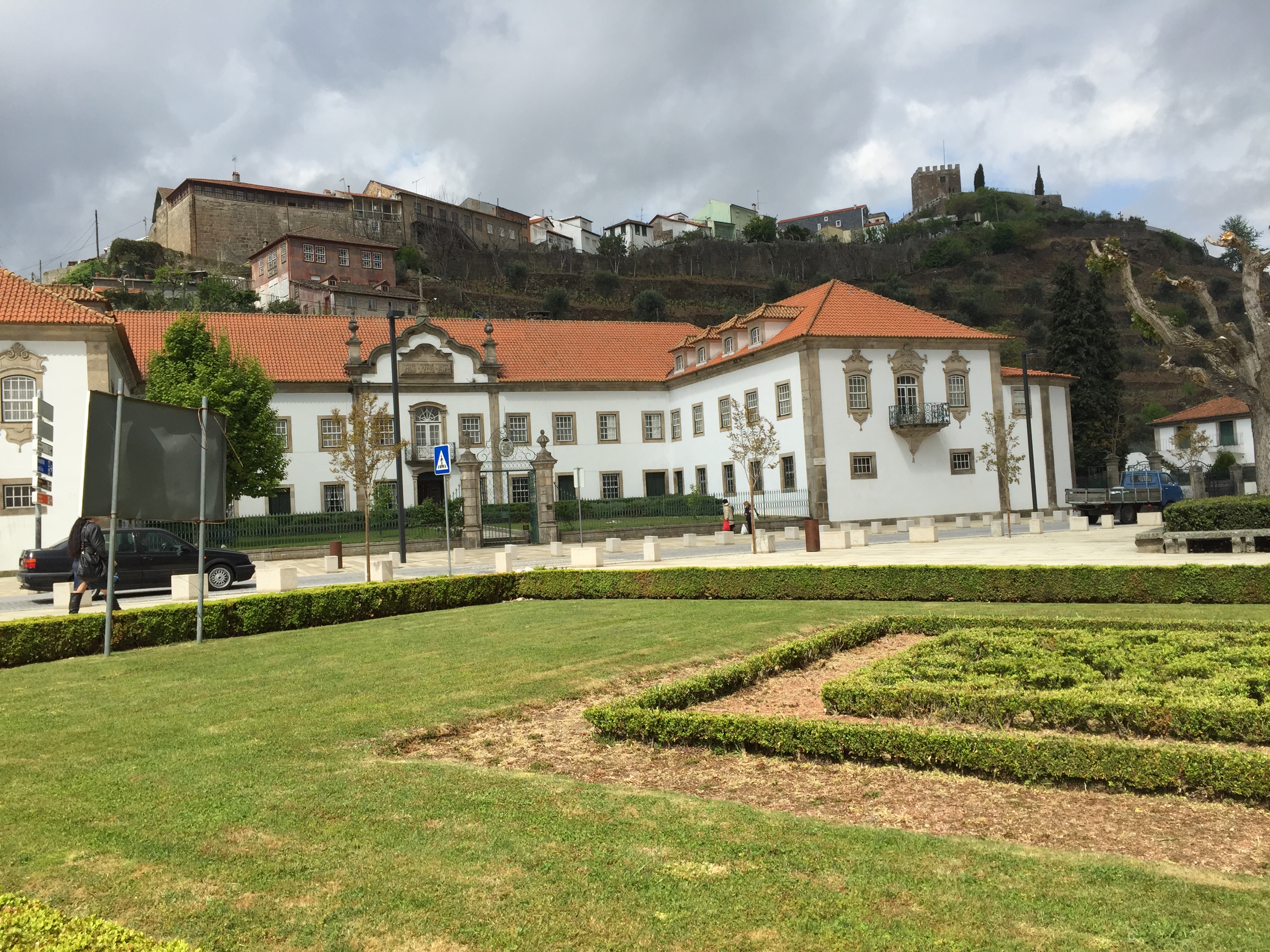
Lamego Museum
Museum were not disappointed. It houses collections of Portuguese paintings, tapestries, ornaments, sculptures, furniture, jewelry, azulejos (tiles), Baroque and Roman vehicles, chapels and altars.
We have repeatedly affirmed how glad we are that we chose this trip. Portugal is a great destination, and it is unfortunate that flight connections are roundabout. The country deserves a high priority for European travel. Visiting only Lisbon and Porto on short shore excursions from cruise ships is like equating a morning in Berlin with exploring Germany.
 Norman and Jan Rodgers